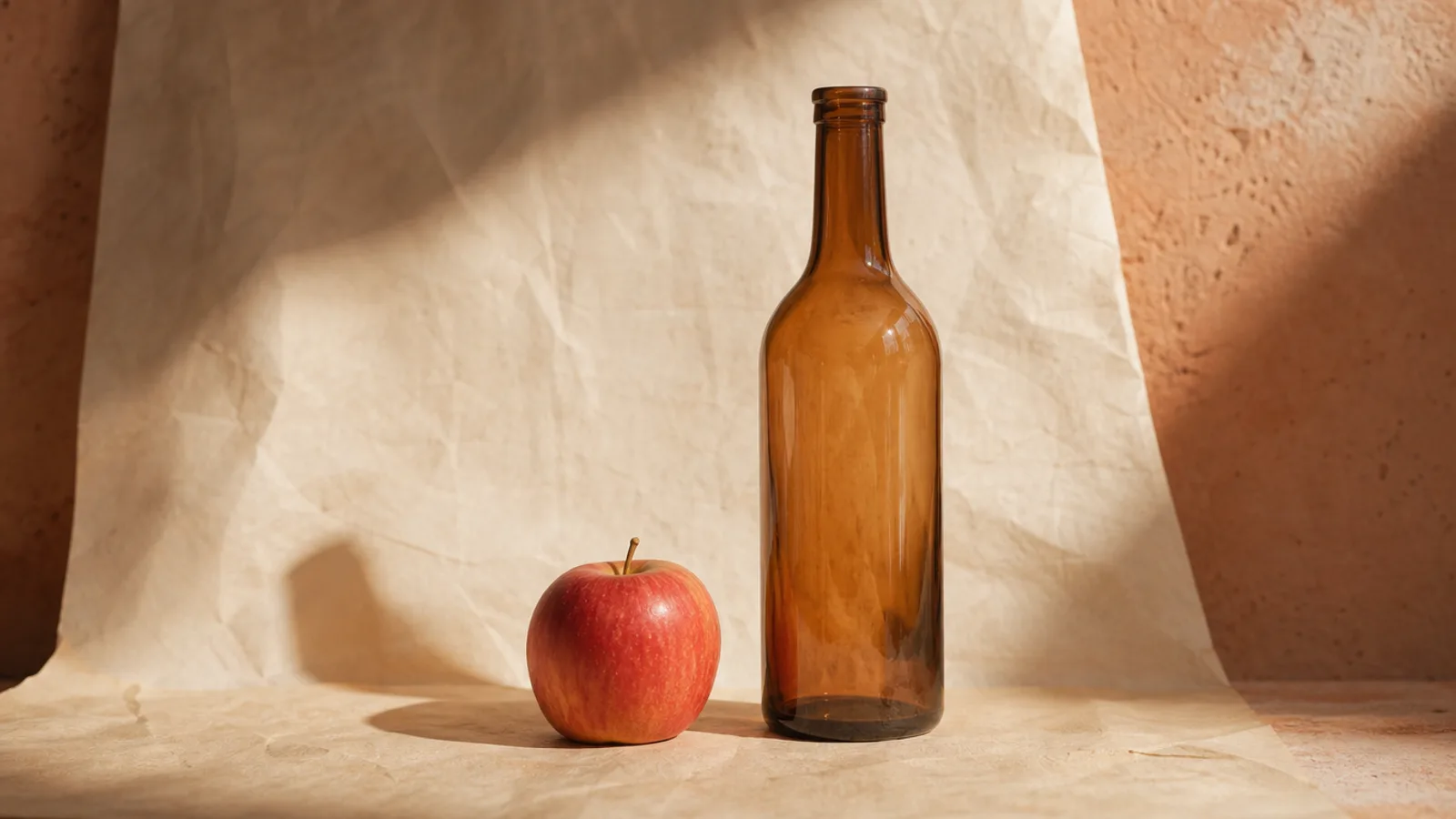
Size It Up looks simpler than a numerical Daily Question. You can see both objects. There is nothing to look up. And yet a silhouette that is twice as tall as it should be is a common miss, not a rare one.
The problem is not that your eyes are bad. It is that everyday seeing is built for recognition, not for measurement.
Pictures flatten real volume
A tall, thin object and a short, wide one can share the same height on a screen and still differ wildly in true size. Maps do a related trick: Greenland looks like Africa until you remember the projection. City-distance questions on this site fail for the same reason - the picture in your head was drawn for a different job than comparison.
On Size It Up you only control one dimension of the target. Height grows, but the mind still tries to keep the familiar picture of the object, the one from a poster or a product photo, not the one from standing next to it.
Familiar objects are remembered as icons
An apple, a bottle, a person, a car: you have seen each thousands of times. Memory stores a typical version, not a measured one. When two icons sit side by side, you compare the icons, not the metres.
Pop Culture rounds make this worse on purpose. A fictional creature has no metre stick in real life, so the only calibration is the reference object. Geography rounds swap that for coastlines and borders, which people have mostly seen as map drawings.
Small percentage errors still look huge
Scoring on Size It Up uses proportional error, not pixels. Doubling the target is the same miss as shrinking it by half. That feels harsh if you were 'almost there' visually, but a factor of two is a large physical difference once the object is standing in a room.
• Use the reference as a ruler, not as decoration.
• Ask how many of the blue object would stack to the red one.
• Ignore whether the silhouette 'looks right' as a logo.
The same gap shows up in numbers
Folding a sheet of paper 50 times and asking whether two cities are 1,000 km apart are numerical cousins of this visual mistake. The quantity is ordinary; the scale is not. OffBy's games keep returning to that mismatch because it is where intuition is loudest and least reliable.
If you want a next puzzle that trains the same muscle without a silhouette, play Size It Up, then try Weigh It Up: weight comparisons hide in the same blind spot, just off the screen.
Try today's OffBy