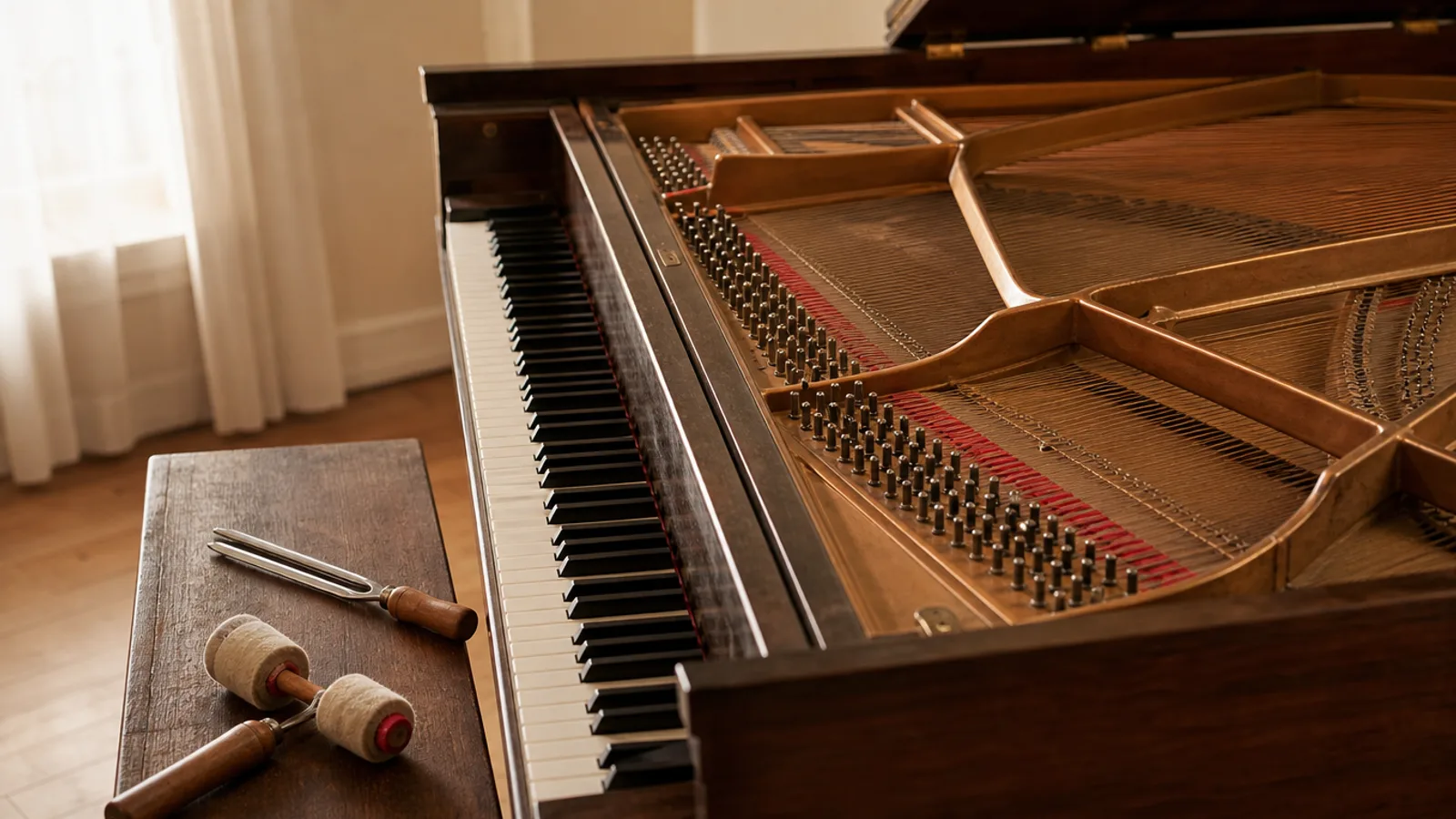
Enrico Fermi used to ask students how many piano tuners worked in Chicago. Nobody in the room had the census figure. That was the point. The question is a template for every Daily Question that looks impossible until you split it.
You do not need Chicago specifically. The same chain works for any large city. The numbers below use a city of about 3 million people - the same order as Chicago in Fermi's day.
Step 1: How many people, how many pianos?
Start with population: 3 × 10^6 people. Households are smaller than that. If a typical household is 2 to 3 people, you have roughly 1 × 10^6 households.
What fraction own a piano? Not most. A cautious guess is 1 in 50 households, or 2%. That gives about 20,000 pianos. If you guessed 1 in 20 or 1 in 100, you are still in the same neighbourhood.
Step 2: How often is a piano tuned?
A piano that is actually played might be tuned once a year. Many sit for longer. Call it one tuning every two years on average, so 10,000 tunings per year.
Step 3: How many tunings can one person do?
A working tuner might manage two or three pianos on a busy day, not every calendar day. Say 4 days a week, 50 weeks a year, 2 tunings a day:
2 × 4 × 50 = 400 tunings per tuner per year.
Step 4: Divide
10,000 tunings ÷ 400 tunings per tuner ≈ 25 tuners.
Fermi's original Chicago estimate landed around 50 to 100. Directories at the time were in that range. The method does not promise the exact listing. It promises that you will not say 3, and you will not say 10,000.
Where the estimate can slip
The ownership fraction is the softest step. Digital keyboards replaced a lot of living-room pianos. Schools and concert halls add instruments that households do not own. Those corrections usually move the answer by a factor of two, not by a factor of a hundred.
That is the same shape as honeybee wingbeats or Oscar nominations on this site: one uncertain fraction, then a stack of quantities you can picture. If the last number feels absurd, check the fraction before you throw the whole chain away.
For the broader method, see What Is a Fermi Problem? and How to Guess Within an Order of Magnitude.
Try today's OffBy