
American White Pelican
Pelecanus erythrorhynchos Gmelin, JF, 1789
5.6 kgWeight
The American white pelican (Pelecanus erythrorhynchos) is a large aquatic soaring bird from the order Pelecaniformes.
Busiest months: January, May and November · Most records: United States, Canada, Mexico
AI-generated illustration. It may contain mistakes. · How the stickers are made
Records by month · United States · American White Pelican
| Month | Records |
|---|---|
| January | 48,407 |
| February | 39,305 |
| March | 37,095 |
| April | 38,428 |
| May | 40,666 |
| June | 14,374 |
| July | 17,921 |
| August | 22,625 |
| September | 27,266 |
| October | 31,734 |
| November | 44,179 |
| December | 36,377 |
Counts come from the birding hotspots covered by Field Stickers. eBird records via GBIF up to 2024-12-31. A record means someone listed it; more records partly mean more birders, not more birds. eBird / GBIF
Where and when it's recorded

American White Pelican has been recorded at 657 of the 8,171 birding hotspots we track, in 19 countries and regions.
Records by month Northern Hemisphere
Where it's recorded most
- Estero Llano Grande SP WBCUnited States15,933 records
- IRWD San Joaquin Marsh & Wildlife Sanctuary, IrvineUnited States14,798 records
- Riverlands Migratory Bird SanctuaryUnited States11,532 records
More places
- Leonabelle Turnbull Birding Ctr.United States9,495 records
- Hagerman NWRUnited States8,734 records
- Riparian Preserve at Gilbert Water RanchUnited States8,603 records
- Mitchell Lake Audubon CenterUnited States8,516 records
- Bolsa Chica Ecological ReserveUnited States7,864 records
- Cherry Creek SPUnited States7,698 records
- Merritt Island NWR – Black Point Wildlife DriveUnited States7,533 records
Countries and regions with the most records
eBird records via GBIF up to 2024-12-31. A record means someone listed it; more records partly mean more birders, not more birds.
About
The American white pelican (Pelecanus erythrorhynchos) is a large aquatic soaring bird from the order Pelecaniformes. It breeds in interior North America, moving south and to the coasts, as far as Costa Rica, in winter.
Excerpt from Wikipedia, CC BY-SA 4.0 · authors · Read more on Wikipedia
Questions
How big is the American White Pelican?
The American White Pelican weighs around 5.6 kg.
Where does the American White Pelican live?
Its breeding range: North America: inland south-central British Columbia and northeastern Alberta to west-central Ontario (southwestern, south-central Canada) to central California and Texas (southwestern, south-central USA). It is most often recorded in United States, Canada and Mexico.
When is the best time to see the American White Pelican?
At the hotspots we track, it is recorded most in January, May and November (Northern Hemisphere).
Is the American White Pelican endangered?
The IUCN Red List classifies the American White Pelican as Least Concern.
What does the American White Pelican eat?
Main food: Fish, shrimp & shellfish.
What family is the American White Pelican in?
It belongs to the family Pelicans (Pelecanidae), order Pelecaniformes.
At a glance
- Weight
- 5.6 kg
- Habitat
- Wetland
- Diet
- Fish, shrimp & shellfish
- Lifestyle
- On the water surface
- Migration
- Partial migrant
- Conservation
- Least Concern
More measurements
- Wing
- 561 mm
- Tail
- 146 mm
- Bill
- 320 mm
- Tarsus
- 116 mm
Averages from the AVONET dataset; length from field guides where available.
Range
North America: inland south-central British Columbia and northeastern Alberta to west-central Ontario (southwestern, south-central Canada) to central California and Texas (southwestern, south-central USA)
Breeding range, IOC World Bird List 15.2
Classification
- Order
- Pelecaniformes
- Family
- Pelicans Pelecanidae
- Genus
- Pelecanus
Other birds in the genus Pelecanus
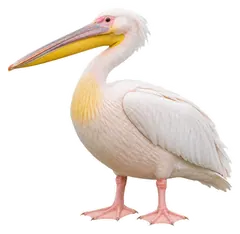 Great White PelicanPelecanus onocrotalus
 Pink-backed PelicanPelecanus rufescens
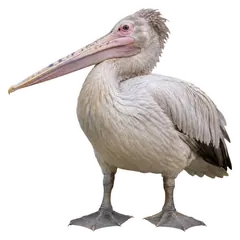 Spot-billed PelicanPelecanus philippensis
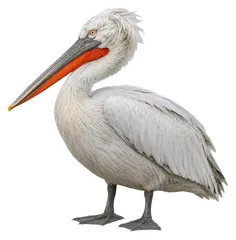 Dalmatian PelicanPelecanus crispus
 Australian PelicanPelecanus conspicillatus
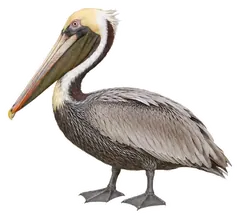 Brown PelicanPelecanus occidentalis
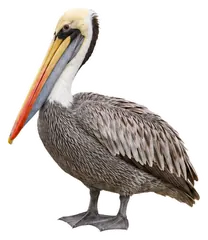 Peruvian PelicanPelecanus thagus
 WebP · 1070 px
In other languages
- EnglishAmerican White Pelican
- 简体中文美洲鹈鹕
- 繁體中文紅嘴鵜鶘
- 日本語アメリカシロペリカン
- 한국어아메리카흰사다새
- DeutschNashornpelikan
- FrançaisPélican d’Amérique
- EspañolPelícano norteamericano
- Portuguêspelicano-branco-americano
- ItalianoPellicano americano
- NederlandsWitte Pelikaan
- РусскийПеликан-носорог
- Svenskahornpelikan
- DanskAmerikansk Hvid Pelikan
- Polskipelikan dzioborogi