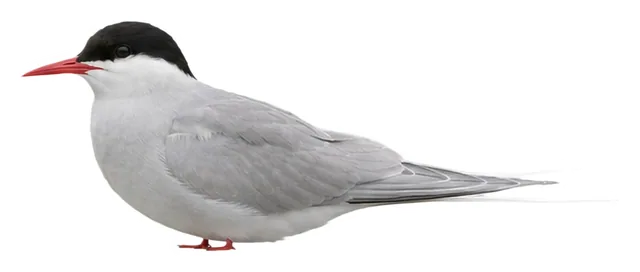
Arctic Tern
Sterna paradisaea Pontoppidan, 1763
110 gWeight
The Arctic tern (Sterna paradisaea) is a tern in the family Laridae.
Busiest months: June · Most records: Iceland, United Kingdom, Canada
AI-generated illustration. It may contain mistakes. · How the stickers are made
Where and when it's recorded

Arctic Tern has been recorded at 732 of the 8,171 birding hotspots we track, in 70 countries and regions.
Records by month Northern Hemisphere
Where it's recorded most
- KaldbakstjarnirIceland2,141 records
- Húsavík – hafnarsvæðiIceland1,480 records
- ChurchillCanada1,273 records
More places
- Vatnajökulsþjóðgarður NP – JökulsárlónIceland914 records
- Reykjavík – Tjörnin pondIceland904 records
- Garður – Garðskagi lighthouseIceland808 records
- GambellUnited States792 records
- BakkatjörnIceland698 records
- Teslin Lake – Teslin Lake Bird ObservatoryCanada622 records
- Bridges of RossIreland591 records
Countries and regions with the most records
eBird records via GBIF up to 2024-12-31. A record means someone listed it; more records partly mean more birders, not more birds.
About
The Arctic tern (Sterna paradisaea) is a tern in the family Laridae. This bird has a circumpolar breeding distribution covering the Arctic and subarctic regions of Europe (as far south as Brittany), Asia, and North America (as far south as Massachusetts). The species is strongly migratory, seeing two summers each year as it migrates along a convoluted route from its northern breeding grounds to the Antarctic coast for the southern summer and back again about six months later.
Excerpt from Wikipedia, CC BY-SA 4.0 · authors · Read more on Wikipedia
Questions
How big is the Arctic Tern?
The Arctic Tern weighs around 110 g.
Where does the Arctic Tern live?
Its breeding range: Palearctic, North America: widespread Arctic and subarctic coasts and inland, from Greenland, Iceland and British Isles to northeastern Siberia, Sakhalin and Kamchatka (eastern Russia), Aleutian Islands, Alaska mainland through Arctic and subarctic Canada to James Bay, southeastern Canada and New York. It is most often recorded in Iceland, United Kingdom and Canada.
When is the best time to see the Arctic Tern?
At the hotspots we track, it is recorded most in June (Northern Hemisphere).
Is the Arctic Tern endangered?
The IUCN Red List classifies the Arctic Tern as Least Concern.
What does the Arctic Tern eat?
Main food: Fish, shrimp & shellfish.
What family is the Arctic Tern in?
It belongs to the family Gulls, Terns, Skimmers (Laridae), order Charadriiformes.
At a glance
- Weight
- 110 g
- Habitat
- Coast & tidal flats
- Diet
- Fish, shrimp & shellfish
- Lifestyle
- Feeds in the air
- Migration
- Migratory
- Conservation
- Least Concern
More measurements
- Wing
- 263 mm
- Tail
- 180 mm
- Bill
- 38 mm
- Tarsus
- 16 mm
Averages from the AVONET dataset; length from field guides where available.
Range
Palearctic, North America: widespread Arctic and subarctic coasts and inland, from Greenland, Iceland and British Isles to northeastern Siberia, Sakhalin and Kamchatka (eastern Russia), Aleutian Islands, Alaska mainland through Arctic and subarctic Canada to James Bay, southeastern Canada and New York
Breeding range, IOC World Bird List 15.2
Classification
- Order
- Charadriiformes
- Family
- Gulls, Terns, Skimmers Laridae
- Genus
- Sterna
Other birds in the genus Sterna
 River TernSterna aurantia
 Forster's TernSterna forsteri
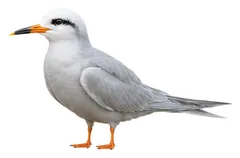 Snowy-crowned TernSterna trudeaui
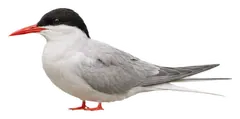 South American TernSterna hirundinacea
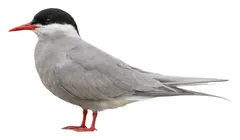 Antarctic TernSterna vittata
 Kerguelen TernSterna virgata
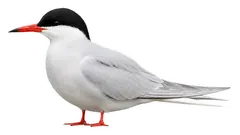 Common TernSterna hirundo
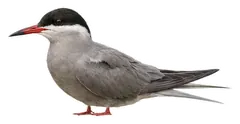 White-cheeked TernSterna repressa
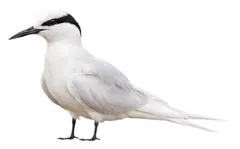 Black-naped TernSterna sumatrana
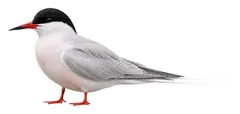 Roseate TernSterna dougallii
 White-fronted TernSterna striata
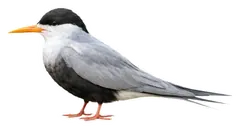 Black-bellied TernSterna acuticauda
 WebP · 1070 px