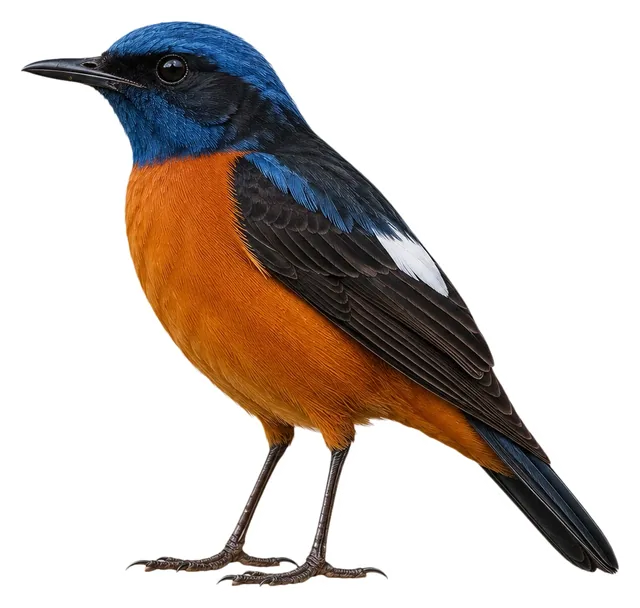
Blue-capped Rock Thrush
Monticola cinclorhyncha (Vigors, 1831)
36 gWeight
Busiest months: February and April · Most records: India, Bhutan, Nepal
AI-generated illustration. It may contain mistakes. · How the stickers are made
Where and when it's recorded

Blue-capped Rock Thrush has been recorded at 141 of the 8,171 birding hotspots we track, in 5 countries and regions.
Records by month Northern Hemisphere
Where it's recorded most
- Nandi HillsIndia1,219 records
- IISc BangaloreIndia549 records
- GKVK CampusIndia441 records
More places
- Ananthagiri Hills, VikarabadIndia338 records
- Uma MaheswaramIndia313 records
- Bondla Wildlife SanctuaryIndia300 records
- SattalIndia260 records
- College of Veterinary and Animal Sciences, PookodeIndia216 records
- Rabindra SarovarIndia146 records
- MuthyalamaduvuIndia144 records
Countries and regions with the most records
eBird records via GBIF up to 2024-12-31. A record means someone listed it; more records partly mean more birders, not more birds.
Questions
How big is the Blue-capped Rock Thrush?
The Blue-capped Rock Thrush weighs around 36 g.
Where does the Blue-capped Rock Thrush live?
Its breeding range: Oriental: Afghanistan to Myanmar and southern India. It is most often recorded in India, Bhutan and Nepal.
When is the best time to see the Blue-capped Rock Thrush?
At the hotspots we track, it is recorded most in February and April (Northern Hemisphere).
Is the Blue-capped Rock Thrush endangered?
The IUCN Red List classifies the Blue-capped Rock Thrush as Least Concern.
What does the Blue-capped Rock Thrush eat?
Main food: Insects & other invertebrates.
What family is the Blue-capped Rock Thrush in?
It belongs to the family Chats, Old World Flycatchers (Muscicapidae), order Passerines (Passeriformes).
At a glance
- Weight
- 36 g
- Habitat
- Forest
- Diet
- Insects & other invertebrates
- Lifestyle
- Perches in trees
- Migration
- Migratory
- Conservation
- Least Concern
More measurements
- Wing
- 100 mm
- Tail
- 67 mm
- Bill
- 22 mm
- Tarsus
- 23 mm
Averages from the AVONET dataset; length from field guides where available.
Range
Oriental: Afghanistan to Myanmar and southern India
Breeding range, IOC World Bird List 15.2
Classification
- Order
- Passerines Passeriformes
- Family
- Chats, Old World Flycatchers Muscicapidae
- Genus
- Monticola
Other birds in the genus Monticola
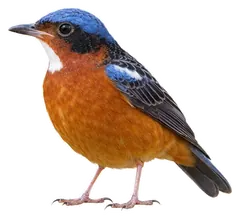 White-throated Rock ThrushMonticola gularis
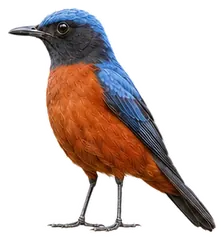 Chestnut-bellied Rock ThrushMonticola rufiventris
 Short-toed Rock ThrushMonticola brevipes
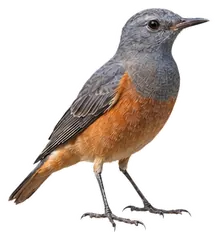 Sentinel Rock ThrushMonticola explorator
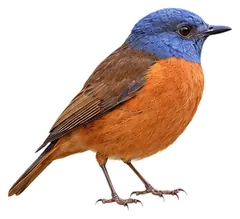 Amber Mountain Rock ThrushMonticola erythronotus
 Forest Rock ThrushMonticola sharpei
 Littoral Rock ThrushMonticola imerina
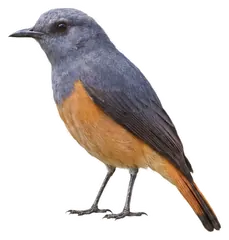 Little Rock ThrushMonticola rufocinereus
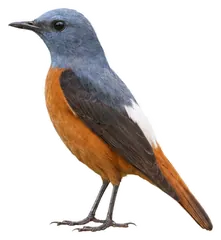 Common Rock ThrushMonticola saxatilis
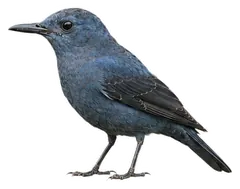 Blue Rock ThrushMonticola solitarius
 Cape Rock ThrushMonticola rupestris
 Miombo Rock ThrushMonticola angolensis
 WebP · 1070 px
In other languages
- EnglishBlue-capped Rock Thrush
- 简体中文蓝头矶鸫
- 繁體中文藍頭磯鶇
- 日本語モンツキイソヒヨドリ
- DeutschBlaukopfrötel
- FrançaisMonticole à croupion roux
- EspañolRoquero capiazul
- Portuguêsmelro-das-rochas-do-himalaia
- ItalianoCodirossone capoblu
- NederlandsBergrotslijster
- РусскийСинеголовый каменный дрозд
- Svenskablåstrupig stentrast
- DanskHimalaya Stendrossel
- Polskinagórnik białoskrzydły