
Blue-faced Parrotfinch
Erythrura trichroa (Kittlitz, 1833)
13 cmLength14 gWeight
Busiest months: August · Most records: Papua New Guinea, Palau, Australia
AI-generated illustration. It may contain mistakes. · How the stickers are made
Where and when it's recorded

Blue-faced Parrotfinch has been recorded at 41 of the 8,171 birding hotspots we track, in 8 countries and regions.
Records by month Southern Hemisphere
Where it's recorded most
- Long Island Park & Conservation AreaPalau105 records
- JulattenAustralia80 records
- Tomba & Murmur Pass [2400-2800m]Papua New Guinea78 records
More places
- Ambua LodgePapua New Guinea64 records
- Varirata National ParkPapua New Guinea53 records
- Minggre Birdwatching HomestayIndonesia35 records
- Lore Lindu NP – Lake Tambing vicinityIndonesia27 records
- Ngchus St.1Palau26 records
- Sera (formerly Crater Mountain) Biological Research StationPapua New Guinea24 records
- Highlands Hwy – above Ambua Lodge to Tari GapPapua New Guinea23 records
Countries and regions with the most records
eBird records via GBIF up to 2024-12-31. A record means someone listed it; more records partly mean more birders, not more birds.
About
The blue-faced parrotfinch (Erythrura trichroa) is a locally common species of estrildid finch found in north-eastern Australia, eastern Indonesia, Papua New Guinea, the Solomon Islands, Vanuatu and New Caledonia, with disjunct populations in Micronesia and Palau. It has an estimated global extent of occurrence of 10,000,000 km2.
Excerpt from Wikipedia, CC BY-SA 4.0 · authors · Read more on Wikipedia
Questions
How big is the Blue-faced Parrotfinch?
The Blue-faced Parrotfinch is about 13 cm long and weighs around 14 g.
Where does the Blue-faced Parrotfinch live?
Its breeding range: Australasia: montane Sulawesi to northeastern Australia, Vanuatu and Loyalty Islands (New Caledonia). It is most often recorded in Papua New Guinea, Palau and Australia.
When is the best time to see the Blue-faced Parrotfinch?
At the hotspots we track, it is recorded most in August (Southern Hemisphere).
Is the Blue-faced Parrotfinch endangered?
The IUCN Red List classifies the Blue-faced Parrotfinch as Least Concern.
What does the Blue-faced Parrotfinch eat?
Main food: Seeds.
What family is the Blue-faced Parrotfinch in?
It belongs to the family Waxbills, Munias & Allies (Estrildidae), order Passerines (Passeriformes).
At a glance
- Length
- 13 cm
- Weight
- 14 g
- Habitat
- Forest
- Diet
- Seeds
- Lifestyle
- Perches in trees
- Migration
- Resident (barely migrates)
- Conservation
- Least Concern
More measurements
- Wing
- 58 mm
- Tail
- 49 mm
- Bill
- 14 mm
- Tarsus
- 17 mm
Averages from the AVONET dataset; length from field guides where available.
Range
Australasia: montane Sulawesi to northeastern Australia, Vanuatu and Loyalty Islands (New Caledonia)
Breeding range, IOC World Bird List 15.2
Classification
- Order
- Passerines Passeriformes
- Family
- Waxbills, Munias & Allies Estrildidae
- Genus
- Erythrura
Other birds in the genus Erythrura
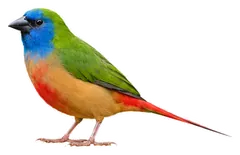 Pin-tailed ParrotfinchErythrura prasina
 Green-faced ParrotfinchErythrura viridifacies
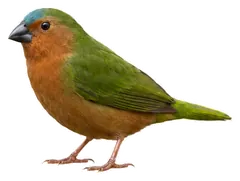 Tawny-breasted ParrotfinchErythrura hyperythra
 Red-throated ParrotfinchErythrura psittacea
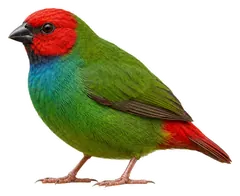 Fiji ParrotfinchErythrura pealii
 Royal ParrotfinchErythrura regia
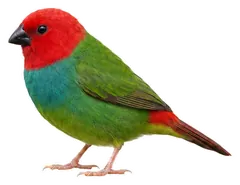 Red-headed ParrotfinchErythrura cyaneovirens
 Pink-billed ParrotfinchErythrura kleinschmidti
 Tricolored ParrotfinchErythrura tricolor
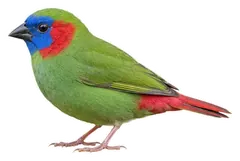 Red-eared ParrotfinchErythrura coloria
 Papuan ParrotfinchErythrura papuana
 WebP · 1070 px
In other languages
- EnglishBlue-faced Parrotfinch
- 简体中文蓝脸鹦雀
- 繁體中文藍臉鸚雀
- 日本語ナンヨウセイコウチョウ
- DeutschDreifarben-Papageiamadine
- FrançaisDiamant de Kittlitz
- EspañolDiamante cariazul
- Portuguêsdiamante-de-cara-azul
- ItalianoDiamante facciazzurra
- NederlandsBlauwmaskerpapegaaiamadine
- РусскийСинелицая амадина
- Svenskablåhuvad amadin
- DanskBlåhovedet Papegøjeamadine
- Polskipapuzik trójbarwny