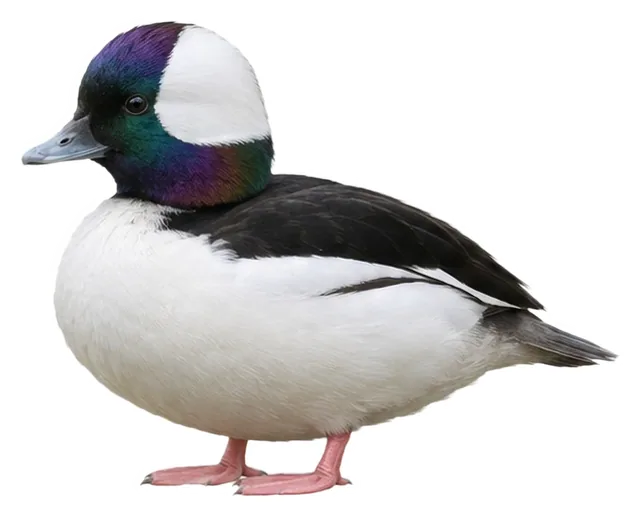
Bufflehead
Bucephala albeola (Linnaeus, 1758)
32–40 cmLength398 gWeight
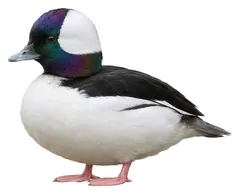
The bufflehead (Bucephala albeola) is a small sea duck of the genus Bucephala, the goldeneyes.
Busiest months: January, March–April and November · Most records: United States, Canada, Mexico
AI-generated illustration. It may contain mistakes. · How the stickers are made
Records by month · United States · Bufflehead
| Month | Records |
|---|---|
| January | 113,718 |
| February | 91,155 |
| March | 114,510 |
| April | 92,987 |
| May | 24,365 |
| June | 2,986 |
| July | 1,867 |
| August | 1,630 |
| September | 1,742 |
| October | 17,616 |
| November | 99,929 |
| December | 95,833 |
Counts come from the birding hotspots covered by Field Stickers. eBird records via GBIF up to 2024-12-31. A record means someone listed it; more records partly mean more birders, not more birds. eBird / GBIF
Where and when it's recorded

Bufflehead has been recorded at 738 of the 8,171 birding hotspots we track, in 18 countries and regions.
Records by month Northern Hemisphere
Where it's recorded most
- Union Bay Natural Area/Montlake FillUnited States13,636 records
- Tommy Thompson ParkCanada11,549 records
- Toronto – Colonel Samuel Smith ParkCanada11,464 records
More places
- Billy Frank Jr. Nisqually NWRUnited States10,820 records
- Parker River NWRUnited States9,584 records
- Calgary – Carburn ParkCanada9,212 records
- Reifel Bird SanctuaryCanada9,173 records
- Central ParkUnited States8,224 records
- Edwin B. Forsythe NWRUnited States8,137 records
- North Vancouver – Maplewood Flats Conservation AreaCanada7,173 records
Countries and regions with the most records
eBird records via GBIF up to 2024-12-31. A record means someone listed it; more records partly mean more birders, not more birds.
About
The bufflehead (Bucephala albeola) is a small sea duck of the genus Bucephala, the goldeneyes. It breeds in Alaska and Canada and migrates in winter to southern North America. This species was first described by Carl Linnaeus in his landmark 1758 10th edition of Systema Naturae as Anas albeola.
Excerpt from Wikipedia, CC BY-SA 4.0 · authors · Read more on Wikipedia
Questions
How big is the Bufflehead?
The Bufflehead is about 32–40 cm long and weighs around 398 g.
Where does the Bufflehead live?
Its breeding range: North America: subarctic west-central Alaska and Canada east to eastern Quebec and (locally) northwestern, north-central USA. It is most often recorded in United States, Canada and Mexico.
When is the best time to see the Bufflehead?
At the hotspots we track, it is recorded most in January, March, April and November (Northern Hemisphere).
Is the Bufflehead endangered?
The IUCN Red List classifies the Bufflehead as Least Concern.
What does the Bufflehead eat?
Main food: Fish, shrimp & shellfish.
What family is the Bufflehead in?
It belongs to the family Ducks, Geese, Swans (Anatidae), order Anseriformes.
At a glance
- Length
- 32–40 cm
- Weight
- 398 g
- Habitat
- Wetland
- Diet
- Fish, shrimp & shellfish
- Lifestyle
- On the water surface
- Migration
- Migratory
- Conservation
- Least Concern
More measurements
- Wing
- 161 mm
- Tail
- 65 mm
- Bill
- 29 mm
- Tarsus
- 30 mm
Averages from the AVONET dataset; length from field guides where available.
Range
North America: subarctic west-central Alaska and Canada east to eastern Quebec and (locally) northwestern, north-central USA
Breeding range, IOC World Bird List 15.2
Classification
- Order
- Anseriformes
- Family
- Ducks, Geese, Swans Anatidae
- Genus
- Bucephala
Other birds in the genus Bucephala
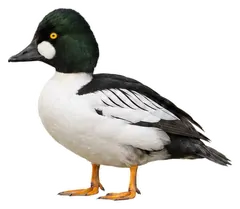 Common GoldeneyeBucephala clangula
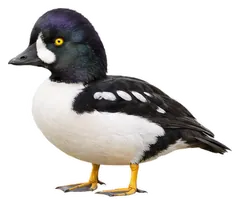 Barrow's GoldeneyeBucephala islandica
 White-faced Whistling DuckDendrocygna viduata
 Black-bellied Whistling DuckDendrocygna autumnalis
 Spotted Whistling DuckDendrocygna guttata
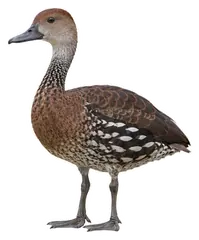 West Indian Whistling DuckDendrocygna arborea
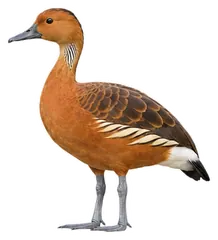 Fulvous Whistling DuckDendrocygna bicolor
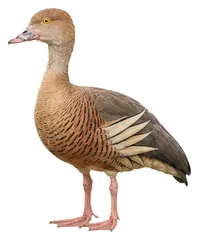 Plumed Whistling DuckDendrocygna eytoni
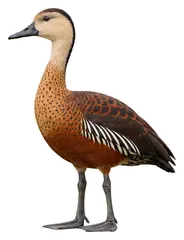 Wandering Whistling DuckDendrocygna arcuata
 Lesser Whistling DuckDendrocygna javanica
 WebP · 1070 px