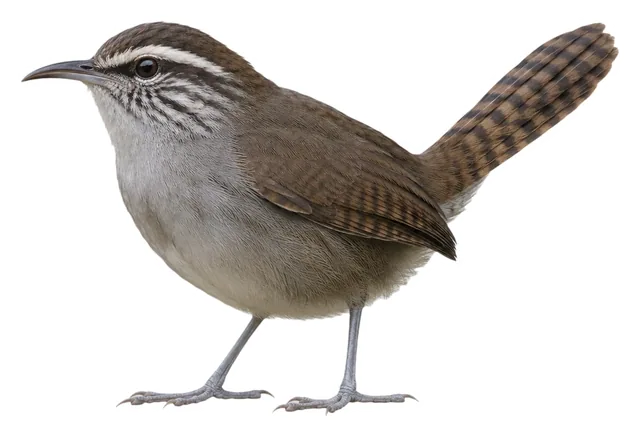
Canebrake Wren
Cantorchilus zeledoni (Ridgway, 1878)
14 cmLength24 gWeight
The canebrake wren (Cantorchilus zeledoni) is a species of bird in the family Troglodytidae.
Busiest months: January–March · Most records: Costa Rica, Panama, Nicaragua
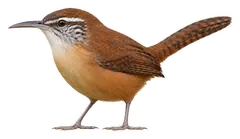
AI-generated illustration. It may contain mistakes. · How the stickers are made
Where and when it's recorded

Canebrake Wren has been recorded at 35 of the 8,171 birding hotspots we track, in 3 countries and regions.
Records by month Northern Hemisphere
Where it's recorded most
- Refugio mixto Caño NegroCosta Rica1,431 records
- Comandancia de Sarapiquí RoadCosta Rica634 records
- Medio Queso wetlandCosta Rica566 records
More places
- Estación Biológica La Selva-OTSCosta Rica550 records
- Refugio de Vida Silvestre Lapa Verde – Sector ChilamateCosta Rica362 records
- Maquenque Eco-LodgeCosta Rica355 records
- Changuinola Canal – San San-Pond SakPanama354 records
- California – San San-Pond SakPanama151 records
- Río Changuinola y DesembocaduraPanama139 records
- RB Indio Maíz – Entrada y Refugio BartolaNicaragua117 records
Countries and regions with the most records
eBird records via GBIF up to 2024-12-31. A record means someone listed it; more records partly mean more birders, not more birds.
About
The canebrake wren (Cantorchilus zeledoni) is a species of bird in the family Troglodytidae. It is found in Costa Rica, Nicaragua, and Panama.
Excerpt from Wikipedia, CC BY-SA 4.0 · authors · Read more on Wikipedia
Questions
How big is the Canebrake Wren?
The Canebrake Wren is about 14 cm long and weighs around 24 g.
Where does the Canebrake Wren live?
Its breeding range: Middle America: eastern Nicaragua, eastern Costa Rica and northwestern Panama. It is most often recorded in Costa Rica, Panama and Nicaragua.
When is the best time to see the Canebrake Wren?
At the hotspots we track, it is recorded most in January, February and March (Northern Hemisphere).
Is the Canebrake Wren endangered?
The IUCN Red List classifies the Canebrake Wren as Least Concern.
What does the Canebrake Wren eat?
Main food: Insects & other invertebrates.
What family is the Canebrake Wren in?
It belongs to the family Wrens (Troglodytidae), order Passerines (Passeriformes).
At a glance
- Length
- 14 cm
- Weight
- 24 g
- Habitat
- Woodland
- Diet
- Insects & other invertebrates
- Lifestyle
- Perches in trees
- Migration
- Resident (barely migrates)
- Conservation
- Least Concern
More measurements
- Wing
- 57 mm
- Tail
- 53 mm
- Bill
- 18 mm
- Tarsus
- 24 mm
Averages from the AVONET dataset; length from field guides where available.
Range
Middle America: eastern Nicaragua, eastern Costa Rica and northwestern Panama
Breeding range, IOC World Bird List 15.2
Classification
- Order
- Passerines Passeriformes
- Family
- Wrens Troglodytidae
- Genus
- Cantorchilus
Other birds in the genus Cantorchilus
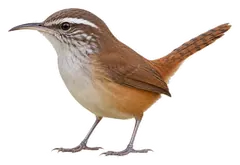 Cabanis's WrenCantorchilus modestus
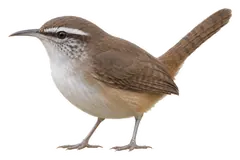 Isthmian WrenCantorchilus elutus
 Buff-breasted WrenCantorchilus leucotis
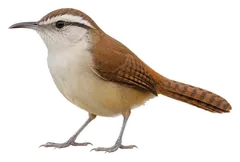 Superciliated WrenCantorchilus superciliaris
 Fawn-breasted WrenCantorchilus guarayanus
 Long-billed WrenCantorchilus longirostris
 Grey WrenCantorchilus griseus
 Riverside WrenCantorchilus semibadius
 Bay WrenCantorchilus nigricapillus
 Stripe-breasted WrenCantorchilus thoracicus
 Stripe-throated WrenCantorchilus leucopogon
 WebP · 1070 px