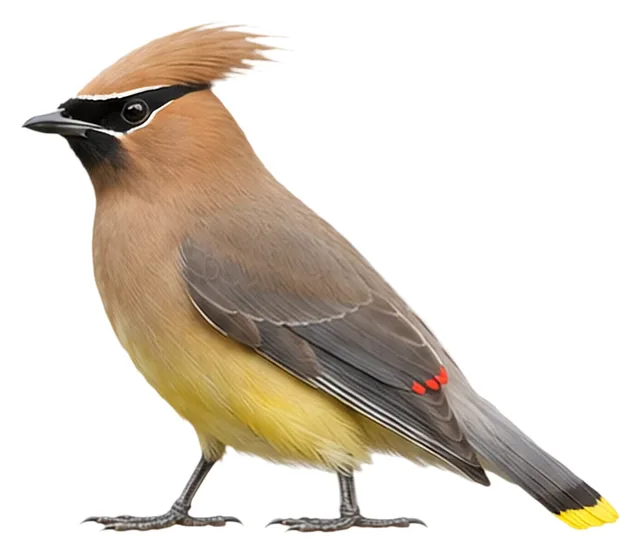
Cedar Waxwing
Bombycilla cedrorum Vieillot, 1808
32 gWeight
The cedar waxwing (Bombycilla cedrorum) is a member of the family Bombycillidae or waxwing family of passerine birds.
Busiest months: May · Most records: United States, Canada, Mexico
AI-generated illustration. It may contain mistakes. · How the stickers are made
Records by month · United States · Cedar Waxwing
| Month | Records |
|---|---|
| January | 27,312 |
| February | 20,462 |
| March | 25,646 |
| April | 46,832 |
| May | 132,521 |
| June | 66,467 |
| July | 57,409 |
| August | 74,224 |
| September | 87,651 |
| October | 55,987 |
| November | 38,076 |
| December | 25,238 |
Counts come from the birding hotspots covered by Field Stickers. eBird records via GBIF up to 2024-12-31. A record means someone listed it; more records partly mean more birders, not more birds. eBird / GBIF
Where and when it's recorded

Cedar Waxwing has been recorded at 963 of the 8,171 birding hotspots we track, in 19 countries and regions.
Records by month Northern Hemisphere
Where it's recorded most
- Parker River NWRUnited States13,947 records
- Point Pelee National ParkCanada10,592 records
- Montrose Point Bird Sanctuary, Lincoln Park, ChicagoUnited States9,219 records
More places
- Prospect ParkUnited States8,849 records
- Reifel Bird SanctuaryCanada8,421 records
- Central ParkUnited States8,369 records
- Union Bay Natural Area/Montlake FillUnited States8,302 records
- Billy Frank Jr. Nisqually NWRUnited States7,625 records
- Sandy HookUnited States7,419 records
- Monhegan IslandUnited States6,801 records
Countries and regions with the most records
eBird records via GBIF up to 2024-12-31. A record means someone listed it; more records partly mean more birders, not more birds.
About
The cedar waxwing (Bombycilla cedrorum) is a member of the family Bombycillidae or waxwing family of passerine birds. It is a medium-sized bird that is mainly brown, gray, and yellow. Some of the wing feathers have red tips, which resemble sealing wax, giving the bird its common name.
Excerpt from Wikipedia, CC BY-SA 4.0 · authors · Read more on Wikipedia
Questions
How big is the Cedar Waxwing?
The Cedar Waxwing weighs around 32 g.
Where does the Cedar Waxwing live?
Its breeding range: North America, Middle America, South America: Canada to Venezuela and Colombia. It is most often recorded in United States, Canada and Mexico.
When is the best time to see the Cedar Waxwing?
At the hotspots we track, it is recorded most in May (Northern Hemisphere).
Is the Cedar Waxwing endangered?
The IUCN Red List classifies the Cedar Waxwing as Least Concern.
What does the Cedar Waxwing eat?
Main food: Fruit.
What family is the Cedar Waxwing in?
It belongs to the family Waxwings (Bombycillidae), order Passerines (Passeriformes).
At a glance
- Weight
- 32 g
- Habitat
- Woodland
- Diet
- Fruit
- Lifestyle
- Perches in trees
- Migration
- Migratory
- Conservation
- Least Concern
More measurements
- Wing
- 95 mm
- Tail
- 60 mm
- Bill
- 15 mm
- Tarsus
- 17 mm
Averages from the AVONET dataset; length from field guides where available.
Range
North America, Middle America, South America: Canada to Venezuela and Colombia
Breeding range, IOC World Bird List 15.2
Classification
- Order
- Passerines Passeriformes
- Family
- Waxwings Bombycillidae
- Genus
- Bombycilla
Other birds in the genus Bombycilla
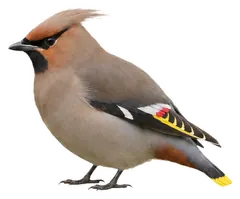 Bohemian WaxwingBombycilla garrulus
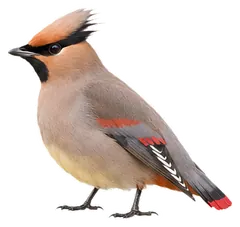 Japanese WaxwingBombycilla japonica
 WebP · 1070 px
In other languages
- EnglishCedar Waxwing
- 简体中文雪松太平鸟
- 繁體中文雪松太平鳥
- 日本語ヒメレンジャク
- 한국어애기여새
- DeutschZedernseidenschwanz
- FrançaisJaseur d’Amérique
- EspañolAmpelis americano
- Portuguêspicoteiro-americano
- ItalianoBeccofrusone dei cedri
- NederlandsCederpestvogel
- РусскийКедровый свиристель
- Svenskatujasidensvans
- DanskCedersilkehale
- Polskijemiołuszka cedrowa