
Cinereous Becard
Pachyramphus rufus (Boddaert, 1783)
13–14 cmLength19 gWeight
The cinereous becard (Pachyramphus rufus) is a species of bird in the family Tityridae, the tityras, becards, and allies.
Busiest months: January–March and May · Most records: Colombia, Venezuela, Guyana
AI-generated illustration. It may contain mistakes. · How the stickers are made
Where and when it's recorded

Cinereous Becard has been recorded at 151 of the 8,171 birding hotspots we track, in 8 countries and regions.
Records by month Northern Hemisphere
Where it's recorded most
- RN Laguna de SonsoColombia571 records
- Hotel Tinamú Birding Nature ReserveColombia424 records
- Laguna El TabacalColombia256 records
More places
- Ecohotel El DiamanteColombia192 records
- Santuario Santa FeColombia190 records
- Georgetown Botanical GardensGuyana188 records
- RN CauquitáColombia182 records
- Reinita Cielo Azul ProAves ReserveColombia169 records
- Estancia BajosombraColombia138 records
- Refugio de las aves - La PiñuelaColombia115 records
Countries and regions with the most records
eBird records via GBIF up to 2024-12-31. A record means someone listed it; more records partly mean more birders, not more birds.
About
The cinereous becard (Pachyramphus rufus) is a species of bird in the family Tityridae, the tityras, becards, and allies. It is found in Brazil, Colombia, French Guiana, Guyana, Panama, Peru, Suriname, Venezuela, and possibly Ecuador.
Excerpt from Wikipedia, CC BY-SA 4.0 · authors · Read more on Wikipedia
Questions
How big is the Cinereous Becard?
The Cinereous Becard is about 13–14 cm long and weighs around 19 g.
Where does the Cinereous Becard live?
Its breeding range: Middle America, South America: Panama and northern South America, Amazonia. It is most often recorded in Colombia, Venezuela and Guyana.
When is the best time to see the Cinereous Becard?
At the hotspots we track, it is recorded most in January, February, March and May (Northern Hemisphere).
Is the Cinereous Becard endangered?
The IUCN Red List classifies the Cinereous Becard as Least Concern.
What does the Cinereous Becard eat?
Main food: Insects & other invertebrates.
What family is the Cinereous Becard in?
It belongs to the family Tityras, Becards & Allies (Tityridae), order Passerines (Passeriformes).
At a glance
- Length
- 13–14 cm
- Weight
- 19 g
- Habitat
- Forest
- Diet
- Insects & other invertebrates
- Lifestyle
- Perches in trees
- Migration
- Resident (barely migrates)
- Conservation
- Least Concern
More measurements
- Wing
- 68 mm
- Tail
- 48 mm
- Bill
- 15 mm
- Tarsus
- 18 mm
Averages from the AVONET dataset; length from field guides where available.
Range
Middle America, South America: Panama and northern South America, Amazonia
Breeding range, IOC World Bird List 15.2
Classification
- Order
- Passerines Passeriformes
- Family
- Tityras, Becards & Allies Tityridae
- Genus
- Pachyramphus
Other birds in the genus Pachyramphus
 Green-backed BecardPachyramphus viridis
 Barred BecardPachyramphus versicolor
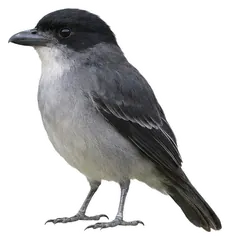 Slaty BecardPachyramphus spodiurus
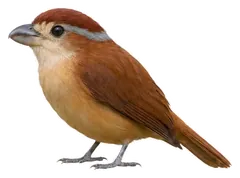 Chestnut-crowned BecardPachyramphus castaneus
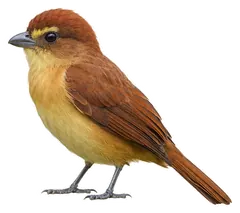 Cinnamon BecardPachyramphus cinnamomeus
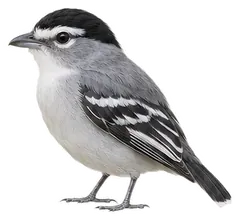 Cryptic BecardPachyramphus salvini
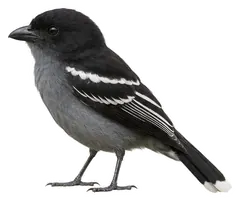 White-winged BecardPachyramphus polychopterus
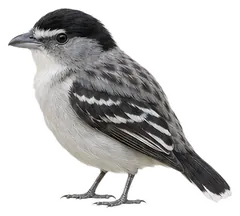 Black-capped BecardPachyramphus marginatus
 Black-and-white BecardPachyramphus albogriseus
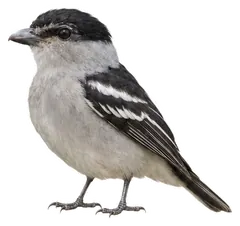 Grey-collared BecardPachyramphus major
 Glossy-backed BecardPachyramphus surinamus
 One-colored BecardPachyramphus homochrous
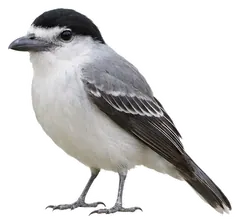 WebP · 1070 px