Cinereous Vulture
Aegypius monachus (Linnaeus, 1766)
120 cmLength250 cmWingspan9.3 kgWeight
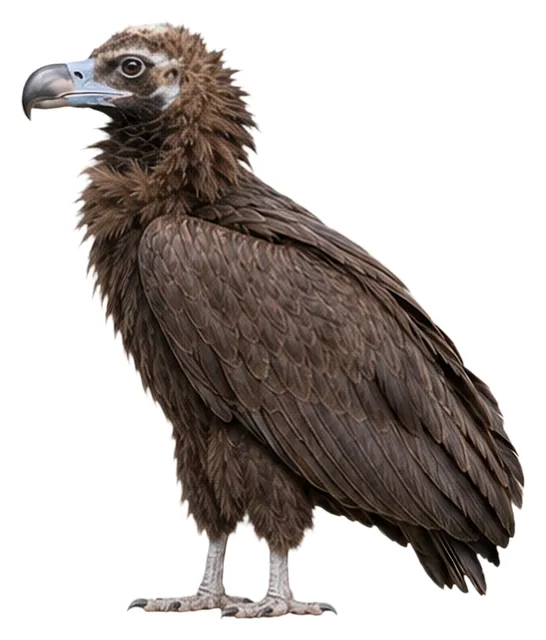
This large, blackish vulture has a wingspan of up to 3 m and neck feathers resembling a monk’s hood.
Busiest months: April–May · Most records: Spain, Mongolia, India
Looks like Himalayan Vulture
AI-generated illustration. It may contain mistakes. · How the stickers are made
How to identify
Field marks
- Bare skin on head and neck blue-gray, whitish above eyes
- Bill massive and blue-gray
- Wings very broad, like “barn doors”
- Appears almost entirely black in flight at a distance
Male, female and young
Size overlaps broadly between the sexes, with females usually slightly heavier; immatures have rufous-brown upperparts and a paler belly.
Voice
Usually very quiet, giving only a few moans, roars or gurgles near the nest.
Similar species
Where and when it's recorded

Cinereous Vulture has been recorded at 435 of the 8,171 birding hotspots we track, in 37 countries and regions.
Records by month Northern Hemisphere
To protect this bird from disturbance, we don't list exact sites.
Countries and regions with the most records
eBird records via GBIF up to 2024-12-31. A record means someone listed it; more records partly mean more birders, not more birds.
About
The cinereous vulture (Aegypius monachus), also known as the black vulture, Eurasian black vulture, and monk vulture, is a very large raptor in the family Accipitridae distributed through much of temperate Eurasia.
Excerpt from Wikipedia, CC BY-SA 4.0 · authors · Read more on Wikipedia
Questions
How big is the Cinereous Vulture?
The Cinereous Vulture is about 120 cm long, with a wingspan of 250 cm and weighs around 9.3 kg.
Where does the Cinereous Vulture live?
Its breeding range: Palearctic: southern Europe to Central Asia, Pakistan and northwestern India. It is most often recorded in Spain, Mongolia and India.
When is the best time to see the Cinereous Vulture?
At the hotspots we track, it is recorded most in April and May (Northern Hemisphere).
Is the Cinereous Vulture endangered?
The IUCN Red List classifies the Cinereous Vulture as Near Threatened.
What does the Cinereous Vulture eat?
Main food: Carrion.
What family is the Cinereous Vulture in?
It belongs to the family Kites, Hawks, Eagles (Accipitridae), order Accipitriformes.
How do you identify the Cinereous Vulture?
Bare skin on head and neck blue-gray, whitish above eyes. Bill massive and blue-gray. Wings very broad, like “barn doors”.
How do male and female Cinereous Vulture differ?
Size overlaps broadly between the sexes, with females usually slightly heavier; immatures have rufous-brown upperparts and a paler belly.
How do you tell the Cinereous Vulture from the Himalayan Vulture?
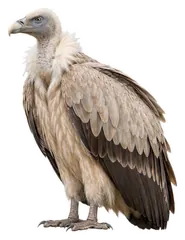
Similar in size and shape; Cinereous Vulture appears slightly heavier, with a slightly longer bill; Gyps vultures have paler plumage, often with stripes.
At a glance
- Length
- 120 cm
- Wingspan
- 250 cm
- Weight
- 9.3 kg
- Habitat
- Forest
- Diet
- Carrion
- Lifestyle
- Active on the ground
- Migration
- Resident (barely migrates)
- Conservation
- Near Threatened
More measurements
- Wing
- 734 mm
- Tail
- 371 mm
- Bill
- 88 mm
- Tarsus
- 134 mm
Averages from the AVONET dataset; length from field guides where available.
Range
Palearctic: southern Europe to Central Asia, Pakistan and northwestern India
Breeding range, IOC World Bird List 15.2
Classification
- Order
- Accipitriformes
- Family
- Kites, Hawks, Eagles Accipitridae
- Genus
- Aegypius
More from the family Kites, Hawks, Eagles
 Pearl KiteGampsonyx swainsonii
 Scissor-tailed KiteChelictinia riocourii
 White-tailed KiteElanus leucurus
 Black-winged KiteElanus caeruleus
 Black-shouldered KiteElanus axillaris
 Letter-winged KiteElanus scriptus
 African Harrier-HawkPolyboroides typus
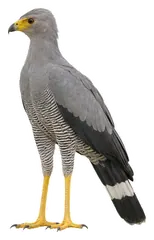 Madagascar Harrier-HawkPolyboroides radiatus
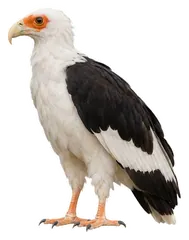 Palm-nut VultureGypohierax angolensis
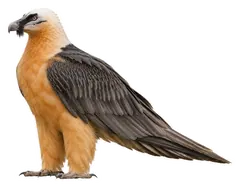 Bearded VultureGypaetus barbatus
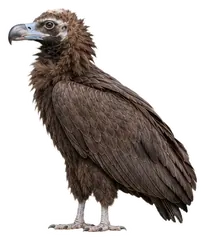
Download illustration
Free to use with credit: “Illustration: Field Stickers”. AI-generated. Its appearance was checked against a reference photo by Juan Lacruz; the pose follows our standard. ↗
