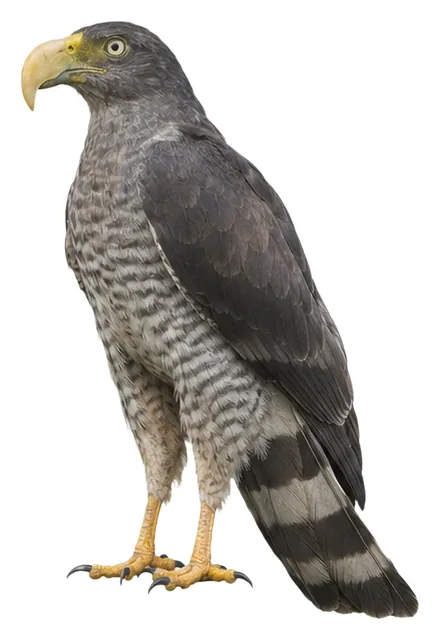
Cuban Kite
Chondrohierax wilsonii (Cassin, 1847)
286 gWeight
The Cuban kite (Chondrohierax wilsonii) is a bird of prey in the family Accipitridae which also includes many other diurnal raptors such as kites, eagles and harriers.
AI-generated illustration. It may contain mistakes. · How the stickers are made
Where and when it's recorded
No records at the public birding hotspots we track. It may be rare, remote, or its locations protected.
About
The Cuban kite (Chondrohierax wilsonii) is a bird of prey in the family Accipitridae which also includes many other diurnal raptors such as kites, eagles and harriers. The species was originally described in 1847 by John Cassin from material at The Academy of Natural Sciences of Philadelphia. It is endemic to Cuba.
Excerpt from Wikipedia, CC BY-SA 4.0 · authors · Read more on Wikipedia
Questions
How big is the Cuban Kite?
The Cuban Kite weighs around 286 g.
Where does the Cuban Kite live?
Its breeding range: North America: eastern Cuba.
Is the Cuban Kite endangered?
The IUCN Red List classifies the Cuban Kite as Critically Endangered.
What does the Cuban Kite eat?
Main food: Insects & other invertebrates.
What family is the Cuban Kite in?
It belongs to the family Kites, Hawks, Eagles (Accipitridae), order Accipitriformes.
At a glance
- Weight
- 286 g
- Habitat
- Forest
- Diet
- Insects & other invertebrates
- Lifestyle
- Perches in trees
- Migration
- Partial migrant
- Conservation
- Critically Endangered
More measurements
- Wing
- 244 mm
- Tail
- 185 mm
- Bill
- 38 mm
- Tarsus
- 23 mm
Averages from the AVONET dataset; length from field guides where available.
Range
North America: eastern Cuba
Breeding range, IOC World Bird List 15.2
Classification
- Order
- Accipitriformes
- Family
- Kites, Hawks, Eagles Accipitridae
- Genus
- Chondrohierax
Other birds in the genus Chondrohierax
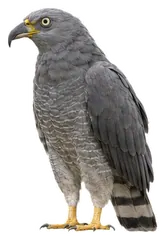 Hook-billed KiteChondrohierax uncinatus
 Pearl KiteGampsonyx swainsonii
 Scissor-tailed KiteChelictinia riocourii
 White-tailed KiteElanus leucurus
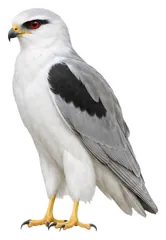 Black-winged KiteElanus caeruleus
 Black-shouldered KiteElanus axillaris
 Letter-winged KiteElanus scriptus
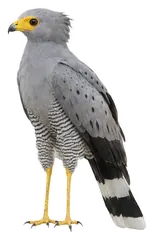 African Harrier-HawkPolyboroides typus
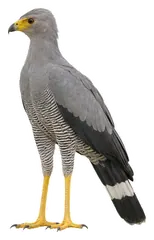 Madagascar Harrier-HawkPolyboroides radiatus
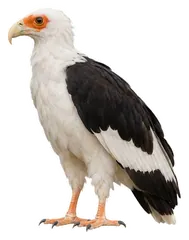 Palm-nut VultureGypohierax angolensis
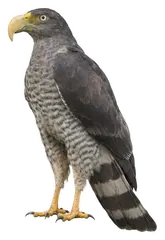
Download illustration
Free to use with credit: “Illustration: Field Stickers”. AI-generated. Its appearance was checked against a reference photo by Academy of Natural Sciences of Drexel University; the pose follows our standard. ↗