
Dark-fronted Babbler
Dumetia atriceps (Jerdon, 1839)
16 gWeight
The dark-fronted babbler (Dumetia atriceps) is an Old World babbler found in the Western Ghats of India and the forests of Sri Lanka.
Busiest months: December–February · Most records: Sri Lanka, India
AI-generated illustration. It may contain mistakes. · How the stickers are made
Where and when it's recorded

Dark-fronted Babbler has been recorded at 64 of the 8,171 birding hotspots we track, in 2 countries and regions.
Records by month Northern Hemisphere
Where it's recorded most
- Bondla Wildlife SanctuaryIndia689 records
- Sinharaja Forest ReserveSri Lanka643 records
- Sinharaja NP – Kudawa accessSri Lanka394 records
More places
- HergaIndia333 records
- Thattekad Bird Sanctuary – UrulanthanniIndia310 records
- Eshwar Nagar, ManipalIndia307 records
- Horton Plains National ParkSri Lanka283 records
- Thattekkad Bird SanctuaryIndia235 records
- College of Veterinary and Animal Sciences, PookodeIndia131 records
- Kitulgala – Kelani Valley/Makandawa Forest ReserveSri Lanka123 records
Countries and regions with the most records
eBird records via GBIF up to 2024-12-31. A record means someone listed it; more records partly mean more birders, not more birds.
About
The dark-fronted babbler (Dumetia atriceps) is an Old World babbler found in the Western Ghats of India and the forests of Sri Lanka. They are small chestnut brown birds with a dark black cap, a whitish underside and pale yellow iris. They forage in flocks in the undergrowth of forests constantly making calls and uttering alarm calls when disturbed.
Excerpt from Wikipedia, CC BY-SA 4.0 · authors · Read more on Wikipedia
Questions
How big is the Dark-fronted Babbler?
The Dark-fronted Babbler weighs around 16 g.
Where does the Dark-fronted Babbler live?
Its breeding range: Oriental: western India to Sri Lanka. It is most often recorded in Sri Lanka and India.
When is the best time to see the Dark-fronted Babbler?
At the hotspots we track, it is recorded most in January, February and December (Northern Hemisphere).
Is the Dark-fronted Babbler endangered?
The IUCN Red List classifies the Dark-fronted Babbler as Least Concern.
What does the Dark-fronted Babbler eat?
Main food: Insects & other invertebrates.
What family is the Dark-fronted Babbler in?
It belongs to the family Babblers, Scimitar Babblers (Timaliidae), order Passerines (Passeriformes).
At a glance
- Weight
- 16 g
- Habitat
- Shrubland
- Diet
- Insects & other invertebrates
- Lifestyle
- Varied
- Migration
- Resident (barely migrates)
- Conservation
- Least Concern
More measurements
- Wing
- 59 mm
- Tail
- 48 mm
- Bill
- 14 mm
- Tarsus
- 21 mm
Averages from the AVONET dataset; length from field guides where available.
Range
Oriental: western India to Sri Lanka
Breeding range, IOC World Bird List 15.2
Classification
- Order
- Passerines Passeriformes
- Family
- Babblers, Scimitar Babblers Timaliidae
- Genus
- Dumetia
Other birds in the genus Dumetia
 Tawny-bellied BabblerDumetia hyperythra
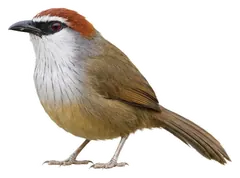 Chestnut-capped BabblerTimalia pileata
 Grey-faced Tit-BabblerMixornis kelleyi
 Grey-cheeked Tit-BabblerMixornis flavicollis
 Kangean Tit-BabblerMixornis prillwitzi
 Pin-striped Tit-BabblerMixornis gularis
 Bold-striped Tit-BabblerMixornis bornensis
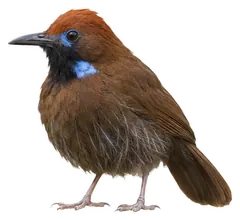 Fluffy-backed Tit-BabblerMacronus ptilosus
 Brown Tit-BabblerMacronus striaticeps
 Golden BabblerCyanoderma chrysaeum
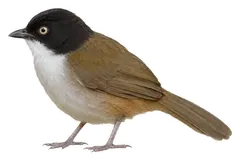 WebP · 1070 px
In other languages
- EnglishDark-fronted Babbler
- 简体中文黑头鹛
- 繁體中文黑頭鶥
- 日本語ズグロインドチメドリ
- DeutschKapuzentyrannentimalie
- FrançaisTimalie à tête noire
- EspañolTimalí frentinegro
- Portuguêstagarela-de-cabeça-preta
- ItalianoGarrulo frontescura
- NederlandsZwartvoorhoofdbabbelaar
- РусскийКапюшонная тимелия
- Svenskasvarthuvad timalia
- DanskSorthovedet Timalie
- Polskikurtnik czarnoczelny