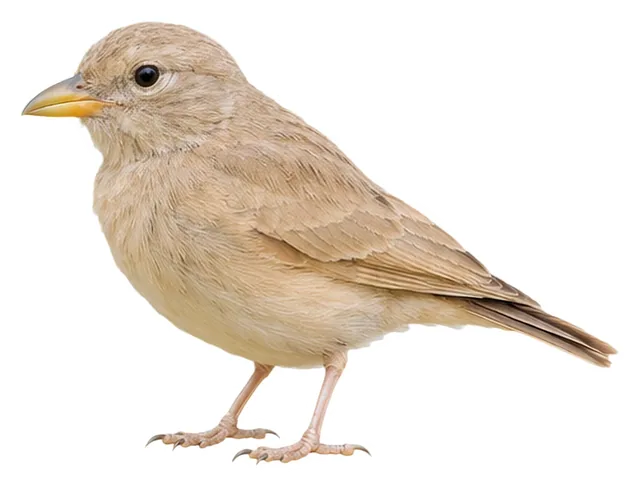
Desert Lark
Ammomanes deserti (Lichtenstein, MHC, 1823)
24 gWeight
The desert lark (Ammomanes deserti) breeds in deserts and semi-deserts from Morocco to western India.
Busiest months: March · Most records: United Arab Emirates, Morocco, Israel
AI-generated illustration. It may contain mistakes. · How the stickers are made
Where and when it's recorded

Desert Lark has been recorded at 70 of the 8,171 birding hotspots we track, in 23 countries and regions.
Records by month Northern Hemisphere
Where it's recorded most
- Green MubazzarahUnited Arab Emirates915 records
- Private estate near Green MubazzarahUnited Arab Emirates402 records
- Wamm FarmsUnited Arab Emirates237 records
More places
- PetraJordan198 records
- Yeruham LakeIsrael180 records
- Tagdilt TrackMorocco157 records
- Eilat – KM20 Flamingo Pools 20Israel145 records
- Kfar AdumimPalestinian Territories135 records
- ) | Gorges du TodraMorocco129 records
- International Birding and Research Center Eilat (IBRCE)Israel119 records
Countries and regions with the most records
eBird records via GBIF up to 2024-12-31. A record means someone listed it; more records partly mean more birders, not more birds.
About
The desert lark (Ammomanes deserti) breeds in deserts and semi-deserts from Morocco to western India. It has a very wide distribution and faces no obvious threats, and surveys have shown that it is slowly increasing in numbers as it expands its range. The International Union for Conservation of Nature has rated its conservation status as being of "least concern".
Excerpt from Wikipedia, CC BY-SA 4.0 · authors · Read more on Wikipedia
Questions
How big is the Desert Lark?
The Desert Lark weighs around 24 g.
Where does the Desert Lark live?
Its breeding range: Africa, Palearctic: Morocco to western India. It is most often recorded in United Arab Emirates, Morocco and Israel.
When is the best time to see the Desert Lark?
At the hotspots we track, it is recorded most in March (Northern Hemisphere).
Is the Desert Lark endangered?
The IUCN Red List classifies the Desert Lark as Least Concern.
What does the Desert Lark eat?
Main food: Omnivore.
What family is the Desert Lark in?
It belongs to the family Larks (Alaudidae), order Passerines (Passeriformes).
At a glance
- Weight
- 24 g
- Habitat
- Desert
- Diet
- Omnivore
- Lifestyle
- Active on the ground
- Migration
- Partial migrant
- Conservation
- Least Concern
More measurements
- Wing
- 96 mm
- Tail
- 64 mm
- Bill
- 16 mm
- Tarsus
- 21 mm
Averages from the AVONET dataset; length from field guides where available.
Range
Africa, Palearctic: Morocco to western India
Breeding range, IOC World Bird List 15.2
Classification
- Order
- Passerines Passeriformes
- Family
- Larks Alaudidae
- Genus
- Ammomanes
Other birds in the genus Ammomanes
 Bar-tailed LarkAmmomanes cinctura
 Rufous-tailed LarkAmmomanes phoenicura
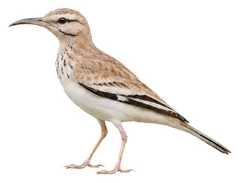 Greater Hoopoe-LarkAlaemon alaudipes
 Lesser Hoopoe-LarkAlaemon hamertoni
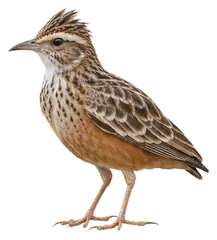 Beesley's LarkChersomanes beesleyi
 Spike-heeled LarkChersomanes albofasciata
 Gray's LarkAmmomanopsis grayi
 Short-clawed LarkCerthilauda chuana
 Karoo Long-billed LarkCerthilauda subcoronata
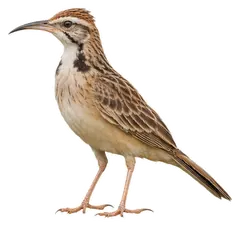 Eastern Long-billed LarkCerthilauda semitorquata
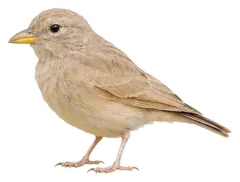
Download illustration
Free to use with credit: “Illustration: Field Stickers”. AI-generated. Its appearance was checked against a reference photo by Jan Ebr & Ivana Ebrová; the pose follows our standard. ↗