
Eurasian Teal
Anas crecca Linnaeus, 1758
≈33 cmLength342 gWeight
This is a very small duck with a large green “comma” on the male’s face.
Busiest months: October–January and March · Most records: United Kingdom, China, Spain
AI-generated illustration. It may contain mistakes. · How the stickers are made
How to identify
Field marks
- Male has a green comma-shaped band from around the eye to the side of neck
- Speculum emerald-green
- Male has a conspicuous horizontal white band along the side when the wings are folded
- Male has creamy-yellow undertail-coverts edged with black
Male, female and young
Female brown overall, without the green comma, white line on the side or creamy-yellow rear, but still has an emerald-green speculum.
Where and when it's recorded

Eurasian Teal has been recorded at 2,503 of the 8,171 birding hotspots we track, in 114 countries and regions.
Records by month Northern Hemisphere
Where it's recorded most
- Titchwell Marsh RSPB ReserveUnited Kingdom7,380 records
- Amwell HMWT NRUnited Kingdom5,557 records
- Minsmere RSPB ReserveUnited Kingdom5,124 records
More places
- Taipei – Tianliaoyang WetlandTaiwan (China)4,807 records
- Cley & Salthouse Marshes NWT NR – Cley Marshes including Hides and Visitor CentreUnited Kingdom4,044 records
- Beddington FarmlandsUnited Kingdom3,997 records
- Txingudi – PlaiaundiSpain3,896 records
- Huajiang IBA – Huajiang Wild Duck Nature Park (Huajiang to Zhongxing Bridge)Taiwan (China)3,461 records
- Rutland WaterUnited Kingdom3,221 records
- WWT Slimbridge Wetland CentreUnited Kingdom3,197 records
Countries and regions with the most records
eBird records via GBIF up to 2024-12-31. A record means someone listed it; more records partly mean more birders, not more birds.
About
The Eurasian teal (Anas crecca), common teal, or Eurasian green-winged teal is a common and widespread duck that breeds in temperate Eurosiberia and migrates south in winter. The Eurasian teal is often called simply the teal due to being the only one of these small dabbling ducks in much of its range. The bird gives its name to the blue-green colour teal.
Excerpt from Wikipedia, CC BY-SA 4.0 · authors · Read more on Wikipedia
Questions
How big is the Eurasian Teal?
The Eurasian Teal is about ≈33 cm long and weighs around 342 g.
Where does the Eurasian Teal live?
Its breeding range: Palearctic, North America: northern, central Europe, Asia and Aleutian Islands. It is most often recorded in United Kingdom, China and Spain.
When is the best time to see the Eurasian Teal?
At the hotspots we track, it is recorded most in January, March, October, November and December (Northern Hemisphere).
What does the Eurasian Teal eat?
Main food: Aquatic plants.
What family is the Eurasian Teal in?
It belongs to the family Ducks, Geese, Swans (Anatidae), order Anseriformes.
How do you identify the Eurasian Teal?
Male has a green comma-shaped band from around the eye to the side of neck. Speculum emerald-green. Male has a conspicuous horizontal white band along the side when the wings are folded.
How do male and female Eurasian Teal differ?
Female brown overall, without the green comma, white line on the side or creamy-yellow rear, but still has an emerald-green speculum.
At a glance
- Length
- ≈33 cm
- Weight
- 342 g
- Habitat
- Wetland
- Diet
- Aquatic plants
- Lifestyle
- On the water surface
- Migration
- Partial migrant
More measurements
- Wing
- 179 mm
- Tail
- 62 mm
- Bill
- 36 mm
- Tarsus
- 26 mm
Averages from the AVONET dataset; length from field guides where available.
Range
Palearctic, North America: northern, central Europe, Asia and Aleutian Islands
Breeding range, IOC World Bird List 15.2
Classification
- Order
- Anseriformes
- Family
- Ducks, Geese, Swans Anatidae
- Genus
- Anas
Other birds in the genus Anas
 African Black DuckAnas sparsa
 Yellow-billed DuckAnas undulata
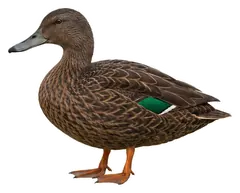 Meller's DuckAnas melleri
 Pacific Black DuckAnas superciliosa
 Laysan DuckAnas laysanensis
 Hawaiian DuckAnas wyvilliana
 Philippine DuckAnas luzonica
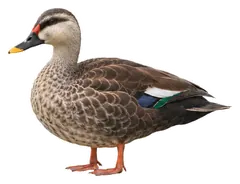 Indian Spot-billed DuckAnas poecilorhyncha
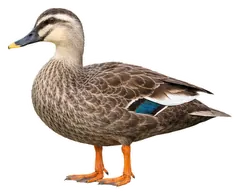 Eastern Spot-billed DuckAnas zonorhyncha
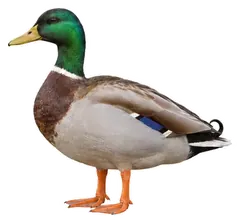 MallardAnas platyrhynchos
 Mottled DuckAnas fulvigula
 American Black DuckAnas rubripes

Download illustration
Free to use with credit: “Illustration: Field Stickers”. AI-generated. Its appearance was checked against a reference photo by Charles J. Sharp; the pose follows our standard. ↗
