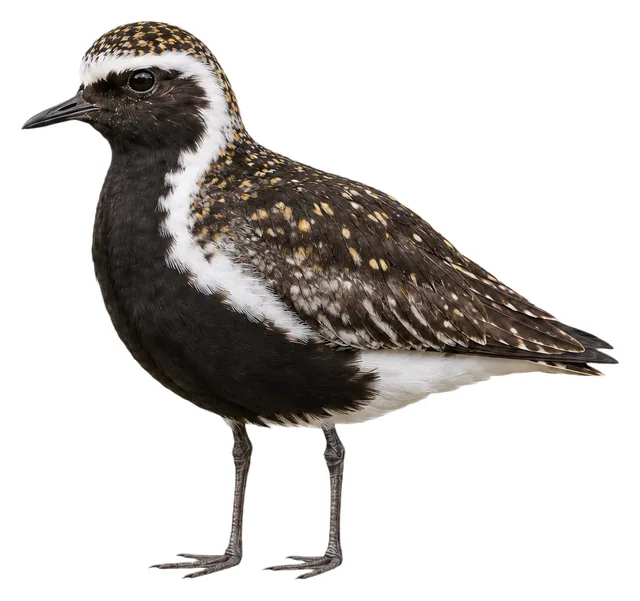
European Golden Plover
Pluvialis apricaria (Linnaeus, 1758)
≈30 cmLength72 cmWingspan214 gWeight
The European golden plover (Pluvialis apricaria), also known as the Eurasian golden plover, greater golden plover, or just the golden plover within Europe, is a relatively large species of plover.
Busiest months: October · Most records: United Kingdom, Iceland, Spain
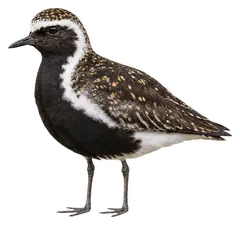
AI-generated illustration. It may contain mistakes. · How the stickers are made
How to identify
Field marks
- White axillaries, visible with wings spread
- Stocky build; wings only slightly longer than the tail
Voice
A single, slightly descending, rather melancholy “tuu”.
Where and when it's recorded

European Golden Plover has been recorded at 889 of the 8,171 birding hotspots we track, in 71 countries and regions.
Records by month Northern Hemisphere
Where it's recorded most
- Titchwell Marsh RSPB ReserveUnited Kingdom4,240 records
- KaldbakstjarnirIceland2,556 records
- Spurn Bird Observatory Recording AreaUnited Kingdom1,828 records
More places
- Frampton Marsh RSPB ReserveUnited Kingdom1,635 records
- Cley & Salthouse Marshes NWT NR – Cley Marshes including Hides and Visitor CentreUnited Kingdom1,616 records
- WWT Slimbridge Wetland CentreUnited Kingdom1,405 records
- Rutland WaterUnited Kingdom974 records
- Oare Marshes LNRUnited Kingdom917 records
- Fair IsleUnited Kingdom865 records
- Lezíria Grande de Vila Franca de Xira – área geralPortugal811 records
Countries and regions with the most records
eBird records via GBIF up to 2024-12-31. A record means someone listed it; more records partly mean more birders, not more birds.
About
The European golden plover (Pluvialis apricaria), also known as the Eurasian golden plover, greater golden plover, or just the golden plover within Europe, is a relatively large species of plover.
Excerpt from Wikipedia, CC BY-SA 4.0 · authors · Read more on Wikipedia
Questions
How big is the European Golden Plover?
The European Golden Plover is about ≈30 cm long, with a wingspan of 72 cm and weighs around 214 g.
Where does the European Golden Plover live?
Its breeding range: Palearctic: inland low Arctic (mainly) to temperate zone: east-central Greenland, Iceland, Faroe Islands, British Isles, northern Germany and Denmark, Fennoscandia, Baltic east to Taimyr Peninsula (north-central Russia). It is most often recorded in United Kingdom, Iceland and Spain.
When is the best time to see the European Golden Plover?
At the hotspots we track, it is recorded most in October (Northern Hemisphere).
Is the European Golden Plover endangered?
The IUCN Red List classifies the European Golden Plover as Least Concern.
What does the European Golden Plover eat?
Main food: Insects & other invertebrates.
What family is the European Golden Plover in?
It belongs to the family Plovers (Charadriidae), order Charadriiformes.
How do you identify the European Golden Plover?
White axillaries, visible with wings spread. Stocky build; wings only slightly longer than the tail.
At a glance
- Length
- ≈30 cm
- Wingspan
- 72 cm
- Weight
- 214 g
- Habitat
- Grassland
- Diet
- Insects & other invertebrates
- Lifestyle
- Active on the ground
- Migration
- Migratory
- Conservation
- Least Concern
More measurements
- Wing
- 181 mm
- Tail
- 70 mm
- Bill
- 25 mm
- Tarsus
- 38 mm
Averages from the AVONET dataset; length from field guides where available.
Range
Palearctic: inland low Arctic (mainly) to temperate zone: east-central Greenland, Iceland, Faroe Islands, British Isles, northern Germany and Denmark, Fennoscandia, Baltic east to Taimyr Peninsula (north-central Russia)
Breeding range, IOC World Bird List 15.2
Classification
- Order
- Charadriiformes
- Family
- Plovers Charadriidae
- Genus
- Pluvialis
Other birds in the genus Pluvialis
 Grey PloverPluvialis squatarola
 Pacific Golden PloverPluvialis fulva
 American Golden PloverPluvialis dominica
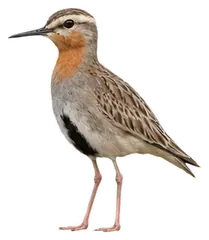 Tawny-throated DotterelOreopholus ruficollis
 Rufous-chested DotterelZonibyx modestus
 Diademed Sandpiper-PloverPhegornis mitchellii
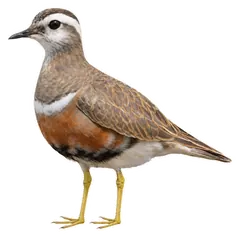 Eurasian DotterelEudromias morinellus
 KilldeerCharadrius vociferus
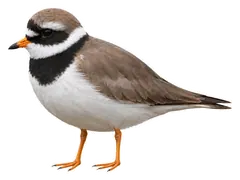 Common Ringed PloverCharadrius hiaticula
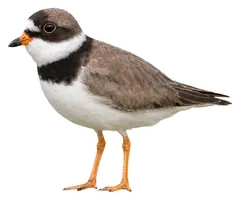 Semipalmated PloverCharadrius semipalmatus
 WebP · 1070 px