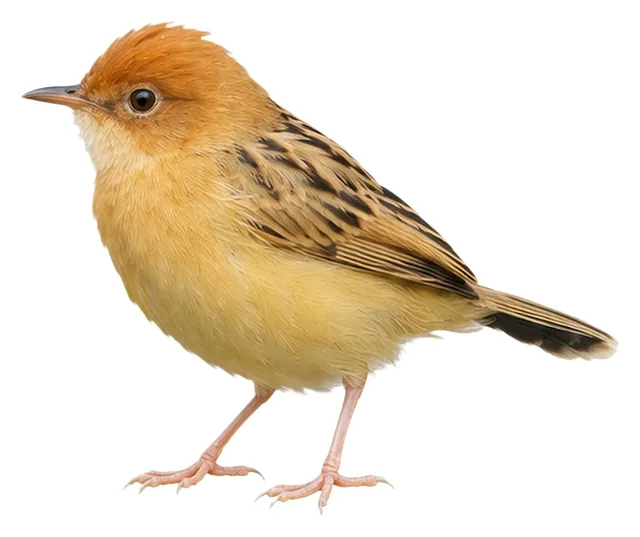
Golden-headed Cisticola
Cisticola exilis (Vigors & Horsfield, 1827)
9–12 cmLength7 gWeight
It is usually found in tall, dense grass; in the breeding season, the male has a golden body, a golden-orange head and a shorter tail.
Busiest months: January and October · Most records: Australia, China, Thailand
Looks like Zitting Cisticola
AI-generated illustration. It may contain mistakes. · How the stickers are made
How to identify
Field marks
- Male in the breeding season has a golden-orange head and golden body
- Shorter tail in the breeding season
- In the non-breeding season, back rufous with black or dark brown markings
- In the non-breeding season, belly cream and throat white
Male, female and young
The male has a golden body and golden-orange head in the breeding season; sexes similar in the non-breeding season; juveniles resemble adults but are paler.
Voice
Varied calls, ranging from “teewip” to “wheezz, whit-whit”.
Similar species

Where and when it's recorded

Golden-headed Cisticola has been recorded at 498 of the 8,171 birding hotspots we track, in 14 countries and regions.
Records by month Southern Hemisphere
Where it's recorded most
- Western Treatment PlantAustralia8,177 records
- Jerrabomberra Wetlands Nature ReserveAustralia5,003 records
- Oxley Creek CommonAustralia4,584 records
More places
- Townsville Town Common Conservation ParkAustralia2,667 records
- Lake Samsonvale – Golds Scrub LaneAustralia2,373 records
- Western Treatment Plant – T Section PondsAustralia2,038 records
- Kedron Brook Wetlands ReserveAustralia1,373 records
- Dandenong Valley WetlandAustralia1,363 records
- Western Treatment Plant – Western LagoonsAustralia1,177 records
- Landing Lights WetlandAustralia1,049 records
Countries and regions with the most records
eBird records via GBIF up to 2024-12-31. A record means someone listed it; more records partly mean more birders, not more birds.
About
The golden-headed cisticola (Cisticola exilis), also known as the bright-capped cisticola, is a species of warbler in the family Cisticolidae, found in Australia and thirteen Asian countries. It is an omnivore and frequently makes a variety of vocalizations. Known as the "finest tailor of all birds", it constructs nests out of plants and spider threads.
Excerpt from Wikipedia, CC BY-SA 4.0 · authors · Read more on Wikipedia
Questions
How big is the Golden-headed Cisticola?
The Golden-headed Cisticola is about 9–12 cm long and weighs around 7 g.
Where does the Golden-headed Cisticola live?
Its breeding range: Oriental, Australasia: southwestern India to southeastern China, Taiwan (China), Philippines, Australia and Bismarck Archipelago. It is most often recorded in Australia, China and Thailand.
When is the best time to see the Golden-headed Cisticola?
At the hotspots we track, it is recorded most in January and October (Southern Hemisphere).
Is the Golden-headed Cisticola endangered?
The IUCN Red List classifies the Golden-headed Cisticola as Least Concern.
What does the Golden-headed Cisticola eat?
Main food: Insects & other invertebrates.
What family is the Golden-headed Cisticola in?
It belongs to the family Cisticolas & Allies (Cisticolidae), order Passerines (Passeriformes).
How do you identify the Golden-headed Cisticola?
Male in the breeding season has a golden-orange head and golden body. Shorter tail in the breeding season. In the non-breeding season, back rufous with black or dark brown markings.
How do male and female Golden-headed Cisticola differ?
The male has a golden body and golden-orange head in the breeding season; sexes similar in the non-breeding season; juveniles resemble adults but are paler.
How do you tell the Golden-headed Cisticola from the Zitting Cisticola?
Zitting Cisticola lacks the “rich golden” head of Golden-headed Cisticola.
At a glance
- Length
- 9–12 cm
- Weight
- 7 g
- Habitat
- Grassland
- Diet
- Insects & other invertebrates
- Lifestyle
- Active on the ground
- Migration
- Resident (barely migrates)
- Conservation
- Least Concern
More measurements
- Wing
- 45 mm
- Tail
- 41 mm
- Bill
- 12 mm
- Tarsus
- 17 mm
Averages from the AVONET dataset; length from field guides where available.
Range
Oriental, Australasia: southwestern India to southeastern China, Taiwan (China), Philippines, Australia and Bismarck Archipelago
Breeding range, IOC World Bird List 15.2
Subspecies · 3
- Cisticola exilis tytleri s Nepal and ne India to n Myanmar and sw China
- Cisticola exilis courtoisi s, e China
- Cisticola exilis volitans Taiwan (China)
Classification
- Order
- Passerines Passeriformes
- Family
- Cisticolas & Allies Cisticolidae
- Genus
- Cisticola
Other birds in the genus Cisticola
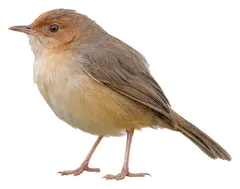 Red-faced CisticolaCisticola erythrops
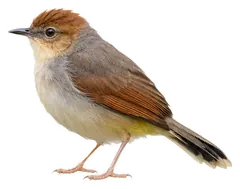 Singing CisticolaCisticola cantans
 Whistling CisticolaCisticola lateralis
 Trilling CisticolaCisticola woosnami
 Chattering CisticolaCisticola anonymus
 Bubbling CisticolaCisticola bulliens
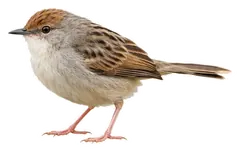 Hunter's CisticolaCisticola hunteri
 Chubb's CisticolaCisticola chubbi
 Kilombero CisticolaCisticola bakerorum
 Black-lored CisticolaCisticola nigriloris
 Rock-loving CisticolaCisticola aberrans
 Huambo CisticolaCisticola bailunduensis
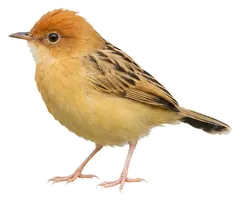
Download illustration
Free to use with credit: “Illustration: Field Stickers”. AI-generated. Its appearance was checked against a reference photo by sallyicasey; the pose follows our standard. ↗
In other languages
- EnglishGolden-headed Cisticola
- 简体中文金头扇尾莺
- 繁體中文黃頭扇尾鶯
- 日本語タイワンセッカ
- DeutschGoldkopf-Zistensänger
- FrançaisCisticole à couronne dorée
- EspañolCistícola cabecidorado
- Portuguêsfuinha-de-cabeça-dourada
- ItalianoCisticola testadorata
- NederlandsGoudkopgraszanger
- РусскийЗолотоголовая цистикола
- Svenskagyllencistikola
- DanskGyldenhovedet Cisticola
- Polskichwastówka złotogłowa