
Great Knot
Calidris tenuirostris (Horsfield, 1821)
26–30 cmLength61 cmWingspan192 gWeight
This is one of the largest Calidris sandpipers, with the face, throat and breast covered in black markings in the breeding season.
Most records: Australia, China, Thailand
Looks like Red Knot
AI-generated illustration. It may contain mistakes. · How the stickers are made
How to identify
Field marks
- Face, throat and breast covered in black markings in the breeding season
- Upperparts mottled gray; scapulars rufous in the breeding season
- Legs and feet short and dark
- Bill moderately long, slender and dark
Similar species
Where and when it's recorded

Great Knot has been recorded at 392 of the 8,171 birding hotspots we track, in 35 countries and regions.
Records by month Northern Hemisphere
To protect this bird from disturbance, we don't list exact sites.
Countries and regions with the most records
eBird records via GBIF up to 2024-12-31. A record means someone listed it; more records partly mean more birders, not more birds.
About
The great knot (Calidris tenuirostris) is a medium-sized wader. It is one of the largest species in the genus Calidris. It is a migratory bird which breeds in eastern Siberia, Russia, and flies to southern Asia and Australia in the northern winter.
Excerpt from Wikipedia, CC BY-SA 4.0 · authors · Read more on Wikipedia
Questions
How big is the Great Knot?
The Great Knot is about 26–30 cm long, with a wingspan of 61 cm and weighs around 192 g.
Where does the Great Knot live?
Its breeding range: Palearctic: low Arctic and subarctic montane tundra: northeastern Siberia from Yakutsk east to Anadyr Peninsula. It is most often recorded in Australia, China and Thailand.
Is the Great Knot endangered?
The IUCN Red List classifies the Great Knot as Endangered.
What does the Great Knot eat?
Main food: Fish, shrimp & shellfish.
What family is the Great Knot in?
It belongs to the family Sandpipers, Snipes (Scolopacidae), order Charadriiformes.
How do you identify the Great Knot?
Face, throat and breast covered in black markings in the breeding season. Upperparts mottled gray; scapulars rufous in the breeding season. Legs and feet short and dark.
How do you tell the Great Knot from the Red Knot?
Red Knot has a distinctly reddish face, throat and breast in breeding plumage; in other plumages, Great Knot is larger, with a longer bill and a darker breast.
At a glance
- Length
- 26–30 cm
- Wingspan
- 61 cm
- Weight
- 192 g
- Habitat
- Grassland
- Diet
- Fish, shrimp & shellfish
- Lifestyle
- Active on the ground
- Migration
- Migratory
- Conservation
- Endangered
More measurements
- Wing
- 176 mm
- Tail
- 64 mm
- Bill
- 45 mm
- Tarsus
- 34 mm
Averages from the AVONET dataset; length from field guides where available.
Range
Palearctic: low Arctic and subarctic montane tundra: northeastern Siberia from Yakutsk east to Anadyr Peninsula
Breeding range, IOC World Bird List 15.2
Classification
- Order
- Charadriiformes
- Family
- Sandpipers, Snipes Scolopacidae
- Genus
- Calidris
Other birds in the genus Calidris
 Red KnotCalidris canutus
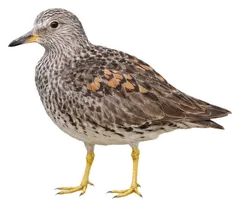 SurfbirdCalidris virgata
 RuffCalidris pugnax
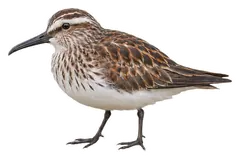 Broad-billed SandpiperCalidris falcinellus
 Sharp-tailed SandpiperCalidris acuminata
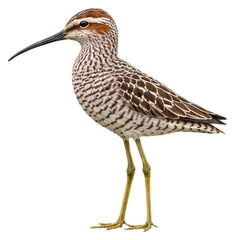 Stilt SandpiperCalidris himantopus
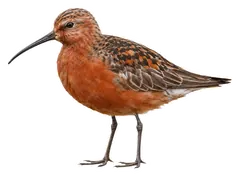 Curlew SandpiperCalidris ferruginea
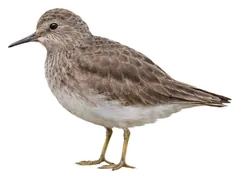 Temminck's StintCalidris temminckii
 Long-toed StintCalidris subminuta
 Red-necked StintCalidris ruficollis
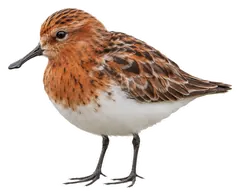 Spoon-billed SandpiperCalidris pygmaea
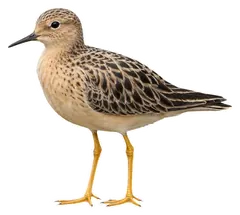 Buff-breasted SandpiperCalidris subruficollis
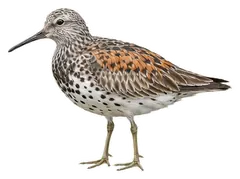
Download illustration
Free to use with credit: “Illustration: Field Stickers”. AI-generated. Its appearance was checked against a reference photo by Original: tcager; this edit: User:MPF; the pose follows our standard. ↗
