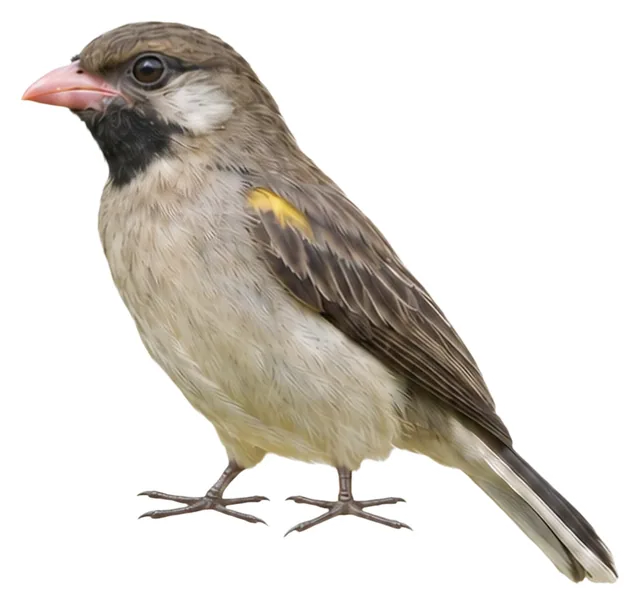
Greater Honeyguide
Indicator indicator (Sparrman, 1777)
50 gWeight
The greater honeyguide (Indicator indicator) is a bird in the paleotropical family Indicatoridae, that is related to the woodpeckers.
Most records: Kenya, South Africa, Tanzania
AI-generated illustration. It may contain mistakes. · How the stickers are made
Where and when it's recorded

Greater Honeyguide has been recorded at 390 of the 8,171 birding hotspots we track, in 34 countries and regions.
Records by month Southern Hemisphere
Where it's recorded most
- Lake Nakuru NPKenya213 records
- Tarangire NPTanzania149 records
- Lake Mburo NPUganda113 records
More places
- Brufut WoodsGambia109 records
- Farasuto Forest Community NRGambia97 records
- Nairobi NPKenya89 records
- Mkhuze GRSouth Africa88 records
- Mole NPGhana83 records
- Queen Elizabeth II NP – Ishasha SectorUganda73 records
- Mt Kenya NP – Castle Forest and LodgeKenya67 records
Countries and regions with the most records
eBird records via GBIF up to 2024-12-31. A record means someone listed it; more records partly mean more birders, not more birds.
About
The greater honeyguide (Indicator indicator) is a bird in the paleotropical family Indicatoridae, that is related to the woodpeckers. Its English and scientific names refer to its habit of guiding people to bee colonies. Claims that it also guides non-human animals are disputed.
Excerpt from Wikipedia, CC BY-SA 4.0 · authors · Read more on Wikipedia
Questions
How big is the Greater Honeyguide?
The Greater Honeyguide weighs around 50 g.
Where does the Greater Honeyguide live?
Its breeding range: Africa: widespread. It is most often recorded in Kenya, South Africa and Tanzania.
Is the Greater Honeyguide endangered?
The IUCN Red List classifies the Greater Honeyguide as Least Concern.
What does the Greater Honeyguide eat?
Main food: Insects & other invertebrates.
What family is the Greater Honeyguide in?
It belongs to the family Honeyguides (Indicatoridae), order Piciformes.
At a glance
- Weight
- 50 g
- Habitat
- Shrubland
- Diet
- Insects & other invertebrates
- Lifestyle
- Perches in trees
- Migration
- Resident (barely migrates)
- Conservation
- Least Concern
More measurements
- Wing
- 108 mm
- Tail
- 70 mm
- Bill
- 18 mm
- Tarsus
- 16 mm
Averages from the AVONET dataset; length from field guides where available.
Range
Africa: widespread
Breeding range, IOC World Bird List 15.2
Classification
- Order
- Piciformes
- Family
- Honeyguides Indicatoridae
- Genus
- Indicator
Other birds in the genus Indicator
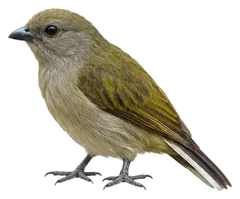 Dwarf HoneyguideIndicator pumilio
 Willcocks's HoneyguideIndicator willcocksi
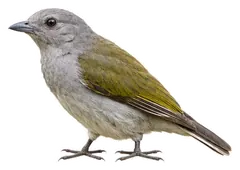 Pallid HoneyguideIndicator meliphilus
 Least HoneyguideIndicator exilis
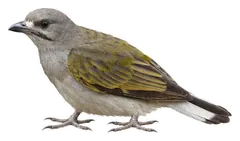 Lesser HoneyguideIndicator minor
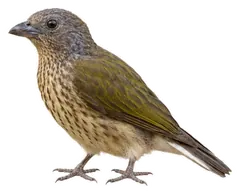 Spotted HoneyguideIndicator maculatus
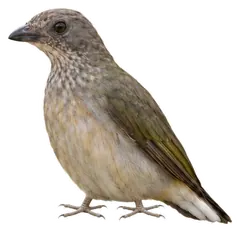 Scaly-throated HoneyguideIndicator variegatus
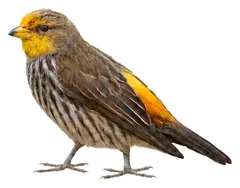 Yellow-rumped HoneyguideIndicator xanthonotus
 Malaysian HoneyguideIndicator archipelagicus
 Cassin's HoneybirdProdotiscus insignis

Download illustration
Free to use with credit: “Illustration: Field Stickers”. AI-generated. Its appearance was checked against a reference photo by an uncredited photographer; the pose follows our standard. ↗
In other languages
- EnglishGreater Honeyguide
- 简体中文黑喉响蜜䴕
- 繁體中文黑喉嚮蜜鴷
- 日本語ノドグロミツオシエ
- DeutschSchwarzkehl-Honiganzeiger
- FrançaisGrand Indicateur
- EspañolIndicador grande
- Portuguêsindicador-grande
- ItalianoIndicatore maggiore
- NederlandsGrote Honingspeurder
- РусскийБольшой медоуказчик
- Svenskasvartstrupig honungsvisare
- DanskSortstrubet Honninggøg
- Polskimiodowód duży