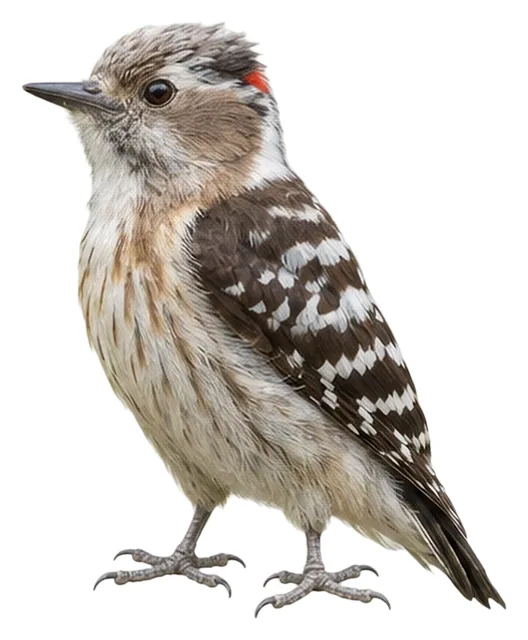
Japanese Pygmy Woodpecker
Yungipicus kizuki (Temminck, 1836)
13–15 cmLength19 gWeight
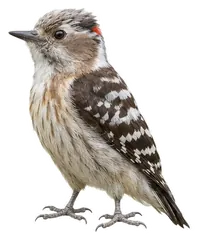
This small bird has white barring across its dark brown back.
Busiest months: December–February · Most records: Japan, South Korea, China
AI-generated illustration. It may contain mistakes. · How the stickers are made
How to identify
Field marks
- Gray-brown crown
- Dark brown back with white barring
- White chin and throat
- White barring on the outer tail feathers
Male, female and young
The male has a single small red patch on the side of the nape, absent in the female; juveniles often have streaks on the throat.
Voice
Thin, high-pitched calls like “tsi-tsi-tsi”; it also drums rapidly on wood.
Where and when it's recorded

Japanese Pygmy Woodpecker has been recorded at 195 of the 8,171 birding hotspots we track, in 3 countries and regions.
Records by month Northern Hemisphere
Where it's recorded most
- Nerima Ward – Shakujii ParkJapan887 records
- Karuizawa – Karuizawa Wild Bird SanctuaryJapan643 records
- Edogawa Ward – Kasai Rinkai Park / Kasai Kaihin ParkJapan525 records
More places
- Seoul – Olympic ParkSouth Korea506 records
- Ota Ward – Tokyo Port Wild Bird Park (including Tidal Pond)Japan432 records
- Kyoto – Kyoto Gyoen Garden / Kyoto Imperial Palace ParkJapan425 records
- Seoul – ChanggyeonggungSouth Korea366 records
- Okayama – Okayama Korakuen GardenJapan360 records
- Shibuya Ward – Meiji Jingu ShrineJapan355 records
- Seoul – Children's Grand ParkSouth Korea350 records
Countries and regions with the most records
eBird records via GBIF up to 2024-12-31. A record means someone listed it; more records partly mean more birders, not more birds.
About
The Japanese pygmy woodpecker or simply pygmy woodpecker (Yungipicus kizuki) is a species of woodpecker. It is found in coniferous and deciduous forests in Russia, China, Korea and Japan. This species has also been placed in the genus Dendrocopos or Picoides.
Excerpt from Wikipedia, CC BY-SA 4.0 · authors · Read more on Wikipedia
Questions
How big is the Japanese Pygmy Woodpecker?
The Japanese Pygmy Woodpecker is about 13–15 cm long and weighs around 19 g.
Where does the Japanese Pygmy Woodpecker live?
Its breeding range: Palearctic: East Asia. It is most often recorded in Japan, South Korea and China.
When is the best time to see the Japanese Pygmy Woodpecker?
At the hotspots we track, it is recorded most in January, February and December (Northern Hemisphere).
What does the Japanese Pygmy Woodpecker eat?
Main food: Insects & other invertebrates.
What family is the Japanese Pygmy Woodpecker in?
It belongs to the family Woodpeckers (Picidae), order Piciformes.
How do you identify the Japanese Pygmy Woodpecker?
Gray-brown crown. Dark brown back with white barring. White chin and throat.
How do male and female Japanese Pygmy Woodpecker differ?
The male has a single small red patch on the side of the nape, absent in the female; juveniles often have streaks on the throat.
At a glance
- Length
- 13–15 cm
- Weight
- 19 g
- Habitat
- Forest
- Diet
- Insects & other invertebrates
- Lifestyle
- Perches in trees
- Migration
- Resident (barely migrates)
More measurements
- Wing
- 82 mm
- Tail
- 46 mm
- Bill
- 14 mm
- Tarsus
- 14 mm
Averages from the AVONET dataset; length from field guides where available.
Range
Palearctic: East Asia
Breeding range, IOC World Bird List 15.2
Subspecies · 2
- Yungipicus kizuki permutatus ne China, se Siberia and n Korean Pen.
- Yungipicus kizuki nippon ec China, South Korea and Honshu (Japan)
Classification
- Order
- Piciformes
- Family
- Woodpeckers Picidae
- Genus
- Yungipicus
Other birds in the genus Yungipicus
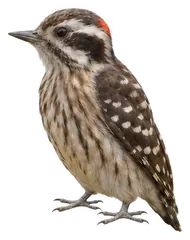 Sulawesi Pygmy WoodpeckerYungipicus temminckii
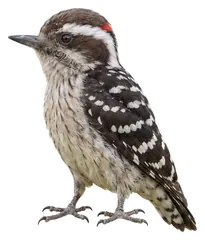 Brown-capped Pygmy WoodpeckerYungipicus nanus
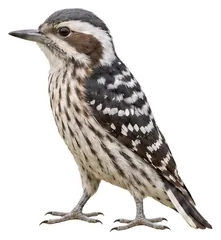 Grey-capped Pygmy WoodpeckerYungipicus canicapillus
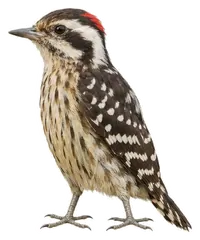 Philippine Pygmy WoodpeckerYungipicus maculatus
 Sulu Pygmy WoodpeckerYungipicus ramsayi
 Sunda Pygmy WoodpeckerYungipicus moluccensis
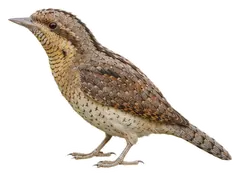 Eurasian WryneckJynx torquilla
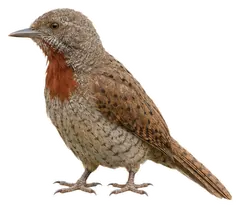 Red-throated WryneckJynx ruficollis
 Speckled PiculetPicumnus innominatus
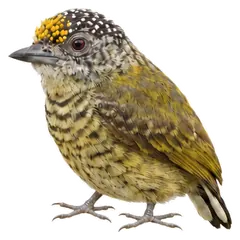 Bar-breasted PiculetPicumnus aurifrons
Download illustration
Free to use with credit: “Illustration: Field Stickers”. AI-generated. Its appearance was checked against a reference photo by Евгений Гурьевских; the pose follows our standard. ↗