
Leaden Honeyeater
Ptiloprora plumbea (Salvadori, 1895)
14 gWeight
The leaden honeyeater (Ptiloprora plumbea) is a species of bird in the family Meliphagidae.
This sticker was generated from a written description only, without a reference photo, so it is more likely to contain mistakes than the others. Check a field guide for details.
AI-generated illustration. It may contain mistakes. · How the stickers are made
Where and when it's recorded
No records at the public birding hotspots we track. It may be rare, remote, or its locations protected.
About
The leaden honeyeater (Ptiloprora plumbea) is a species of bird in the family Meliphagidae.
Excerpt from Wikipedia, CC BY-SA 4.0 · authors · Read more on Wikipedia
Questions
How big is the Leaden Honeyeater?
The Leaden Honeyeater weighs around 14 g.
Where does the Leaden Honeyeater live?
Its breeding range: Australasia: patchily in montane west-central, central, southeastern New Guinea.
Is the Leaden Honeyeater endangered?
The IUCN Red List classifies the Leaden Honeyeater as Least Concern.
What does the Leaden Honeyeater eat?
Main food: Insects & other invertebrates.
What family is the Leaden Honeyeater in?
It belongs to the family Honeyeaters (Meliphagidae), order Passerines (Passeriformes).
At a glance
- Weight
- 14 g
- Habitat
- Forest
- Diet
- Insects & other invertebrates
- Lifestyle
- Perches in trees
- Migration
- Resident (barely migrates)
- Conservation
- Least Concern
More measurements
- Wing
- 76 mm
- Tail
- 65 mm
- Bill
- 21 mm
- Tarsus
- 23 mm
Averages from the AVONET dataset; length from field guides where available.
Range
Australasia: patchily in montane west-central, central, southeastern New Guinea
Breeding range, IOC World Bird List 15.2
Classification
- Order
- Passerines Passeriformes
- Family
- Honeyeaters Meliphagidae
- Genus
- Ptiloprora
Other birds in the genus Ptiloprora
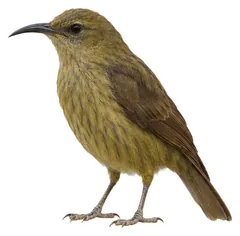 Yellowish-streaked HoneyeaterPtiloprora meekiana
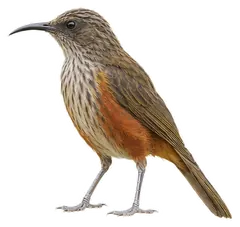 Rufous-sided HoneyeaterPtiloprora erythropleura
 Rufous-backed HoneyeaterPtiloprora guisei
 Mayr's HoneyeaterPtiloprora mayri
 Grey-streaked HoneyeaterPtiloprora perstriata
 Dark-eared MyzaMyza celebensis
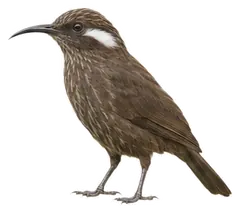 White-eared MyzaMyza sarasinorum
 Eastern SpinebillAcanthorhynchus tenuirostris
 Western SpinebillAcanthorhynchus superciliosus
 Green-backed HoneyeaterGlycichaera fallax
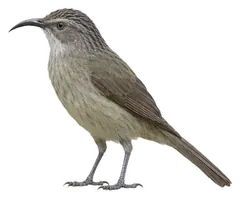
Download illustration
Free to use with credit: “Illustration: Field Stickers”. AI-generated from a written description only; no reference photo was used.
In other languages
- EnglishLeaden Honeyeater
- 简体中文铅色嗜蜜鸟
- 繁體中文鉛灰嗜蜜鳥
- 日本語ネズミセスジミツスイ
- DeutschBleikehl-Honigfresser
- FrançaisMéliphage gris-de-plomb
- EspañolMielero plomizo
- Portuguêspapa-mel-plúmbeo
- ItalianoSucciamiele piombato
- NederlandsLoodkeelhoningeter
- РусскийСвинцовый нектароед
- Svenskablygrå honungsfågel
- DanskBlygrå Honningæder
- Polskipaskowik ołowiany