
Lesser Yellownape
Picus chlorolophus Vieillot, 1818
≈24 cmLength65 gWeight
It has a green back, a bright yellow tuft on the nape and fine barring across the belly.
Busiest months: February · Most records: India, Sri Lanka, Nepal
AI-generated illustration. It may contain mistakes. · How the stickers are made
How to identify
Field marks
- Bright yellow tuft on the nape
- Green neck and breast
- Whitish belly with fine green barring
- Blackish rump and tail
Male, female and young
The adult male has red above the eye, above the nape and on the moustachial stripe; the female has a red patch only above the ear-coverts, and juveniles resemble the female but have duller feathers.
Where and when it's recorded

Lesser Yellownape has been recorded at 339 of the 8,171 birding hotspots we track, in 13 countries and regions.
Records by month Northern Hemisphere
Where it's recorded most
- SattalIndia676 records
- Bukit FraserMalaysia545 records
- Thattekkad Bird SanctuaryIndia488 records
More places
- Wildlife Institute of IndiaIndia457 records
- Sinharaja Forest ReserveSri Lanka401 records
- Mahananda WLS – Rongtong and Shivakhola ForestIndia400 records
- Forest Research Institute (FRI), New Forest CampusIndia334 records
- Mahananda WLS – LatpancharIndia288 records
- Nameri National Park & SurroundingsIndia288 records
- Corbett NP – DhikalaIndia273 records
Countries and regions with the most records
eBird records via GBIF up to 2024-12-31. A record means someone listed it; more records partly mean more birders, not more birds.
About
The lesser yellownape (Picus chlorolophus) is a type of woodpecker which is a widespread and often common breeder in tropical and sub-tropical Asia, primarily the Indian subcontinent and Southeast Asia. It ranges from India, Bhutan, Nepal, Bangladesh and Sri Lanka eastwards to Thailand, Burma, Cambodia, Laos, Indonesia, Malaysia and Vietnam. Much of the scientific knowledge gathered about this species is sourced from formal studies in various parts of India.
Excerpt from Wikipedia, CC BY-SA 4.0 · authors · Read more on Wikipedia
Questions
How big is the Lesser Yellownape?
The Lesser Yellownape is about ≈24 cm long and weighs around 65 g.
Where does the Lesser Yellownape live?
Its breeding range: Oriental: widespread. It is most often recorded in India, Sri Lanka and Nepal.
When is the best time to see the Lesser Yellownape?
At the hotspots we track, it is recorded most in February (Northern Hemisphere).
Is the Lesser Yellownape endangered?
The IUCN Red List classifies the Lesser Yellownape as Least Concern.
What does the Lesser Yellownape eat?
Main food: Insects & other invertebrates.
What family is the Lesser Yellownape in?
It belongs to the family Woodpeckers (Picidae), order Piciformes.
How do you identify the Lesser Yellownape?
Bright yellow tuft on the nape. Green neck and breast. Whitish belly with fine green barring.
How do male and female Lesser Yellownape differ?
The adult male has red above the eye, above the nape and on the moustachial stripe; the female has a red patch only above the ear-coverts, and juveniles resemble the female but have duller feathers.
At a glance
- Length
- ≈24 cm
- Weight
- 65 g
- Habitat
- Forest
- Diet
- Insects & other invertebrates
- Lifestyle
- Perches in trees
- Migration
- Resident (barely migrates)
- Conservation
- Least Concern
More measurements
- Wing
- 129 mm
- Tail
- 88 mm
- Bill
- 28 mm
- Tarsus
- 22 mm
Averages from the AVONET dataset; length from field guides where available.
Range
Oriental: widespread
Breeding range, IOC World Bird List 15.2
Subspecies · 2
- Picus chlorolophus citrinocristatus Tonkin area of n Vietnam and se China
- Picus chlorolophus longipennis Hainan I. (off se China)
Classification
- Order
- Piciformes
- Family
- Woodpeckers Picidae
- Genus
- Picus
Other birds in the genus Picus
 Crimson-winged WoodpeckerPicus puniceus
 Streak-breasted WoodpeckerPicus viridanus
 Laced WoodpeckerPicus vittatus
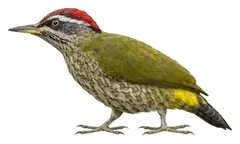 Streak-throated WoodpeckerPicus xanthopygaeus
 Scaly-bellied WoodpeckerPicus squamatus
 Japanese Green WoodpeckerPicus awokera
 European Green WoodpeckerPicus viridis
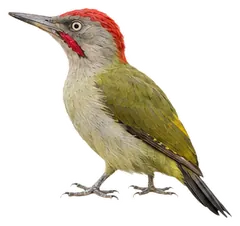 Iberian Green WoodpeckerPicus sharpei
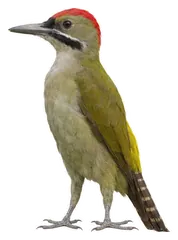 Levaillant's WoodpeckerPicus vaillantii
 Red-collared WoodpeckerPicus rabieri
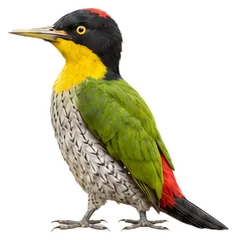 Black-headed WoodpeckerPicus erythropygius
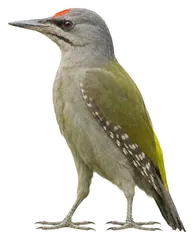 Grey-headed WoodpeckerPicus canus
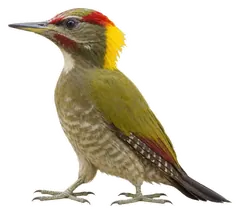
Download illustration
Free to use with credit: “Illustration: Field Stickers”. AI-generated. Its appearance was checked against a reference photo by Wang.QG; the pose follows our standard. ↗
In other languages
- EnglishLesser Yellownape
- 简体中文黄冠啄木鸟
- 繁體中文小黃冠綠啄木
- 日本語ヒメアオゲラ
- DeutschGelbhaubenspecht
- FrançaisPic à huppe jaune
- EspañolPito crestigualdo
- Portuguêspeto-de-poupa-amarela
- ItalianoNucagialla minore
- NederlandsKleine Geelkuifspecht
- РусскийМалый желтохохлый дятел
- Svenskagulnackad gröngöling
- DanskGulnakket Grønspætte
- Polskidzięcioł żółtoczuby