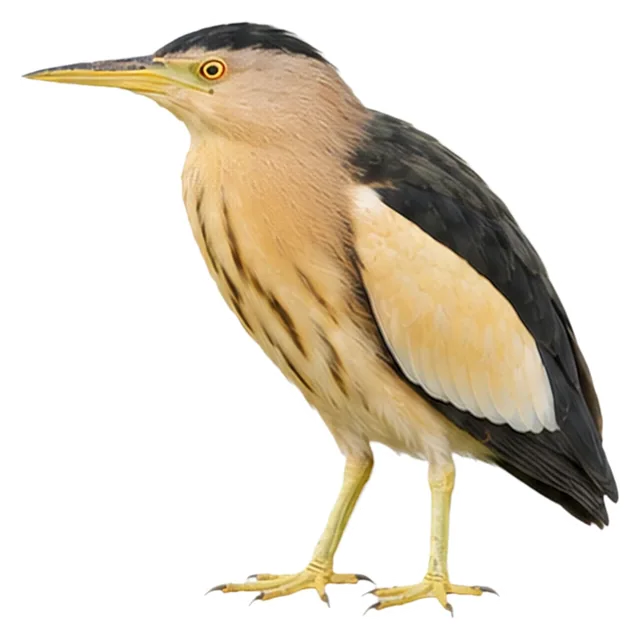
Little Bittern
Botaurus minutus (Linnaeus, 1766)
33–38 cmLength49 cmWingspan
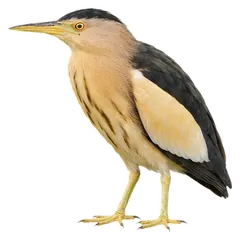
It is small and thick-necked, with a single pale patch on the front of the wing.
Busiest months: May · Most records: Spain, Israel, Portugal
AI-generated illustration. It may contain mistakes. · How the stickers are made
How to identify
Field marks
- Long, pointed bill; thick neck
- Both sexes have a pale patch on the front of the wing
- Male has a black crown and back with a green sheen
- Male has pale yellowish-brown underparts
Male, female and young
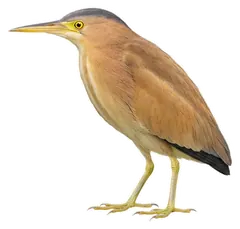
The female has brownish-black upperparts and underparts with dark yellowish-brown and brown stripes; juveniles are more rufous and more heavily striped than females.
Voice
In spring, the male proclaims its territory with low, barking or frog-like calls.
Where and when it's recorded

Little Bittern has been recorded at 931 of the 8,171 birding hotspots we track, in 102 countries and regions.
Records by month Northern Hemisphere
Where it's recorded most
- International Birding and Research Center Eilat (IBRCE)Israel3,276 records
- PN Ria Formosa – Quinta do Lago – área geralPortugal1,420 records
- Zamora – Río DueroSpain1,160 records
More places
- Marjal dels Moros – ÁreaSpain835 records
- Poleg MarshIsrael718 records
- Lagunas de Campotejar ZEPASpain706 records
- Badajoz – Azud del GuadianaSpain698 records
- Aras Kuş Halkalama İstasyonuTürkiye542 records
- Parque Ambiental de VilamouraPortugal536 records
- Private estate near Green MubazzarahUnited Arab Emirates521 records
Countries and regions with the most records
eBird records via GBIF up to 2024-12-31. A record means someone listed it; more records partly mean more birders, not more birds.
About
The little bittern (Botaurus minutus) is a wading bird in the heron family, Ardeidae. This species was formerly placed in the genus Ixobrychus.
Excerpt from Wikipedia, CC BY-SA 4.0 · authors · Read more on Wikipedia
Questions
How big is the Little Bittern?
The Little Bittern is about 33–38 cm long, with a wingspan of 49 cm.
Where does the Little Bittern live?
Its breeding range: Palearctic, Africa: southern, central Europe to Central Asia, northwestern India and Africa. It is most often recorded in Spain, Israel and Portugal.
When is the best time to see the Little Bittern?
At the hotspots we track, it is recorded most in May (Northern Hemisphere).
Is the Little Bittern endangered?
The IUCN Red List classifies the Little Bittern as Least Concern.
What family is the Little Bittern in?
It belongs to the family Herons, Bitterns (Ardeidae), order Pelecaniformes.
How do you identify the Little Bittern?
Long, pointed bill; thick neck. Both sexes have a pale patch on the front of the wing. Male has a black crown and back with a green sheen.
How do male and female Little Bittern differ?
The female has brownish-black upperparts and underparts with dark yellowish-brown and brown stripes; juveniles are more rufous and more heavily striped than females.
At a glance
- Length
- 33–38 cm
- Wingspan
- 49 cm
- Conservation
- Least Concern
Range
Palearctic, Africa: southern, central Europe to Central Asia, northwestern India and Africa
Breeding range, IOC World Bird List 15.2
Classification
- Order
- Pelecaniformes
- Family
- Herons, Bitterns Ardeidae
- Genus
- Botaurus
Other birds in the genus Botaurus
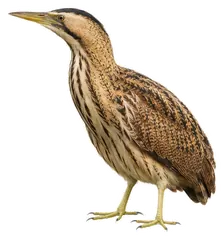 Eurasian BitternBotaurus stellaris
 Australasian BitternBotaurus poiciloptilus
 American BitternBotaurus lentiginosus
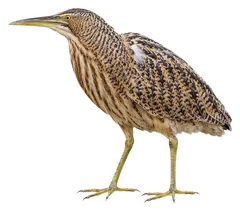 Pinnated BitternBotaurus pinnatus
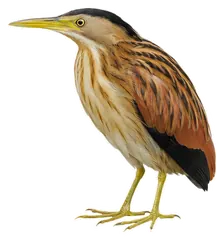 Stripe-backed BitternBotaurus involucris
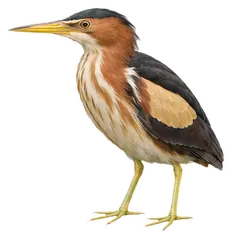 Least BitternBotaurus exilis
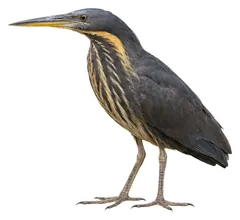 Black BitternBotaurus flavicollis
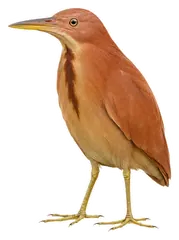 Cinnamon BitternBotaurus cinnamomeus
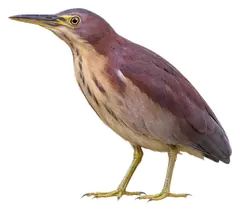 Von Schrenck's BitternBotaurus eurhythmus
 Dwarf BitternBotaurus sturmii
 Yellow BitternBotaurus sinensis
 Black-backed BitternBotaurus dubius
Download illustration
Free to use with credit: “Illustration: Field Stickers”. AI-generated. Its appearance was checked against a reference photo by Adrien Mauss; the pose follows our standard. ↗