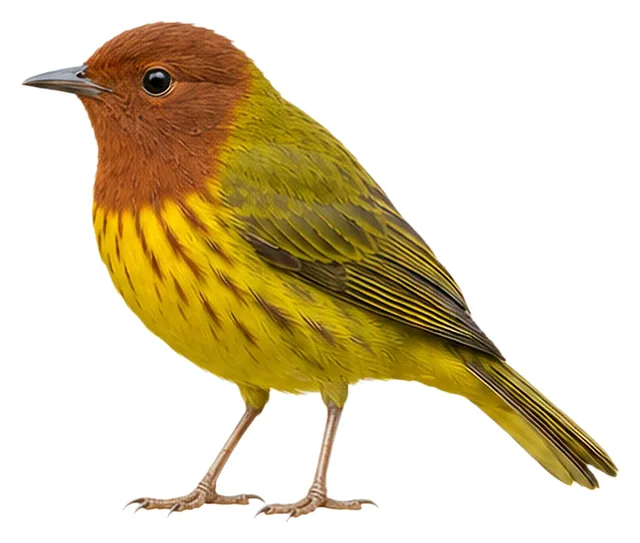
Mangrove Warbler
Setophaga petechia (Linnaeus, 1766)
13 cmLength10 gWeight
The mangrove warbler or mangrove yellow warbler (Setophaga petechia) is a New World warbler species.
Busiest months: January–March and October · Most records: Costa Rica, Mexico, Panama
AI-generated illustration. It may contain mistakes. · How the stickers are made
Where and when it's recorded

Mangrove Warbler has been recorded at 933 of the 8,171 birding hotspots we track, in 46 countries and regions.
Records by month Northern Hemisphere
Where it's recorded most
- Tárcoles – Tour en BoteCosta Rica3,275 records
- Ammo Dump PondsPanama2,909 records
- Refugio mixto Caño NegroCosta Rica2,889 records
More places
- Chichicaxtle – Observatorio de Aves Rapaces Dr. Mario A. RamosMexico2,800 records
- Hotel BougainvilleaCosta Rica2,691 records
- Bubali Bird SanctuaryAruba2,652 records
- Zamorano Univ. – Campus Farms and River 740-815 maslHonduras2,362 records
- MEX - Veracruz- MInatitlan - Pantano de Santa AlejandrinMexico2,334 records
- PN Carara-Entrada principal [senderos Quebrada Bonita y Universal]Costa Rica1,827 records
- Finca La GraciaGuatemala1,725 records
Countries and regions with the most records
eBird records via GBIF up to 2024-12-31. A record means someone listed it; more records partly mean more birders, not more birds.
About
The mangrove warbler or mangrove yellow warbler (Setophaga petechia) is a New World warbler species. It a small bright yellow bird that is found in mangroves on the Atlantic and Pacific coasts of the tropical Americas. It is also present in the Caribbean and on the Galápagos Islands.
Excerpt from Wikipedia, CC BY-SA 4.0 · authors · Read more on Wikipedia
Questions
How big is the Mangrove Warbler?
The Mangrove Warbler is about 13 cm long and weighs around 10 g.
Where does the Mangrove Warbler live?
Its breeding range: North America, Middle America, South America: extreme southern USA through West Indies to coastal Middle America and South America. It is most often recorded in Costa Rica, Mexico and Panama.
When is the best time to see the Mangrove Warbler?
At the hotspots we track, it is recorded most in January, February, March and October (Northern Hemisphere).
Is the Mangrove Warbler endangered?
The IUCN Red List classifies the Mangrove Warbler as Least Concern.
What does the Mangrove Warbler eat?
Main food: Insects & other invertebrates.
What family is the Mangrove Warbler in?
It belongs to the family New World Warblers (Parulidae), order Passerines (Passeriformes).
At a glance
- Length
- 13 cm
- Weight
- 10 g
- Habitat
- Shrubland
- Diet
- Insects & other invertebrates
- Lifestyle
- Perches in trees
- Migration
- Migratory
- Conservation
- Least Concern
More measurements
- Wing
- 60 mm
- Tail
- 43 mm
- Bill
- 12 mm
- Tarsus
- 20 mm
Averages from the AVONET dataset; length from field guides where available.
Range
North America, Middle America, South America: extreme southern USA through West Indies to coastal Middle America and South America
Breeding range, IOC World Bird List 15.2
Classification
- Order
- Passerines Passeriformes
- Family
- New World Warblers Parulidae
- Genus
- Setophaga
Other birds in the genus Setophaga
 Plumbeous WarblerSetophaga plumbea
 Elfin Woods WarblerSetophaga angelae
 Arrowhead WarblerSetophaga pharetra
 Hooded WarblerSetophaga citrina
 American RedstartSetophaga ruticilla
 Kirtland's WarblerSetophaga kirtlandii
 Cape May WarblerSetophaga tigrina
 Cerulean WarblerSetophaga cerulea
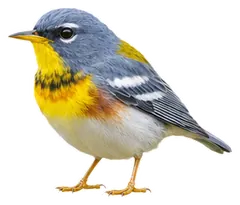 Northern ParulaSetophaga americana
 Tropical ParulaSetophaga pitiayumi
 Magnolia WarblerSetophaga magnolia
 Bay-breasted WarblerSetophaga castanea
 WebP · 1070 px