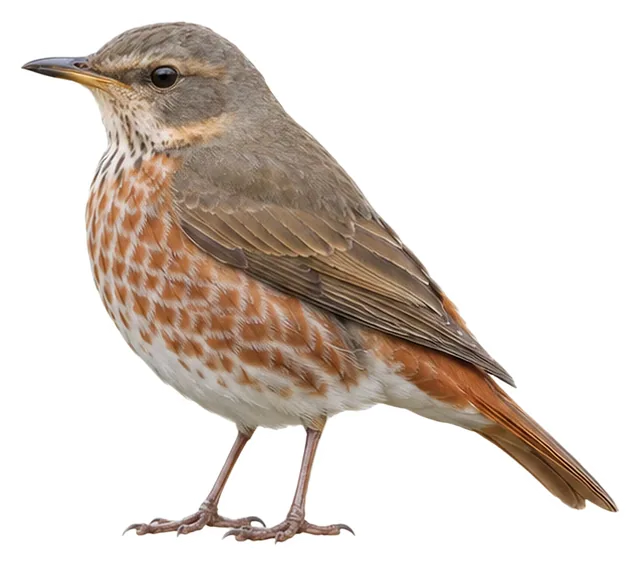
Naumann's Thrush
Turdus naumanni Temminck, 1820
≈24 cmLength73 gWeight
It has a reddish-brown face and breast and a white belly, and is closely related to Dusky Thrush.
Busiest months: December–January · Most records: China, South Korea, Mongolia
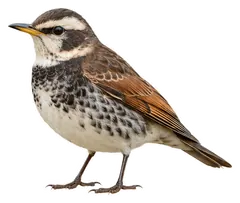
Looks like Dusky Thrush
AI-generated illustration. It may contain mistakes. · How the stickers are made
How to identify
Field marks
- Pale brown back and head
- Reddish face, breast, flank spots and rump
- White belly and undertail-coverts
- Pale supercilium and reddish-brown underwings
Male, female and young
Female is very similar to male; juvenile has weaker markings.
Similar species
Where and when it's recorded

Naumann's Thrush has been recorded at 662 of the 8,171 birding hotspots we track, in 12 countries and regions.
Records by month Northern Hemisphere
Where it's recorded most
- Beijing Botanical GardenChina459 records
- Seoul – Olympic ParkSouth Korea327 records
- Jinshan – Jinshan Youth Activity CenterTaiwan (China)321 records
More places
- Olympic Forest Park SouthChina313 records
- Seoul – ChanggyeonggungSouth Korea310 records
- Lingshan Scenic AreaChina237 records
- Taipei – Tianliaoyang WetlandTaiwan (China)215 records
- Tsinghua UniversityChina202 records
- Temple of HeavenChina202 records
- Peking UniversityChina194 records
Countries and regions with the most records
eBird records via GBIF up to 2024-12-31. A record means someone listed it; more records partly mean more birders, not more birds.
About
Naumann's thrush (Turdus naumanni) is a species of the thrush family Turdidae which breeds eastwards from central Siberia to North Manchuria, Amurland and Sakhalin. It is closely related to the more northerly breeding dusky thrush T. eunomus; the two have often been regarded as conspecific.
Excerpt from Wikipedia, CC BY-SA 4.0 · authors · Read more on Wikipedia
Questions
How big is the Naumann's Thrush?
The Naumann's Thrush is about ≈24 cm long and weighs around 73 g.
Where does the Naumann's Thrush live?
Its breeding range: Palearctic: south-central Russia. It is most often recorded in China, South Korea and Mongolia.
When is the best time to see the Naumann's Thrush?
At the hotspots we track, it is recorded most in January and December (Northern Hemisphere).
Is the Naumann's Thrush endangered?
The IUCN Red List classifies the Naumann's Thrush as Least Concern.
What does the Naumann's Thrush eat?
Main food: Insects & other invertebrates.
What family is the Naumann's Thrush in?
It belongs to the family Thrushes (Turdidae), order Passerines (Passeriformes).
How do you identify the Naumann's Thrush?
Pale brown back and head. Reddish face, breast, flank spots and rump. White belly and undertail-coverts.
How do male and female Naumann's Thrush differ?
Female is very similar to male; juvenile has weaker markings.
How do you tell the Naumann's Thrush from the Dusky Thrush?
Dusky Thrush has a darker brown back and rump, with black on the face, breast and flank spots; these areas are reddish in Naumann's Thrush.
At a glance
- Length
- ≈24 cm
- Weight
- 73 g
- Habitat
- Forest
- Diet
- Insects & other invertebrates
- Lifestyle
- Varied
- Migration
- Migratory
- Conservation
- Least Concern
More measurements
- Wing
- 129 mm
- Tail
- 90 mm
- Bill
- 23 mm
- Tarsus
- 32 mm
Averages from the AVONET dataset; length from field guides where available.
Range
Palearctic: south-central Russia
Breeding range, IOC World Bird List 15.2
Classification
- Order
- Passerines Passeriformes
- Family
- Thrushes Turdidae
- Genus
- Turdus
Other birds in the genus Turdus
 Ethiopian ThrushTurdus simensis
 Groundscraper ThrushTurdus litsitsirupa
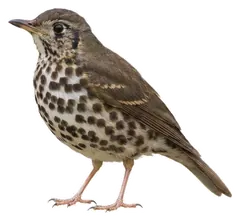 Chinese ThrushTurdus mupinensis
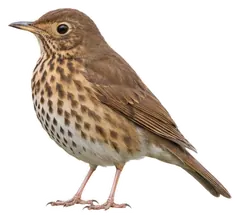 Song ThrushTurdus philomelos
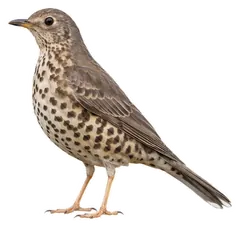 Mistle ThrushTurdus viscivorus
 African ThrushTurdus pelios
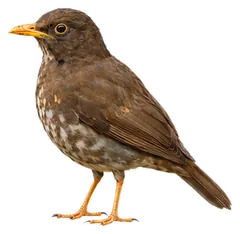 Principe ThrushTurdus xanthorhynchus
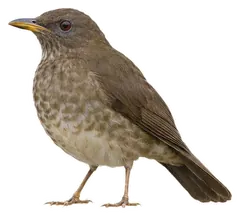 Sao Tome ThrushTurdus olivaceofuscus
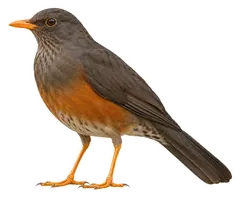 Abyssinian ThrushTurdus abyssinicus
 Taita ThrushTurdus helleri
 Usambara ThrushTurdus roehli
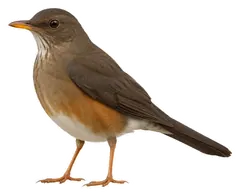 Olive ThrushTurdus olivaceus
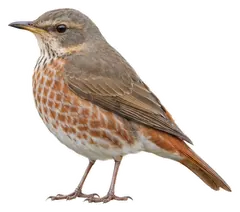
Download illustration
Free to use with credit: “Illustration: Field Stickers”. AI-generated. Its appearance was checked against a reference photo by no rights reserved; the pose follows our standard. ↗
