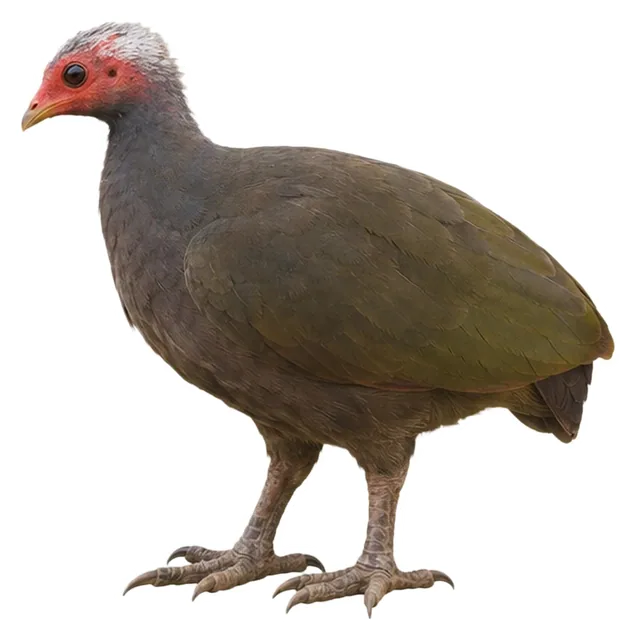
Nicobar Megapode
Megapodius nicobariensis Blyth, 1846
837 gWeight
The Nicobar megapode or Nicobar scrubfowl (Megapodius nicobariensis) is a megapode endemic to the Nicobar Islands of India.
AI-generated illustration. It may contain mistakes. · How the stickers are made
Where and when it's recorded
No records at the public birding hotspots we track. It may be rare, remote, or its locations protected.
About
The Nicobar megapode or Nicobar scrubfowl (Megapodius nicobariensis) is a megapode endemic to the Nicobar Islands of India. Like other megapodes, it builds a large mound nest of soil and vegetation, with the eggs incubated by the heat produced by decomposition. Newly hatched chicks climb out of the loose soil of the mound and, being fully feathered, are capable of flight.
Excerpt from Wikipedia, CC BY-SA 4.0 · authors · Read more on Wikipedia
Questions
How big is the Nicobar Megapode?
The Nicobar Megapode weighs around 837 g.
Where does the Nicobar Megapode live?
Its breeding range: Oriental: Nicobar Islands.
Is the Nicobar Megapode endangered?
The IUCN Red List classifies the Nicobar Megapode as Vulnerable.
What does the Nicobar Megapode eat?
Main food: Omnivore.
What family is the Nicobar Megapode in?
It belongs to the family Megapodes (Megapodiidae), order Galliformes.
At a glance
- Weight
- 837 g
- Habitat
- Forest
- Diet
- Omnivore
- Lifestyle
- Active on the ground
- Migration
- Resident (barely migrates)
- Conservation
- Vulnerable
More measurements
- Wing
- 227 mm
- Tail
- 63 mm
- Bill
- 24 mm
- Tarsus
- 64 mm
Averages from the AVONET dataset; length from field guides where available.
Range
Oriental: Nicobar Islands
Breeding range, IOC World Bird List 15.2
Classification
- Order
- Galliformes
- Family
- Megapodes Megapodiidae
- Genus
- Megapodius
Other birds in the genus Megapodius
 Tongan MegapodeMegapodius pritchardii
 Micronesian MegapodeMegapodius laperouse
 Philippine MegapodeMegapodius cumingii
 Sula MegapodeMegapodius bernsteinii
 Tanimbar MegapodeMegapodius tenimberensis
 Dusky MegapodeMegapodius freycinet
 Biak ScrubfowlMegapodius geelvinkianus
 Melanesian MegapodeMegapodius eremita
 Vanuatu MegapodeMegapodius layardi
 New Guinea ScrubfowlMegapodius decollatus
 Orange-footed ScrubfowlMegapodius reinwardt
Download illustration
Free to use with credit: “Illustration: Field Stickers”. AI-generated. Its appearance was checked against a reference photo by Dr jishnu; the pose follows our standard. ↗
In other languages
- EnglishNicobar Megapode
- 简体中文尼柯巴冢雉
- 繁體中文尼科巴塚雉
- 日本語ニコバルツカツクリ
- DeutschNikobaren-Großfußhuhn
- FrançaisMégapode des Nicobar
- EspañolTalégalo de Nicobar
- Portuguêsfrango-do-mato-das-nicobar
- ItalianoMegapodio delle Nicobare
- NederlandsNicobarenboshoen
- РусскийНикобарский большеног
- Svenskanikobarstorfotshöna
- DanskNicobarbuskhøne
- Polskinogal nikobarski