
Olive-naped Weaver
Ploceus brachypterus Swainson, 1837
27 gWeight
The olive-naped weaver (Ploceus brachypterus) is a bird species in the family Ploceidae.
Busiest months: November · Most records: Ghana, Gambia, Nigeria
AI-generated illustration. It may contain mistakes. · How the stickers are made
Where and when it's recorded

Olive-naped Weaver has been recorded at 96 of the 8,171 birding hotspots we track, in 14 countries and regions.
Records by month Northern Hemisphere
Where it's recorded most
- Abuko NRGambia331 records
- Atewa – farm scrub and degraded forestGhana233 records
- Brufut WoodsGambia219 records
More places
- Farasuto Forest Community NRGambia177 records
- Antwikwaa – forest edge & farm scrubGhana158 records
- Pirang Forest NPGambia146 records
- Ebekawopa (Abrafo) – 'farm scrub' habitatGhana142 records
- Atewa Range – upland forest & ridgeGhana141 records
- Brenu Beach – grasslandsGhana122 records
- Shai Hills Resource ReserveGhana121 records
Countries and regions with the most records
eBird records via GBIF up to 2024-12-31. A record means someone listed it; more records partly mean more birders, not more birds.
About
The olive-naped weaver (Ploceus brachypterus) is a bird species in the family Ploceidae. It is found in West Africa from Senegal and Gambia to Cameroon.
Excerpt from Wikipedia, CC BY-SA 4.0 · authors · Read more on Wikipedia
Questions
How big is the Olive-naped Weaver?
The Olive-naped Weaver weighs around 27 g.
Where does the Olive-naped Weaver live?
Its breeding range: Africa: Senegal and Gambia to western Cameroon, Bioko Island. It is most often recorded in Ghana, Gambia and Nigeria.
When is the best time to see the Olive-naped Weaver?
At the hotspots we track, it is recorded most in November (Northern Hemisphere).
Is the Olive-naped Weaver endangered?
The IUCN Red List classifies the Olive-naped Weaver as Least Concern.
What does the Olive-naped Weaver eat?
Main food: Insects & other invertebrates.
What family is the Olive-naped Weaver in?
It belongs to the family Weavers, Widowbirds (Ploceidae), order Passerines (Passeriformes).
At a glance
- Weight
- 27 g
- Habitat
- Woodland
- Diet
- Insects & other invertebrates
- Lifestyle
- Perches in trees
- Migration
- Resident (barely migrates)
- Conservation
- Least Concern
More measurements
- Wing
- 75 mm
- Tail
- 56 mm
- Bill
- 18 mm
- Tarsus
- 21 mm
Averages from the AVONET dataset; length from field guides where available.
Range
Africa: Senegal and Gambia to western Cameroon, Bioko Island
Breeding range, IOC World Bird List 15.2
Classification
- Order
- Passerines Passeriformes
- Family
- Weavers, Widowbirds Ploceidae
- Genus
- Ploceus
Other birds in the genus Ploceus
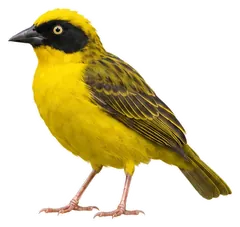 Baglafecht WeaverPloceus baglafecht
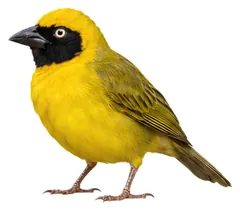 Bannerman's WeaverPloceus bannermani
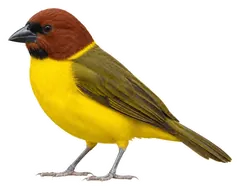 Bates's WeaverPloceus batesi
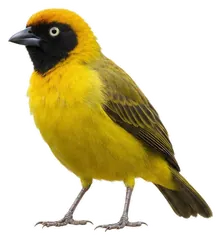 Black-chinned WeaverPloceus nigrimentus
 Bertram's WeaverPloceus bertrandi
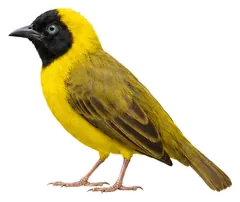 Slender-billed WeaverPloceus pelzelni
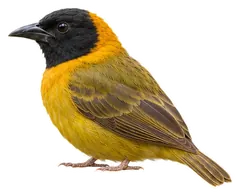 Loango WeaverPloceus subpersonatus
 Little WeaverPloceus luteolus
 Spectacled WeaverPloceus ocularis
 Black-necked WeaverPloceus nigricollis
 Strange WeaverPloceus alienus
 Black-billed WeaverPloceus melanogaster
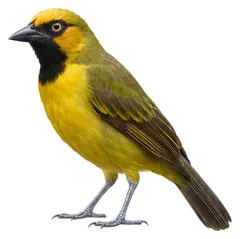
Download illustration
Free to use with credit: “Illustration: Field Stickers”. AI-generated. Its appearance was checked against a reference photo by lucapassalacqua; the pose follows our standard. ↗