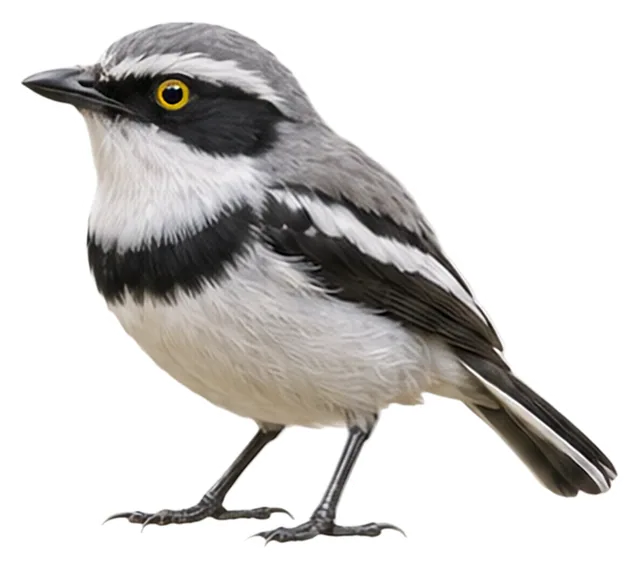
Pale Batis
Batis soror Reichenow, 1903
10–12 cmLength9.5 gWeight
The pale batis (Batis soror), also known as the Mozambique batis or East coast batis, is a species of small bird in the wattle-eyes family, Platysteiridae.
Busiest months: November · Most records: Kenya, Mozambique, Tanzania
AI-generated illustration. It may contain mistakes. · How the stickers are made
Where and when it's recorded

Pale Batis has been recorded at 25 of the 8,171 birding hotspots we track, in 5 countries and regions.
Records by month Southern Hemisphere
Where it's recorded most
- Arabuko-Sokoke Forest NRKenya448 records
- East Usambara Mountains – Amani Nature ReserveTanzania111 records
- Mida CreekKenya93 records
More places
- Gorongosa NP – Chitengo CampMozambique91 records
- Katiyo Tea EstateZimbabwe88 records
- Panda WoodlandsMozambique65 records
- San Sebastian Peninsula – Land – please consider using different hotspots for birding on the sandbars and islandsMozambique55 records
- Miombo Woodland – Road to Gorongosa NPMozambique37 records
- Dunes de DovelaMozambique23 records
- Coutada 12Mozambique19 records
Countries and regions with the most records
eBird records via GBIF up to 2024-12-31. A record means someone listed it; more records partly mean more birders, not more birds.
About
The pale batis (Batis soror), also known as the Mozambique batis or East coast batis, is a species of small bird in the wattle-eyes family, Platysteiridae. It occurs in eastern Africa, mostly in lowland miombo woodland.
Excerpt from Wikipedia, CC BY-SA 4.0 · authors · Read more on Wikipedia
Questions
How big is the Pale Batis?
The Pale Batis is about 10–12 cm long and weighs around 9.5 g.
Where does the Pale Batis live?
Its breeding range: Africa: southeastern Kenya to eastern Zimbabwe and southern Mozambique. It is most often recorded in Kenya, Mozambique and Tanzania.
When is the best time to see the Pale Batis?
At the hotspots we track, it is recorded most in November (Southern Hemisphere).
Is the Pale Batis endangered?
The IUCN Red List classifies the Pale Batis as Least Concern.
What does the Pale Batis eat?
Main food: Insects & other invertebrates.
What family is the Pale Batis in?
It belongs to the family Wattle-eyes, Batises (Platysteiridae), order Passerines (Passeriformes).
At a glance
- Length
- 10–12 cm
- Weight
- 9.5 g
- Habitat
- Woodland
- Diet
- Insects & other invertebrates
- Lifestyle
- Perches in trees
- Migration
- Resident (barely migrates)
- Conservation
- Least Concern
More measurements
- Wing
- 54 mm
- Tail
- 37 mm
- Bill
- 15 mm
- Tarsus
- 17 mm
Averages from the AVONET dataset; length from field guides where available.
Range
Africa: southeastern Kenya to eastern Zimbabwe and southern Mozambique
Breeding range, IOC World Bird List 15.2
Classification
- Order
- Passerines Passeriformes
- Family
- Wattle-eyes, Batises Platysteiridae
- Genus
- Batis
Other birds in the genus Batis
 Rwenzori BatisBatis diops
 Margaret's BatisBatis margaritae
 Forest BatisBatis mixta
 Dark BatisBatis crypta
 Malawi BatisBatis dimorpha
 Cape BatisBatis capensis
 Woodwards' BatisBatis fratrum
 Chinspot BatisBatis molitor
 Senegal BatisBatis senegalensis
 Grey-headed BatisBatis orientalis
 Pririt BatisBatis pririt
 Eastern Black-headed BatisBatis minor
 WebP · 1070 px