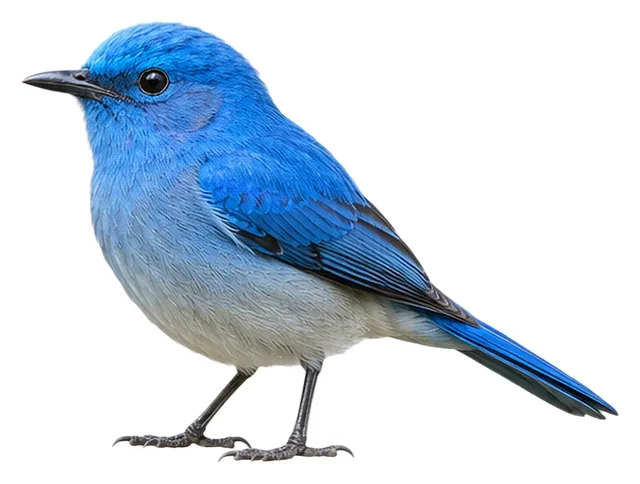
Pale Blue Flycatcher
Cyornis unicolor Blyth, 1843
≈15 cmLength21 gWeight
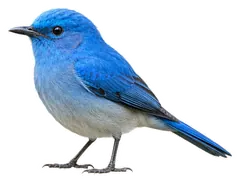
This pale blue flycatcher has grayish underparts from the throat to beneath the tail, and a broken black eye patch.
Busiest months: March · Most records: Thailand, Malaysia, India
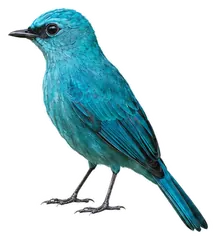
Looks like Verditer Flycatcher
AI-generated illustration. It may contain mistakes. · How the stickers are made
How to identify
Field marks
- Rather pale blue
- Grayish underparts from throat to beneath the tail
- Broken black eye patch
Similar species
Where and when it's recorded

Pale Blue Flycatcher has been recorded at 221 of the 8,171 birding hotspots we track, in 12 countries and regions.
Records by month Northern Hemisphere
Where it's recorded most
- Doi Pha Hom Pok NP – Doi Lang (W), AKA Doi San JuThailand399 records
- Gunung Panti Recreational Forest – Panti Bird Sanctuary and North AreaMalaysia323 records
- Danum Valley Borneo Rainforest LodgeMalaysia170 records
More places
- Doi Pha Hom Pok NP – Doi Lang (W) level part / "Oasis"Thailand138 records
- Jianfengling NNRChina138 records
- Dihing Patkai NP – SoraipungIndia137 records
- Mahananda WLS – LatpancharIndia130 records
- Gunung Halimun Salak NP – Cikaniki Research StationIndonesia120 records
- Mang DenVietnam105 records
- Kaeng Krachan NPThailand95 records
Countries and regions with the most records
eBird records via GBIF up to 2024-12-31. A record means someone listed it; more records partly mean more birders, not more birds.
About
The pale blue flycatcher (Cyornis unicolor) is a bird in the family Muscicapidae. The species was first described by Edward Blyth in 1843.
Excerpt from Wikipedia, CC BY-SA 4.0 · authors · Read more on Wikipedia
Questions
How big is the Pale Blue Flycatcher?
The Pale Blue Flycatcher is about ≈15 cm long and weighs around 21 g.
Where does the Pale Blue Flycatcher live?
Its breeding range: Oriental: Himalayas from northwestern India through southeastern China, Java and Borneo. It is most often recorded in Thailand, Malaysia and India.
When is the best time to see the Pale Blue Flycatcher?
At the hotspots we track, it is recorded most in March (Northern Hemisphere).
Is the Pale Blue Flycatcher endangered?
The IUCN Red List classifies the Pale Blue Flycatcher as Least Concern.
What does the Pale Blue Flycatcher eat?
Main food: Insects & other invertebrates.
What family is the Pale Blue Flycatcher in?
It belongs to the family Chats, Old World Flycatchers (Muscicapidae), order Passerines (Passeriformes).
How do you identify the Pale Blue Flycatcher?
Rather pale blue. Grayish underparts from throat to beneath the tail. Broken black eye patch.
How do you tell the Pale Blue Flycatcher from the Verditer Flycatcher?
Superficially similar and often found in the same places; Pale Blue Flycatcher is paler blue, with grayish underparts from the throat to beneath the tail and a broken black eye patch.
At a glance
- Length
- ≈15 cm
- Weight
- 21 g
- Habitat
- Forest
- Diet
- Insects & other invertebrates
- Lifestyle
- Perches in trees
- Migration
- Resident (barely migrates)
- Conservation
- Least Concern
More measurements
- Wing
- 78 mm
- Tail
- 62 mm
- Bill
- 15 mm
- Tarsus
- 16 mm
Averages from the AVONET dataset; length from field guides where available.
Range
Oriental: Himalayas from northwestern India through southeastern China, Java and Borneo
Breeding range, IOC World Bird List 15.2
Subspecies · 2
- Cyornis unicolor unicolor Himalayas to s China, n Indochina, n Thailand and Myanmar
- Cyornis unicolor diaoluoensis Hainan (off se China)
Classification
- Order
- Passerines Passeriformes
- Family
- Chats, Old World Flycatchers Muscicapidae
- Genus
- Cyornis
Other birds in the genus Cyornis
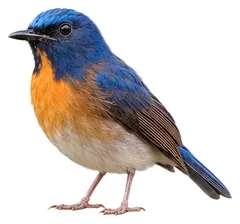 Chinese Blue FlycatcherCyornis glaucicomans
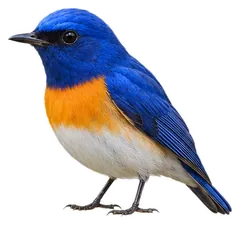 Blue-throated Blue FlycatcherCyornis rubeculoides
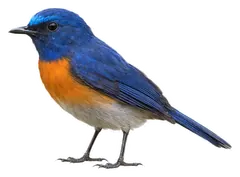 Hainan Blue FlycatcherCyornis hainanus
 Bornean Blue FlycatcherCyornis superbus
 Malaysian Blue FlycatcherCyornis turcosus
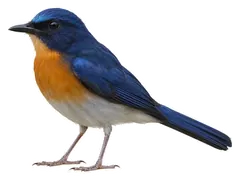 Palawan Blue FlycatcherCyornis lemprieri
 Sunda Blue FlycatcherCyornis caerulatus
 Blue-breasted Blue FlycatcherCyornis herioti
 Rufous-breasted Blue FlycatcherCyornis camarinensis
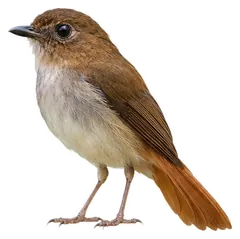 Philippine Jungle FlycatcherCyornis ruficauda
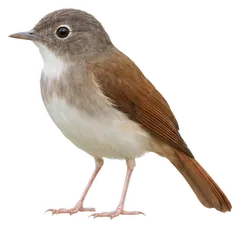 Sulu Jungle FlycatcherCyornis ocularis
 Crocker Jungle FlycatcherCyornis ruficrissa
Download illustration
Free to use with credit: “Illustration: Field Stickers”. AI-generated. Its appearance was checked against a reference photo by Rejoice Gassah; the pose follows our standard. ↗
In other languages
- EnglishPale Blue Flycatcher
- 简体中文纯蓝仙鹟
- 繁體中文純藍仙鶲
- 日本語ウスヒメアオヒタキ
- DeutschEinfarb-Blauschnäpper
- FrançaisGobemouche bleuâtre
- EspañolPapamoscas azulado
- Portuguêspapa-moscas-azuláceo
- ItalianoPigliamosche blu chiaro
- NederlandsAzuurniltava
- РусскийБледно-голубая нильтава
- Svenskaazurflugsnappare
- DanskLys Niltava
- Polskidżunglówka lazurowa