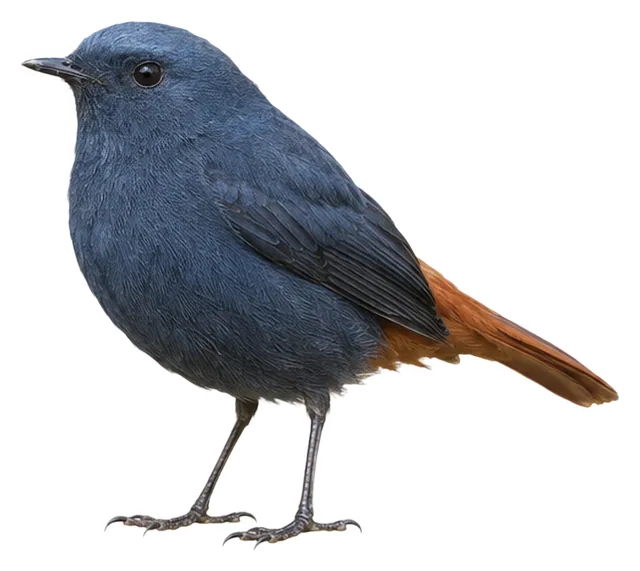
Plumbeous Water Redstart
Phoenicurus fuliginosus Vigors, 1831
14 cmLength20 gWeight
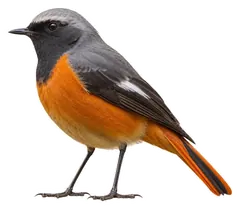
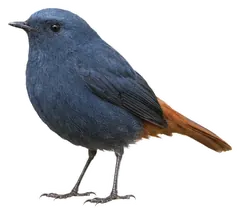
The male is gray-blue with a rusty-red tail and often occurs beside fast-flowing streams.
Busiest months: December–February · Most records: China, India, Bhutan
AI-generated illustration. It may contain mistakes. · How the stickers are made
How to identify
Field marks
- Male gray-blue
- Male tail rusty-red
- Female pale gray, with a white patch on the rump
Male, female and young
Male gray-blue; female pale gray with a white rump; in China, females and one-year-old males have rufous-tinged upperparts.
Where and when it's recorded

Plumbeous Water Redstart has been recorded at 652 of the 8,171 birding hotspots we track, in 11 countries and regions.
Records by month Northern Hemisphere
Where it's recorded most
- Dasyueshan IBA – Hengliu Creek (15K)Taiwan (China)1,087 records
- Taipei – WulaiTaiwan (China)793 records
- Nantou – Xitou Nature Education AreaTaiwan (China)636 records
More places
- SattalIndia502 records
- Corbett NP – DhikalaIndia448 records
- Doi Inthanon NPThailand425 records
- Forest Research Institute (FRI), New Forest CampusIndia423 records
- Tangjiahe NNRChina408 records
- Corbett NPIndia299 records
- Shidu, Juma River PNRChina246 records
Countries and regions with the most records
eBird records via GBIF up to 2024-12-31. A record means someone listed it; more records partly mean more birders, not more birds.
About
The plumbeous water redstart (Phoenicurus fuliginosus) is a passerine bird in the Old World flycatcher family Muscicapidae. It is found in South Asia, Southeast Asia and China. The bird's common name refers to its colour which resembles lead.
Excerpt from Wikipedia, CC BY-SA 4.0 · authors · Read more on Wikipedia
Questions
How big is the Plumbeous Water Redstart?
The Plumbeous Water Redstart is about 14 cm long and weighs around 20 g.
Where does the Plumbeous Water Redstart live?
Its breeding range: Oriental: eastern Afghanistan to eastern China and Taiwan (China). It is most often recorded in China, India and Bhutan.
When is the best time to see the Plumbeous Water Redstart?
At the hotspots we track, it is recorded most in January, February and December (Northern Hemisphere).
Is the Plumbeous Water Redstart endangered?
The IUCN Red List classifies the Plumbeous Water Redstart as Least Concern.
What does the Plumbeous Water Redstart eat?
Main food: Fish, shrimp & shellfish.
What family is the Plumbeous Water Redstart in?
It belongs to the family Chats, Old World Flycatchers (Muscicapidae), order Passerines (Passeriformes).
How do you identify the Plumbeous Water Redstart?
Male gray-blue. Male tail rusty-red. Female pale gray, with a white patch on the rump.
How do male and female Plumbeous Water Redstart differ?
Male gray-blue; female pale gray with a white rump; in China, females and one-year-old males have rufous-tinged upperparts.
At a glance
- Length
- 14 cm
- Weight
- 20 g
- Habitat
- Rivers & streams
- Diet
- Fish, shrimp & shellfish
- Lifestyle
- Perches in trees
- Migration
- Resident (barely migrates)
- Conservation
- Least Concern
More measurements
- Wing
- 74 mm
- Tail
- 53 mm
- Bill
- 13 mm
- Tarsus
- 23 mm
Averages from the AVONET dataset; length from field guides where available.
Range
Oriental: eastern Afghanistan to eastern China and Taiwan (China)
Breeding range, IOC World Bird List 15.2
Subspecies · 2
- Phoenicurus fuliginosus fuliginosus e Afghanistan to ne, e China, Indochina and nw Thailand
- Phoenicurus fuliginosus affinis Taiwan (China)
Classification
- Order
- Passerines Passeriformes
- Family
- Chats, Old World Flycatchers Muscicapidae
- Genus
- Phoenicurus
Other birds in the genus Phoenicurus
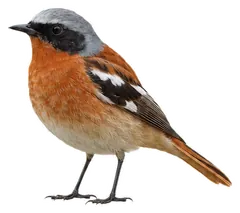 Eversmann's RedstartPhoenicurus erythronotus
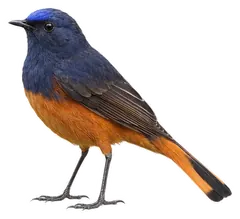 Blue-fronted RedstartPhoenicurus frontalis
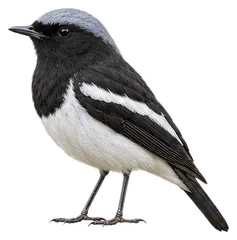 Blue-capped RedstartPhoenicurus coeruleocephala
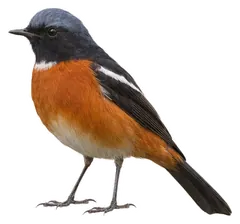 White-throated RedstartPhoenicurus schisticeps
 Luzon Water RedstartPhoenicurus bicolor
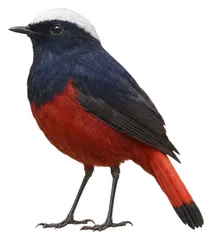 White-capped RedstartPhoenicurus leucocephalus
 Przevalski's RedstartPhoenicurus alaschanicus
 Black RedstartPhoenicurus ochruros
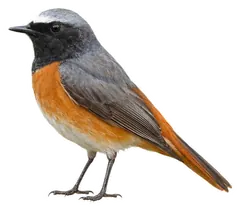 Common RedstartPhoenicurus phoenicurus
 Moussier's RedstartPhoenicurus moussieri
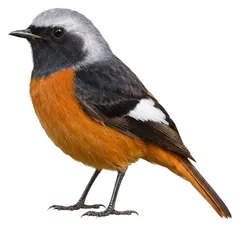 Daurian RedstartPhoenicurus auroreus
 Hodgson's RedstartPhoenicurus hodgsoni
Download illustration
Free to use with credit: “Illustration: Field Stickers”. AI-generated. Its appearance was checked against a reference photo by JJ Harrison (https://www.jjharrison.com.au/); the pose follows our standard. ↗

In other languages
- EnglishPlumbeous Water Redstart
- 简体中文红尾水鸲
- 繁體中文鉛色水鶇
- 日本語カワビタキ
- 한국어부채꼬리바위딱새
- DeutschWasserrotschwanz
- FrançaisRougequeue fuligineux
- EspañolColirrojo fuliginoso
- Portuguêsrabirruivo-plúmbeo
- ItalianoCodirosso acquaiolo piombato
- NederlandsWaterroodstaart
- РусскийСизая горихвостка
- Svenskaforsrödstjärt
- DanskVandrødstjert
- Polskipleszka śniada