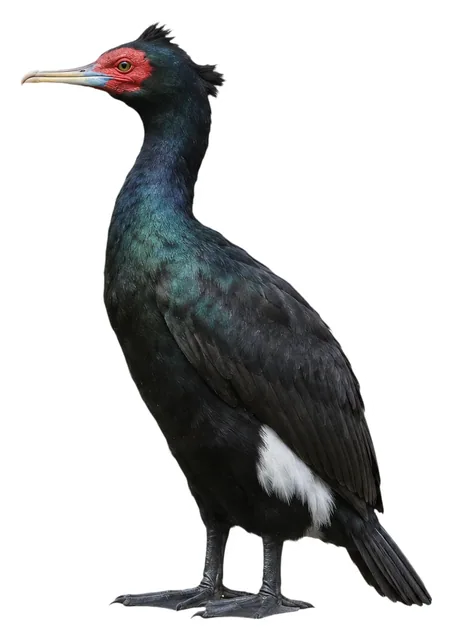
Red-faced Cormorant
Urile urile (Gmelin, JF, 1789)
≈64 cmLength2.1 kgWeight
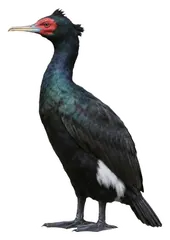
The adult has dark blue-green feathers with a metallic gloss, and bare skin around the eyes that is bright orange or red in the breeding season.
Busiest months: June · Most records: United States, Japan
AI-generated illustration. It may contain mistakes. · How the stickers are made
How to identify
Field marks
- Bare skin around the eyes bright orange or red in the breeding season
- Adult blue-green, with a purple or copper sheen on the back and body sides
- Two crests in the breeding season
- Legs and feet rufous-black
Male, female and young
Adult female lighter than male on average.
Where and when it's recorded

Red-faced Cormorant has been recorded at 5 of the 8,171 birding hotspots we track, in 2 countries and regions.
Records by month Northern Hemisphere
Where it's recorded most
- St. Paul IslandUnited States7,880 records
- Nemuro – Cape NosappuJapan212 records
- Hamanaka – Cape KiritappuJapan9 records
More places
- Nemuro – Shunkunitai Wild Bird SanctuaryJapan3 records
- Nemuro – Hanasaki PortJapan2 records
Countries and regions with the most records
eBird records via GBIF up to 2024-12-31. A record means someone listed it; more records partly mean more birders, not more birds.
Questions
How big is the Red-faced Cormorant?
The Red-faced Cormorant is about ≈64 cm long and weighs around 2.1 kg.
Where does the Red-faced Cormorant live?
Its breeding range: Pacific Ocean: central coastal subarctic North Pacific: Kamchatka, northern, central Kuril and Commander islands (southeastern Russia) to southern Kuril Islands and eastern Hokkaido (northern Japan; western North Pacific); Aleutian and Pribilof islands (Bering Sea) and southern Alaska islands (eastern North Pacific). It is most often recorded in United States and Japan.
When is the best time to see the Red-faced Cormorant?
At the hotspots we track, it is recorded most in June (Northern Hemisphere).
Is the Red-faced Cormorant endangered?
The IUCN Red List classifies the Red-faced Cormorant as Least Concern.
What does the Red-faced Cormorant eat?
Main food: Fish, shrimp & shellfish.
What family is the Red-faced Cormorant in?
It belongs to the family Cormorants, Shags (Phalacrocoracidae), order Suliformes.
At a glance
- Length
- ≈64 cm
- Weight
- 2.1 kg
- Habitat
- Ocean
- Diet
- Fish, shrimp & shellfish
- Lifestyle
- On the water surface
- Migration
- Resident (barely migrates)
- Conservation
- Least Concern
More measurements
- Wing
- 270 mm
- Tail
- 154 mm
- Bill
- 56 mm
- Tarsus
- 56 mm
Averages from the AVONET dataset; length from field guides where available.
Range
Pacific Ocean: central coastal subarctic North Pacific: Kamchatka, northern, central Kuril and Commander islands (southeastern Russia) to southern Kuril Islands and eastern Hokkaido (northern Japan; western North Pacific); Aleutian and Pribilof islands (Bering Sea) and southern Alaska islands (eastern North Pacific)
Breeding range, IOC World Bird List 15.2
Classification
- Order
- Suliformes
- Family
- Cormorants, Shags Phalacrocoracidae
- Genus
- Urile
Other birds in the genus Urile
 Brandt's CormorantUrile penicillatus
 Pelagic CormorantUrile pelagicus
 Pygmy CormorantMicrocarbo pygmaeus
 Reed CormorantMicrocarbo africanus
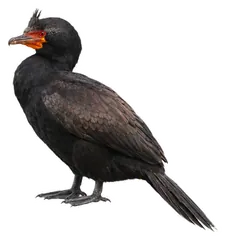 Crowned CormorantMicrocarbo coronatus
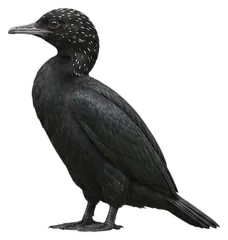 Little CormorantMicrocarbo niger
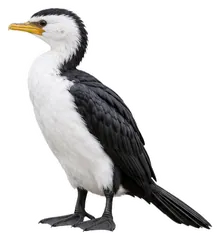 Little Pied CormorantMicrocarbo melanoleucos
 Red-legged CormorantPoikilocarbo gaimardi
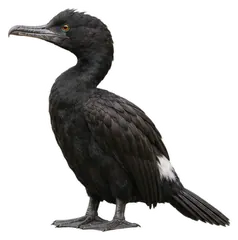 Bank CormorantPhalacrocorax neglectus
 Socotra CormorantPhalacrocorax nigrogularis
 WebP · 1070 px
In other languages
- EnglishRed-faced Cormorant
- 简体中文红脸鸬鹚
- 繁體中文紅臉鸕鷀
- 日本語チシマウガラス
- 한국어붉은뺨가마우지
- DeutschRotgesichtscharbe
- FrançaisCormoran à face rouge
- EspañolCormorán carirrojo
- Portuguêscorvo-marinho-de-cara-vermelha
- ItalianoCormorano facciarossa
- NederlandsRoodmaskeraalscholver
- РусскийКраснолицый баклан
- Svenskaberingskarv
- DanskRødmasket Skarv
- Polskikormoran czerwonoczelny