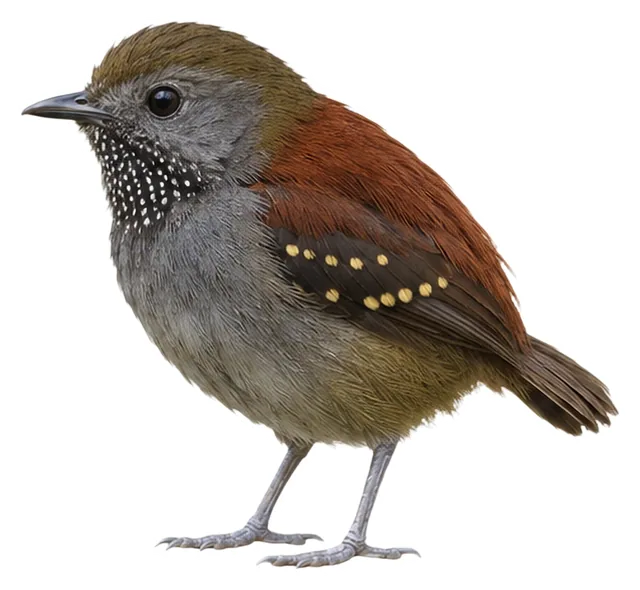
Rufous-backed Stipplethroat
Epinecrophylla haematonota (Sclater, PL, 1857)
10–11 cmLength8.7 gWeight
The rufous-backed stipplethroat (Epinecrophylla haematonota) is a species of bird in subfamily Thamnophilinae of family Thamnophilidae, the "typical antbirds".
Busiest months: January–March and July · Most records: Ecuador, Colombia, Brazil
AI-generated illustration. It may contain mistakes. · How the stickers are made
Where and when it's recorded

Rufous-backed Stipplethroat has been recorded at 23 of the 8,171 birding hotspots we track, in 5 countries and regions.
Records by month Southern Hemisphere
Where it's recorded most
- Shiripuno LodgeEcuador141 records
- Reserva Natural PalmaríBrazil59 records
- Pueblo NuevoColombia57 records
More places
- Tiputini Biodiversity StationEcuador47 records
- Napo Wildlife CenterEcuador29 records
- PN CauraVenezuela23 records
- Senda Mitú CachiveraColombia21 records
- Tahuayo LodgePeru16 records
- Senda BocatomaColombia16 records
- Gareno LodgeEcuador10 records
Countries and regions with the most records
eBird records via GBIF up to 2024-12-31. A record means someone listed it; more records partly mean more birders, not more birds.
About
The rufous-backed stipplethroat (Epinecrophylla haematonota) is a species of bird in subfamily Thamnophilinae of family Thamnophilidae, the "typical antbirds". It is found in Brazil, Colombia, Ecuador, Peru, and Venezuela. In its complex taxonomic history, Epinecrophylla haematonota has also been called the rufous-backed antwren, stipple-throated antwren, Napo stipple-throated antwren, and western stipple-throated antwren.
Excerpt from Wikipedia, CC BY-SA 4.0 · authors · Read more on Wikipedia
Questions
How big is the Rufous-backed Stipplethroat?
The Rufous-backed Stipplethroat is about 10–11 cm long and weighs around 8.7 g.
Where does the Rufous-backed Stipplethroat live?
Its breeding range: South America: southeastern Colombia and southern Venezuela to eastern Ecuador, northern, eastern Peru and western Brazil. It is most often recorded in Ecuador, Colombia and Brazil.
When is the best time to see the Rufous-backed Stipplethroat?
At the hotspots we track, it is recorded most in January, February, March and July (Southern Hemisphere).
Is the Rufous-backed Stipplethroat endangered?
The IUCN Red List classifies the Rufous-backed Stipplethroat as Least Concern.
What does the Rufous-backed Stipplethroat eat?
Main food: Insects & other invertebrates.
What family is the Rufous-backed Stipplethroat in?
It belongs to the family Antbirds (Thamnophilidae), order Passerines (Passeriformes).
At a glance
- Length
- 10–11 cm
- Weight
- 8.7 g
- Habitat
- Forest
- Diet
- Insects & other invertebrates
- Lifestyle
- Perches in trees
- Migration
- Resident (barely migrates)
- Conservation
- Least Concern
More measurements
- Wing
- 50 mm
- Tail
- 38 mm
- Bill
- 15 mm
- Tarsus
- 16 mm
Averages from the AVONET dataset; length from field guides where available.
Range
South America: southeastern Colombia and southern Venezuela to eastern Ecuador, northern, eastern Peru and western Brazil
Breeding range, IOC World Bird List 15.2
Classification
- Order
- Passerines Passeriformes
- Family
- Antbirds Thamnophilidae
- Genus
- Epinecrophylla
Other birds in the genus Epinecrophylla
 Checker-throated StipplethroatEpinecrophylla fulviventris
 Ornate StipplethroatEpinecrophylla ornata
 Rufous-tailed StipplethroatEpinecrophylla erythrura
 White-eyed StipplethroatEpinecrophylla leucophthalma
 Brown-bellied StipplethroatEpinecrophylla gutturalis
 Foothill StipplethroatEpinecrophylla spodionota
 Rio Madeira StipplethroatEpinecrophylla amazonica
 Rufous-rumped AntwrenEuchrepomis callinota
 Chestnut-shouldered AntwrenEuchrepomis humeralis
 Yellow-rumped AntwrenEuchrepomis sharpei
 WebP · 1070 px
In other languages
- EnglishRufous-backed Stipplethroat
- 简体中文斑喉蚁鹩
- 繁體中文納波點喉蟻鷯
- 日本語セアカヒメアリサザイ
- DeutschNapoameisenschlüpfer
- FrançaisMyrmidon cravaté
- EspañolHormiguerito dorsirrojo occidental
- Portuguêschoquinha-de-garganta-carijó
- ItalianoScricciolo formichiero golamacchiata
- NederlandsGrijsborstmiersluiper
- РусскийПестрогорлый алапи
- Svenskarostmantlad strimhake
- DanskPrikstrubet Myresmutte
- Polskigardlinek rudogrzbiety