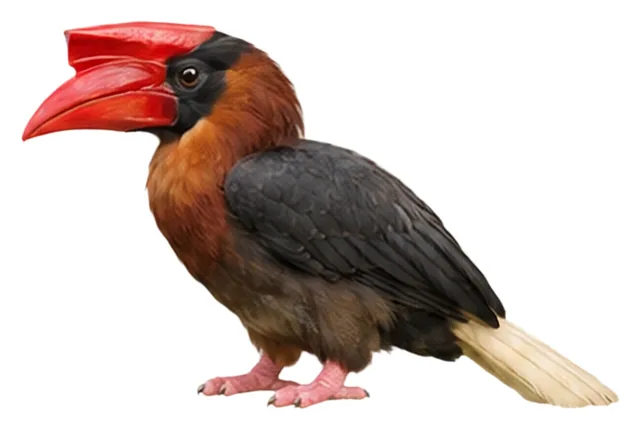
Rufous Hornbill
Buceros hydrocorax Linnaeus, 1766
1.4 kgWeight
The rufous hornbill (Buceros hydrocorax), also known as the Philippine hornbill and locally as kalaw (pronounced KAH-lau), is a large species of hornbill endemic to the Philippines (the largest hornbill in the country).
Busiest months: March · Most records: Philippines
AI-generated illustration. It may contain mistakes. · How the stickers are made
Where and when it's recorded

Rufous Hornbill has been recorded at 15 of the 8,171 birding hotspots we track, in 1 country or region.
Records by month Northern Hemisphere
Where it's recorded most
- Bislig lowlands – PICOP Road 42Philippines226 records
- Bislig lowlands – PICOP Road 4Philippines221 records
- Jariel's Peak – Restaurant, Bgy. Magsaysay, InfantaPhilippines171 records
More places
- Bislig lowlands – PICOP Roads 1-4Philippines99 records
- Brgy. Kuden, Senator Ninoy AquinoPhilippines77 records
- Bislig lowlands – 321 Quarry TrailPhilippines63 records
- Pasonanca Natural Park, Zamboanga City – BalunoPhilippines49 records
- Subic Bay – Hill 394 roadPhilippines7 records
- Subic BayPhilippines6 records
- Bislig lowlands – Old AirportPhilippines3 records
Countries and regions with the most records
eBird records via GBIF up to 2024-12-31. A record means someone listed it; more records partly mean more birders, not more birds.
About
The rufous hornbill (Buceros hydrocorax), also known as the Philippine hornbill and locally as kalaw (pronounced KAH-lau), is a large species of hornbill endemic to the Philippines (the largest hornbill in the country). It is called the "clock-of-the-mountains" by locals, because of its loud booming call which typically occurs every hour. Rufous hornbills inhabit moist tropical lowland forest areas, and are now regarded as a threatened species.
Excerpt from Wikipedia, CC BY-SA 4.0 · authors · Read more on Wikipedia
Questions
How big is the Rufous Hornbill?
The Rufous Hornbill weighs around 1.4 kg.
Where does the Rufous Hornbill live?
Its breeding range: Oriental: Philippines (except West Visayas, Palawan group and Sulu Archipelago). It is most often recorded in Philippines.
When is the best time to see the Rufous Hornbill?
At the hotspots we track, it is recorded most in March (Northern Hemisphere).
Is the Rufous Hornbill endangered?
The IUCN Red List classifies the Rufous Hornbill as Vulnerable.
What does the Rufous Hornbill eat?
Main food: Fruit.
What family is the Rufous Hornbill in?
It belongs to the family Hornbills (Bucerotidae), order Bucerotiformes.
At a glance
- Weight
- 1.4 kg
- Habitat
- Forest
- Diet
- Fruit
- Lifestyle
- Perches in trees
- Migration
- Resident (barely migrates)
- Conservation
- Vulnerable
More measurements
- Wing
- 383 mm
- Tail
- 331 mm
- Bill
- 212 mm
- Tarsus
- 62 mm
Averages from the AVONET dataset; length from field guides where available.
Range
Oriental: Philippines (except West Visayas, Palawan group and Sulu Archipelago)
Breeding range, IOC World Bird List 15.2
Classification
- Order
- Bucerotiformes
- Family
- Hornbills Bucerotidae
- Genus
- Buceros
Other birds in the genus Buceros
 Rhinoceros HornbillBuceros rhinoceros
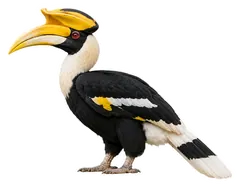 Great HornbillBuceros bicornis
 Abyssinian Ground HornbillBucorvus abyssinicus
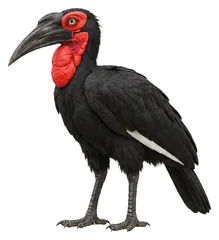 Southern Ground HornbillBucorvus leadbeateri
 Tanzanian Red-billed HornbillTockus ruahae
 Western Red-billed HornbillTockus kempi
 Damara Red-billed HornbillTockus damarensis
 Southern Red-billed HornbillTockus rufirostris
 Northern Red-billed HornbillTockus erythrorhynchus
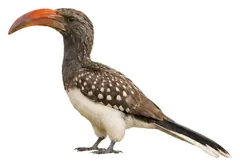 Monteiro's HornbillTockus monteiri
 WebP · 1070 px