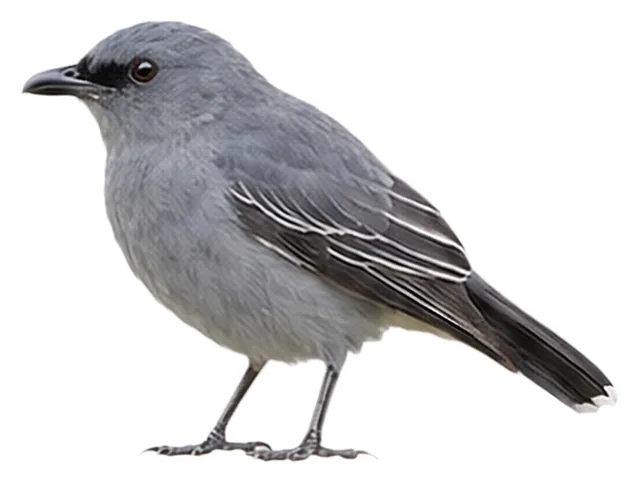
Sahul Cicadabird
Edolisoma tenuirostre (Jardine, 1831)
61 gWeight
The Sahul cicadabird (Edolisoma tenuirostre), previously known as the common cicadabird or slender-billed cicadabird, is a species of passerine bird in the family Campephagidae.
Busiest months: November–January · Most records: Australia, Papua New Guinea, Indonesia
AI-generated illustration. It may contain mistakes. · How the stickers are made
Where and when it's recorded

Sahul Cicadabird has been recorded at 129 of the 8,171 birding hotspots we track, in 3 countries and regions.
Records by month Southern Hemisphere
Where it's recorded most
- Lake Samsonvale – Golds Scrub LaneAustralia1,026 records
- Gold Creek ReservoirAustralia678 records
- Nature Refuge Hawkesbury RoadAustralia564 records
More places
- Tinchi Tamba Wetlands ReserveAustralia497 records
- Keatings Lagoon Conservation ParkAustralia466 records
- Kumbartcho SanctuaryAustralia435 records
- Cairns Botanical Gardens and Centenary LakesAustralia411 records
- Lake Samsonvale – Postmans TrackAustralia409 records
- Anstead Bushland ReserveAustralia379 records
- Daintree Village Boat CruiseAustralia365 records
Countries and regions with the most records
eBird records via GBIF up to 2024-12-31. A record means someone listed it; more records partly mean more birders, not more birds.
About
The Sahul cicadabird (Edolisoma tenuirostre), previously known as the common cicadabird or slender-billed cicadabird, is a species of passerine bird in the family Campephagidae. It is found in Australia, New Guinea and the Bismarck Archipelago. Its natural habitats are temperate forest and subtropical or tropical moist lowland forest.
Excerpt from Wikipedia, CC BY-SA 4.0 · authors · Read more on Wikipedia
Questions
How big is the Sahul Cicadabird?
The Sahul Cicadabird weighs around 61 g.
Where does the Sahul Cicadabird live?
Its breeding range: Australasia: New Guinea region, northern, eastern Australia, and Bismarck Archipelago. It is most often recorded in Australia, Papua New Guinea and Indonesia.
When is the best time to see the Sahul Cicadabird?
At the hotspots we track, it is recorded most in January, November and December (Southern Hemisphere).
Is the Sahul Cicadabird endangered?
The IUCN Red List classifies the Sahul Cicadabird as Least Concern.
What does the Sahul Cicadabird eat?
Main food: Insects & other invertebrates.
What family is the Sahul Cicadabird in?
It belongs to the family Cuckooshrikes (Campephagidae), order Passerines (Passeriformes).
At a glance
- Weight
- 61 g
- Habitat
- Shrubland
- Diet
- Insects & other invertebrates
- Lifestyle
- Perches in trees
- Migration
- Resident (barely migrates)
- Conservation
- Least Concern
More measurements
- Wing
- 116 mm
- Tail
- 86 mm
- Bill
- 25 mm
- Tarsus
- 25 mm
Averages from the AVONET dataset; length from field guides where available.
Range
Australasia: New Guinea region, northern, eastern Australia, and Bismarck Archipelago
Breeding range, IOC World Bird List 15.2
Classification
- Order
- Passerines Passeriformes
- Family
- Cuckooshrikes Campephagidae
- Genus
- Edolisoma
Other birds in the genus Edolisoma
 New Caledonian CuckooshrikeEdolisoma anale
 Blackish CuckooshrikeEdolisoma coerulescens
 White-winged CuckooshrikeEdolisoma ostentum
 Black-bellied CuckooshrikeEdolisoma montanum
 Pale-shouldered CicadabirdEdolisoma dohertyi
 Kai CicadabirdEdolisoma dispar
 Timor CicadabirdEdolisoma timoriense
 Pale CicadabirdEdolisoma ceramense
 Pohnpei CicadabirdEdolisoma insperatum
 Black-bibbed CicadabirdEdolisoma mindanense
 Grey-headed CuckooshrikeEdolisoma schisticeps
 Black CicadabirdEdolisoma melas
 WebP · 1070 px
In other languages
- EnglishSahul Cicadabird
- 简体中文长嘴鹃鵙
- 繁體中文長嘴鵑鵙
- 日本語セミサンショウクイ
- DeutschDünnschnabel-Raupenfänger
- FrançaisÉchenilleur cigale
- EspañolOruguero picofino
- Portuguêslagarteiro-de-saul
- ItalianoUccello cicala
- NederlandsSahoelrupsvogel
- РусскийТонкоклювый цикадник
- Svenskasahulgråfågel
- DanskTyndnæbbet Gråfugl
- Polskigąsienicojad cienkodzioby