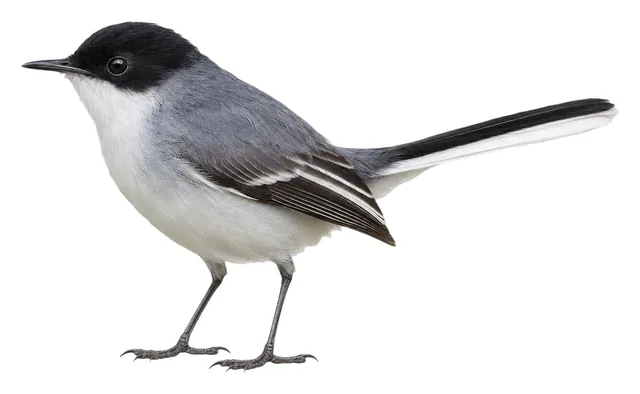
Tropical Gnatcatcher
Polioptila plumbea (Gmelin, JF, 1788)
12 cmLength6.4 gWeight
The tropical gnatcatcher (Polioptila plumbea) is a small active insectivorous songbird, which is a resident species throughout a large part of northern South America.
Busiest months: February–March, May and October · Most records: Venezuela, Colombia, Brazil
AI-generated illustration. It may contain mistakes. · How the stickers are made
Where and when it's recorded

Tropical Gnatcatcher has been recorded at 165 of the 8,171 birding hotspots we track, in 8 countries and regions.
Records by month Northern Hemisphere
Where it's recorded most
- Posada El GalloVenezuela1,821 records
- TarataraVenezuela913 records
- SFF Los Flamencos – Resguardo Perratpu/Boca de CamaronesColombia692 records
More places
- Hacienda El Escobal, TolimaColombia675 records
- Jardín Botánico de MaracaiboVenezuela441 records
- SFF Los Flamencos – Ciénaga del Navío QuebradoColombia400 records
- villa de vista hermosaVenezuela365 records
- Potengi – Sítio Pau PretoBrazil333 records
- PE da Lapa GrandeBrazil272 records
- CaicaguanaVenezuela271 records
Countries and regions with the most records
eBird records via GBIF up to 2024-12-31. A record means someone listed it; more records partly mean more birders, not more birds.
About
The tropical gnatcatcher (Polioptila plumbea) is a small active insectivorous songbird, which is a resident species throughout a large part of northern South America. It was formerly considered as conspecific with the white-browed gnatcatcher and the Marañón gnatcatcher.
Excerpt from Wikipedia, CC BY-SA 4.0 · authors · Read more on Wikipedia
Questions
How big is the Tropical Gnatcatcher?
The Tropical Gnatcatcher is about 12 cm long and weighs around 6.4 g.
Where does the Tropical Gnatcatcher live?
Its breeding range: South America: central, eastern Colombia to Peru and northeastern Brazil. It is most often recorded in Venezuela, Colombia and Brazil.
When is the best time to see the Tropical Gnatcatcher?
At the hotspots we track, it is recorded most in February, March, May and October (Northern Hemisphere).
Is the Tropical Gnatcatcher endangered?
The IUCN Red List classifies the Tropical Gnatcatcher as Least Concern.
What does the Tropical Gnatcatcher eat?
Main food: Insects & other invertebrates.
What family is the Tropical Gnatcatcher in?
It belongs to the family Gnatcatchers (Polioptilidae), order Passerines (Passeriformes).
At a glance
- Length
- 12 cm
- Weight
- 6.4 g
- Habitat
- Shrubland
- Diet
- Insects & other invertebrates
- Lifestyle
- Perches in trees
- Migration
- Resident (barely migrates)
- Conservation
- Least Concern
More measurements
- Wing
- 47 mm
- Tail
- 52 mm
- Bill
- 13 mm
- Tarsus
- 16 mm
Averages from the AVONET dataset; length from field guides where available.
Range
South America: central, eastern Colombia to Peru and northeastern Brazil
Breeding range, IOC World Bird List 15.2
Classification
- Order
- Passerines Passeriformes
- Family
- Gnatcatchers Polioptilidae
- Genus
- Polioptila
Other birds in the genus Polioptila
 Rio Negro GnatcatcherPolioptila facilis
 Guianan GnatcatcherPolioptila guianensis
 Slate-throated GnatcatcherPolioptila schistaceigula
 Para GnatcatcherPolioptila paraensis
 Iquitos GnatcatcherPolioptila clementsi
 Inambari GnatcatcherPolioptila attenboroughi
 Maranon GnatcatcherPolioptila maior
 Creamy-bellied GnatcatcherPolioptila lactea
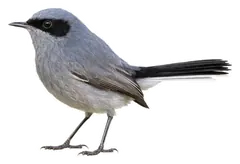 Masked GnatcatcherPolioptila dumicola
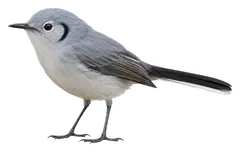 Cuban GnatcatcherPolioptila lembeyei
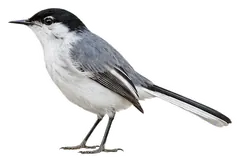 Yucatan GnatcatcherPolioptila albiventris
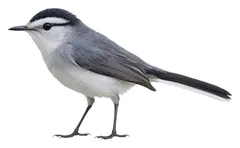 White-browed GnatcatcherPolioptila bilineata
 WebP · 1070 px
In other languages
- EnglishTropical Gnatcatcher
- 简体中文热带蚋莺
- 繁體中文熱帶蚋鶯
- 日本語カオジロブユムシクイ
- DeutschAmazonasmückenfänger
- FrançaisGobemoucheron tropical
- EspañolPerlita tropical
- Portuguêsbalança-rabo-de-chapéu-preto
- ItalianoPigliamoschini tropicale
- NederlandsAmazonemuggenvanger
- РусскийАмазонская комароловка
- Svenskatropikmyggsnappare
- DanskBlygrå Snerresmutte
- Polskisiwuszka tropikalna