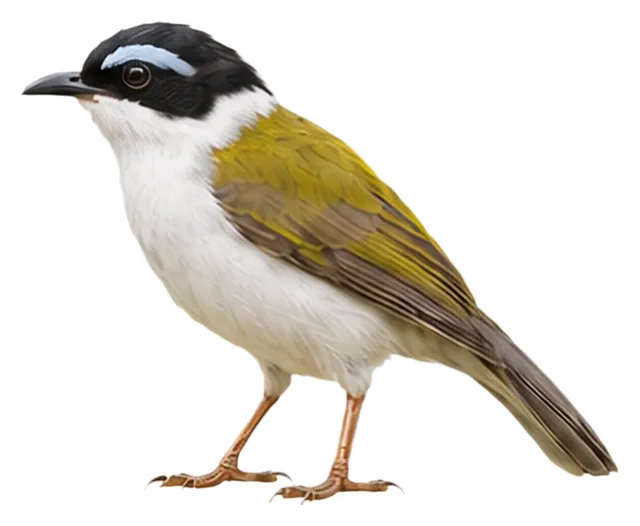
White-throated Honeyeater
Melithreptus albogularis Gould, 1848
12–14 cmLength11 gWeight
The white-throated honeyeater (Melithreptus albogularis) is a bird of the honeyeater family Meliphagidae native to New Guinea and eastern and northern Australia.
Busiest months: July–October · Most records: Australia, Papua New Guinea
AI-generated illustration. It may contain mistakes. · How the stickers are made
Where and when it's recorded

White-throated Honeyeater has been recorded at 83 of the 8,171 birding hotspots we track, in 2 countries and regions.
Records by month Southern Hemisphere
Where it's recorded most
- Sandy Camp Road WetlandsAustralia2,420 records
- Townsville Town Common Conservation ParkAustralia2,366 records
- Lake Samsonvale – Golds Scrub LaneAustralia1,370 records
More places
- Muirhead bushlandAustralia1,234 records
- Nature Refuge Hawkesbury RoadAustralia1,011 records
- Keatings Lagoon Conservation ParkAustralia986 records
- Abattoir Swamp, JulattenAustralia979 records
- Lake Samsonvale – Postmans TrackAustralia777 records
- Gold Creek ReservoirAustralia771 records
- Anstead Bushland ReserveAustralia743 records
Countries and regions with the most records
eBird records via GBIF up to 2024-12-31. A record means someone listed it; more records partly mean more birders, not more birds.
About
The white-throated honeyeater (Melithreptus albogularis) is a bird of the honeyeater family Meliphagidae native to New Guinea and eastern and northern Australia.
Excerpt from Wikipedia, CC BY-SA 4.0 · authors · Read more on Wikipedia
Questions
How big is the White-throated Honeyeater?
The White-throated Honeyeater is about 12–14 cm long and weighs around 11 g.
Where does the White-throated Honeyeater live?
Its breeding range: Australasia: south-central, southeastern New Guinea and northern, northeastern Australia. It is most often recorded in Australia and Papua New Guinea.
When is the best time to see the White-throated Honeyeater?
At the hotspots we track, it is recorded most in July, August, September and October (Southern Hemisphere).
Is the White-throated Honeyeater endangered?
The IUCN Red List classifies the White-throated Honeyeater as Least Concern.
What does the White-throated Honeyeater eat?
Main food: Insects & other invertebrates.
What family is the White-throated Honeyeater in?
It belongs to the family Honeyeaters (Meliphagidae), order Passerines (Passeriformes).
At a glance
- Length
- 12–14 cm
- Weight
- 11 g
- Habitat
- Forest
- Diet
- Insects & other invertebrates
- Lifestyle
- Perches in trees
- Migration
- Resident (barely migrates)
- Conservation
- Least Concern
More measurements
- Wing
- 71 mm
- Tail
- 52 mm
- Bill
- 14 mm
- Tarsus
- 16 mm
Averages from the AVONET dataset; length from field guides where available.
Range
Australasia: south-central, southeastern New Guinea and northern, northeastern Australia
Breeding range, IOC World Bird List 15.2
Classification
- Order
- Passerines Passeriformes
- Family
- Honeyeaters Meliphagidae
- Genus
- Melithreptus
Other birds in the genus Melithreptus
 Black-chinned HoneyeaterMelithreptus gularis
 Strong-billed HoneyeaterMelithreptus validirostris
 Brown-headed HoneyeaterMelithreptus brevirostris
 White-naped HoneyeaterMelithreptus lunatus
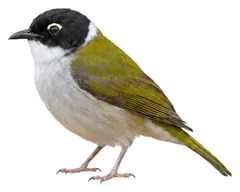 Gilbert's HoneyeaterMelithreptus chloropsis
 Black-headed HoneyeaterMelithreptus affinis
 Dark-eared MyzaMyza celebensis
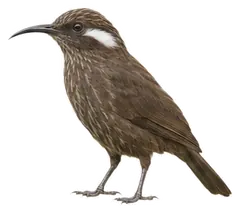 White-eared MyzaMyza sarasinorum
 Eastern SpinebillAcanthorhynchus tenuirostris
 Western SpinebillAcanthorhynchus superciliosus
 WebP · 1070 px
In other languages
- EnglishWhite-throated Honeyeater
- 简体中文白喉抚蜜鸟
- 繁體中文白喉撫蜜鳥
- 日本語ノドジロハチマキミツスイ
- DeutschWeißkehl-Honigfresser
- FrançaisMéliphage à menton blanc
- EspañolMielero goliblanco
- Portuguêspapa-mel-de-papo-branco
- ItalianoSucciamiele golabianca
- NederlandsWitkinhoningeter
- РусскийБелогорлая медвянка
- Svenskavitstrupig honungsfågel
- DanskHvidstrubet Honningæder
- Polskimiodopoik białogardły