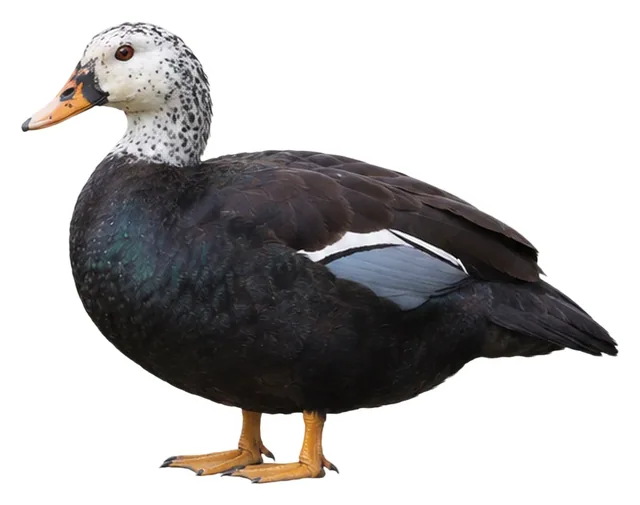
White-winged Duck
Asarcornis scutulata (Müller, S, 1842)
66–81 cmLength116–153 cmWingspan2.9 kgWeight
The adult has a dark body, whitish head and neck, and white wing coverts.
Busiest months: March · Most records: India, Cambodia, Indonesia
AI-generated illustration. It may contain mistakes. · How the stickers are made
How to identify
Field marks
- Adult has a dark body and whitish head and neck
- Head and neck densely covered with black spots
- White wing coverts conspicuous in flight
- Male has a mostly dark yellow bill
Male, female and young
Female smaller and darker, usually with denser mottling on the head and upper neck; juvenile duller and browner.
Where and when it's recorded

White-winged Duck has been recorded at 14 of the 8,171 birding hotspots we track, in 5 countries and regions.
Records by month Northern Hemisphere
To protect this bird from disturbance, we don't list exact sites.
Countries and regions with the most records
eBird records via GBIF up to 2024-12-31. A record means someone listed it; more records partly mean more birders, not more birds.
About
The white-winged duck or white-winged wood duck (Asarcornis scutulata) is a large species of duck, formerly placed in the genus Cairina with the Muscovy duck (Cairina moschata) and considered allied to the dabbling ducks.
Excerpt from Wikipedia, CC BY-SA 4.0 · authors · Read more on Wikipedia
Questions
How big is the White-winged Duck?
The White-winged Duck is about 66–81 cm long, with a wingspan of 116–153 cm and weighs around 2.9 kg.
Where does the White-winged Duck live?
Its breeding range: Oriental: northeastern India to Southeast Asia and Sumatra (formerly Java). It is most often recorded in India, Cambodia and Indonesia.
When is the best time to see the White-winged Duck?
At the hotspots we track, it is recorded most in March (Northern Hemisphere).
Is the White-winged Duck endangered?
The IUCN Red List classifies the White-winged Duck as Critically Endangered.
What does the White-winged Duck eat?
Main food: Omnivore.
What family is the White-winged Duck in?
It belongs to the family Ducks, Geese, Swans (Anatidae), order Anseriformes.
How do you identify the White-winged Duck?
Adult has a dark body and whitish head and neck. Head and neck densely covered with black spots. White wing coverts conspicuous in flight.
How do male and female White-winged Duck differ?
Female smaller and darker, usually with denser mottling on the head and upper neck; juvenile duller and browner.
At a glance
- Length
- 66–81 cm
- Wingspan
- 116–153 cm
- Weight
- 2.9 kg
- Habitat
- Wetland
- Diet
- Omnivore
- Lifestyle
- On the water surface
- Migration
- Resident (barely migrates)
- Conservation
- Critically Endangered
More measurements
- Wing
- 342 mm
- Tail
- 120 mm
- Bill
- 65 mm
- Tarsus
- 54 mm
Averages from the AVONET dataset; length from field guides where available.
Range
Oriental: northeastern India to Southeast Asia and Sumatra (formerly Java)
Breeding range, IOC World Bird List 15.2
Classification
- Order
- Anseriformes
- Family
- Ducks, Geese, Swans Anatidae
- Genus
- Asarcornis
More from the family Ducks, Geese, Swans
 White-faced Whistling DuckDendrocygna viduata
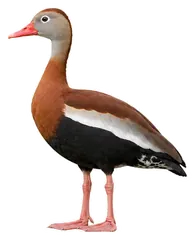 Black-bellied Whistling DuckDendrocygna autumnalis
 Spotted Whistling DuckDendrocygna guttata
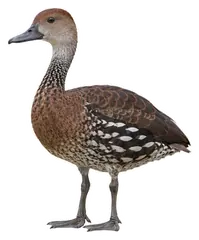 West Indian Whistling DuckDendrocygna arborea
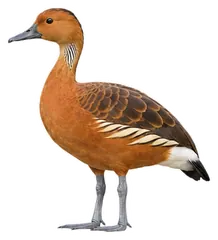 Fulvous Whistling DuckDendrocygna bicolor
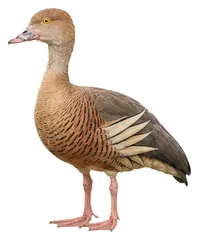 Plumed Whistling DuckDendrocygna eytoni
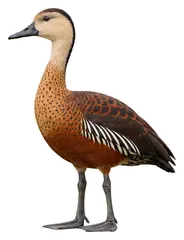 Wandering Whistling DuckDendrocygna arcuata
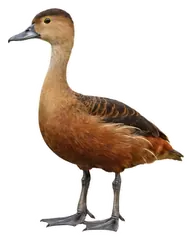 Lesser Whistling DuckDendrocygna javanica
 White-backed DuckThalassornis leuconotus
 Cape Barren GooseCereopsis novaehollandiae
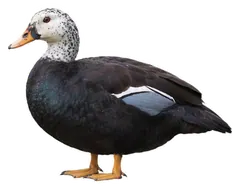
Download illustration
Free to use with credit: “Illustration: Field Stickers”. AI-generated. Its appearance was checked against a reference photo by Marc Thibault; the pose follows our standard. ↗