
Yellow-faced Myna
Mino dumontii (Lesson, RP, 1827)
23–26 cmLength217 gWeight
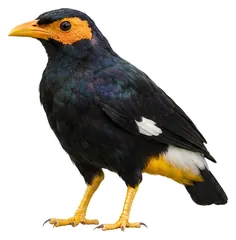
The yellow-faced myna (Mino dumontii) is a species of starling in the family Sturnidae.
Busiest months: July–August · Most records: Papua New Guinea, Indonesia
AI-generated illustration. It may contain mistakes. · How the stickers are made
Where and when it's recorded

Yellow-faced Myna has been recorded at 35 of the 8,171 birding hotspots we track, in 2 countries and regions.
Records by month Southern Hemisphere
Where it's recorded most
- Varirata National ParkPapua New Guinea670 records
- Pacific Adventist UniversityPapua New Guinea411 records
- MalagufukIndonesia161 records
More places
- Tabubil-Kiunga Rd – Km 17Papua New Guinea146 records
- Kwatu LodgePapua New Guinea135 records
- Alex Waisimon's PropertyIndonesia117 records
- Malagufuk villageIndonesia115 records
- Nimbokrang – Jalan Korea swamp forestIndonesia104 records
- West Waigeo birding roadIndonesia101 records
- Boystown Road – Bowerbird HillPapua New Guinea93 records
Countries and regions with the most records
eBird records via GBIF up to 2024-12-31. A record means someone listed it; more records partly mean more birders, not more birds.
About
The yellow-faced myna (Mino dumontii) is a species of starling in the family Sturnidae. It is found in New Guinea and nearby smaller islands, where its natural habitat is subtropical or tropical moist lowland forests. The long-tailed myna was formerly included as a subspecies.
Excerpt from Wikipedia, CC BY-SA 4.0 · authors · Read more on Wikipedia
Questions
How big is the Yellow-faced Myna?
The Yellow-faced Myna is about 23–26 cm long and weighs around 217 g.
Where does the Yellow-faced Myna live?
Its breeding range: Australasia: Raja Ampat Islands (northwest of New Guinea), Aru Islands (southwest of New Guinea) and New Guinea. It is most often recorded in Papua New Guinea and Indonesia.
When is the best time to see the Yellow-faced Myna?
At the hotspots we track, it is recorded most in July and August (Southern Hemisphere).
Is the Yellow-faced Myna endangered?
The IUCN Red List classifies the Yellow-faced Myna as Least Concern.
What does the Yellow-faced Myna eat?
Main food: Fruit.
What family is the Yellow-faced Myna in?
It belongs to the family Starlings, Rhabdornises (Sturnidae), order Passerines (Passeriformes).
At a glance
- Length
- 23–26 cm
- Weight
- 217 g
- Habitat
- Forest
- Diet
- Fruit
- Lifestyle
- Perches in trees
- Migration
- Resident (barely migrates)
- Conservation
- Least Concern
More measurements
- Wing
- 152 mm
- Tail
- 74 mm
- Bill
- 31 mm
- Tarsus
- 36 mm
Averages from the AVONET dataset; length from field guides where available.
Range
Australasia: Raja Ampat Islands (northwest of New Guinea), Aru Islands (southwest of New Guinea) and New Guinea
Breeding range, IOC World Bird List 15.2
Classification
- Order
- Passerines Passeriformes
- Family
- Starlings, Rhabdornises Sturnidae
- Genus
- Mino
Other birds in the genus Mino
 Long-tailed MynaMino kreffti
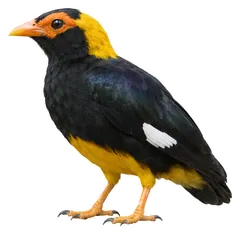 Golden MynaMino anais
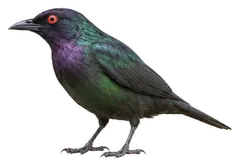 Metallic StarlingAplonis metallica
 Yellow-eyed StarlingAplonis mystacea
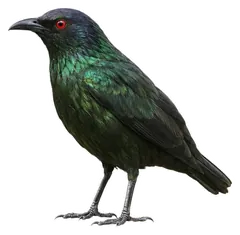 Singing StarlingAplonis cantoroides
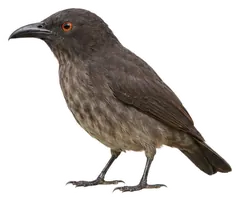 Tanimbar StarlingAplonis crassa
 Atoll StarlingAplonis feadensis
 Rennell StarlingAplonis insularis
 Long-tailed StarlingAplonis magna
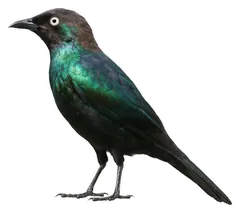 White-eyed StarlingAplonis brunneicapillus
 WebP · 1070 px