
Yellowhammer
Emberiza citrinella Linnaeus, 1758
16–16 cmLength26 cmWingspan30 gWeight
The male has a bright yellow head, and the bird often forages on the ground in small flocks in winter.
Busiest months: April–May · Most records: United Kingdom, Czechia, Germany
Looks like Pine Bunting
AI-generated illustration. It may contain mistakes. · How the stickers are made
How to identify
Field marks
- Male has a bright yellow head
- Back brown with heavy streaks
- Rump reddish-brown
- Outer tail feathers white
Male, female and young
Female less bright, with more streaks on crown, breast and flanks; juvenile much duller, with less yellow and often a paler rump.
Voice
Song is a series of short notes increasing in volume, followed by one or two long notes, often rendered as “A little bit of bread and no cheese”.
Similar species
Where and when it's recorded

Yellowhammer has been recorded at 966 of the 8,171 birding hotspots we track, in 61 countries and regions.
Records by month Northern Hemisphere
Where it's recorded most
- Canons FarmUnited Kingdom1,563 records
- Eschefelder TeicheGermany1,342 records
- Eyebrook ReservoirUnited Kingdom1,333 records
More places
- Hel – CypelPoland1,104 records
- PP LítožniceCzechia1,092 records
- VN RozkošCzechia1,086 records
- Smithy FenUnited Kingdom1,023 records
- Spurn Bird Observatory Recording AreaUnited Kingdom917 records
- Bempton Cliffs RSPB ReserveUnited Kingdom906 records
- Otmoor RSPB ReserveUnited Kingdom792 records
Countries and regions with the most records
eBird records via GBIF up to 2024-12-31. A record means someone listed it; more records partly mean more birders, not more birds.
About
The yellowhammer (Emberiza citrinella) is a passerine bird in the bunting family that is native to Eurasia and has been introduced to New Zealand and Australia. Most European birds remain in the breeding range year-round, but the eastern subspecies is partially migratory, with much of the population wintering further south. Other plumages are duller versions of the same pattern.
Excerpt from Wikipedia, CC BY-SA 4.0 · authors · Read more on Wikipedia
Questions
How big is the Yellowhammer?
The Yellowhammer is about 16–16 cm long, with a wingspan of 26 cm and weighs around 30 g.
Where does the Yellowhammer live?
Its breeding range: Palearctic: subarctic to southern temperate montane western, central Palearctic edge and openings: British Isles, northern Scandinavia to northern Iberian Peninsula, east through subarctic Russia to central Siberia, south through montane northern Mediterranean region, Balkans and Caucasus, east through northern Kazakhstan and far north-central Mongolia. It is most often recorded in United Kingdom, Czechia and Germany.
When is the best time to see the Yellowhammer?
At the hotspots we track, it is recorded most in April and May (Northern Hemisphere).
Is the Yellowhammer endangered?
The IUCN Red List classifies the Yellowhammer as Least Concern.
What does the Yellowhammer eat?
Main food: Seeds.
What family is the Yellowhammer in?
It belongs to the family Buntings (Emberizidae), order Passerines (Passeriformes).
How do you identify the Yellowhammer?
Male has a bright yellow head. Back brown with heavy streaks. Rump reddish-brown.
How do male and female Yellowhammer differ?
Female less bright, with more streaks on crown, breast and flanks; juvenile much duller, with less yellow and often a paler rump.
How do you tell the Yellowhammer from the Pine Bunting?
Females and juveniles can be confused with Pine Bunting; Yellowhammer always has a yellow tinge to its plumage, a paler reddish-brown rump and more uniform upperparts.
At a glance
- Length
- 16–16 cm
- Wingspan
- 26 cm
- Weight
- 30 g
- Habitat
- Shrubland
- Diet
- Seeds
- Lifestyle
- Active on the ground
- Migration
- Partial migrant
- Conservation
- Least Concern
More measurements
- Wing
- 88 mm
- Tail
- 73 mm
- Bill
- 13 mm
- Tarsus
- 19 mm
Averages from the AVONET dataset; length from field guides where available.
Range
Palearctic: subarctic to southern temperate montane western, central Palearctic edge and openings: British Isles, northern Scandinavia to northern Iberian Peninsula, east through subarctic Russia to central Siberia, south through montane northern Mediterranean region, Balkans and Caucasus, east through northern Kazakhstan and far north-central Mongolia
Breeding range, IOC World Bird List 15.2
Classification
- Order
- Passerines Passeriformes
- Family
- Buntings Emberizidae
- Genus
- Emberiza
Other birds in the genus Emberiza
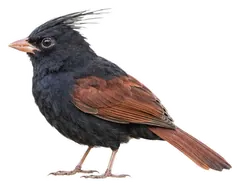 Crested BuntingEmberiza lathami
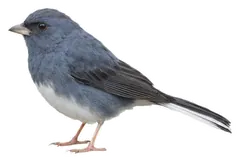 Slaty BuntingEmberiza siemsseni
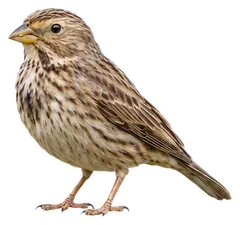 Corn BuntingEmberiza calandra
 Pine BuntingEmberiza leucocephalos
 Rock BuntingEmberiza cia
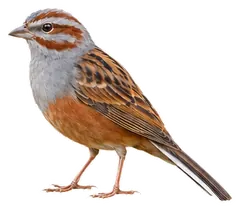 Godlewski's BuntingEmberiza godlewskii
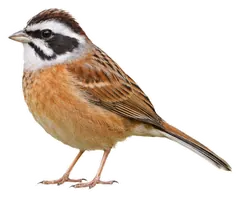 Meadow BuntingEmberiza cioides
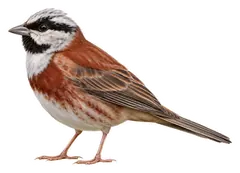 White-capped BuntingEmberiza stewarti
 Jankowski's BuntingEmberiza jankowskii
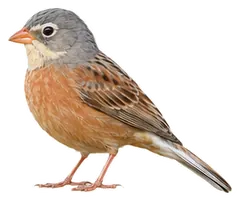 Grey-necked BuntingEmberiza buchanani
 Cinereous BuntingEmberiza cineracea
 Ortolan BuntingEmberiza hortulana

Download illustration
Free to use with credit: “Illustration: Field Stickers”. AI-generated. Its appearance was checked against a reference photo by joba102; the pose follows our standard. ↗