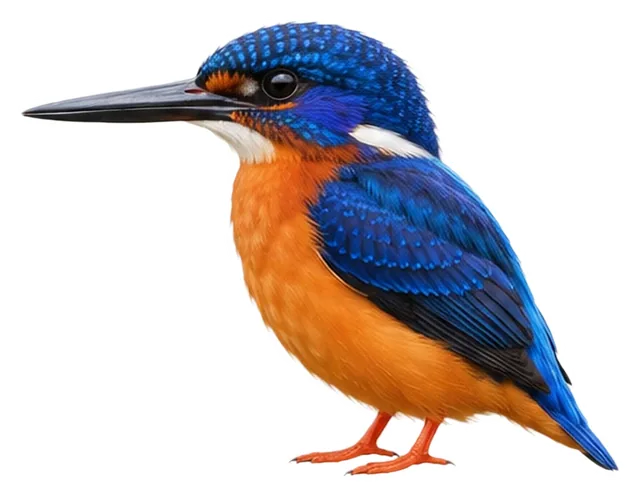
Blue-eared Kingfisher
Alcedo meninting Horsfield, 1821
16 cmLength20 gWeight
The adult resembles Common Kingfisher but has blue ear-coverts and darker, more vivid upperparts.
Busiest months: March and July–August · Most records: Malaysia, Singapore, India
Looks like Common Kingfisher
AI-generated illustration. It may contain mistakes. · How the stickers are made
How to identify
Field marks
- Adult: ear-coverts blue, with no rufous ear stripe
- Upperparts cobalt-blue, deeper and richer
- Underparts richer rufous
- Crown darker
Male, female and young
Adult male has an entirely dark bill; female has a reddish lower mandible; juvenile has rufous ear-coverts, usually mottled throat and upper breast, and a reddish bill with a whitish tip.
Similar species
Where and when it's recorded

Blue-eared Kingfisher has been recorded at 264 of the 8,171 birding hotspots we track, in 12 countries and regions.
Records by month Northern Hemisphere
Where it's recorded most
- Sepilok – Rainforest Discovery CenterMalaysia965 records
- Kinabatangan River – SukauMalaysia817 records
- Menanggol RiverMalaysia503 records
More places
- Kinabatangan River – Sukau Rainforest LodgeMalaysia364 records
- Kinabatangan Wildlife SanctuaryMalaysia323 records
- Kebun Raya BogorIndonesia311 records
- Silau TenegangMalaysia228 records
- Kranji MarshSingapore224 records
- Kinabatangan – Sukau LodgesMalaysia216 records
- Hindhede Nature ParkSingapore198 records
Countries and regions with the most records
eBird records via GBIF up to 2024-12-31. A record means someone listed it; more records partly mean more birders, not more birds.
About
The blue-eared kingfisher (Alcedo meninting) is found in Asia, ranging across the Indian subcontinent and Southeast Asia. It is found mainly in dense shaded forests where it hunts in small streams. A number of subspecies have been described that differ in measurement and colour shade.
Excerpt from Wikipedia, CC BY-SA 4.0 · authors · Read more on Wikipedia
Questions
How big is the Blue-eared Kingfisher?
The Blue-eared Kingfisher is about 16 cm long and weighs around 20 g.
Where does the Blue-eared Kingfisher live?
Its breeding range: Oriental, Australasia: widespread. It is most often recorded in Malaysia, Singapore and India.
When is the best time to see the Blue-eared Kingfisher?
At the hotspots we track, it is recorded most in March, July and August (Northern Hemisphere).
Is the Blue-eared Kingfisher endangered?
The IUCN Red List classifies the Blue-eared Kingfisher as Least Concern.
What does the Blue-eared Kingfisher eat?
Main food: Fish, shrimp & shellfish.
What family is the Blue-eared Kingfisher in?
It belongs to the family Kingfishers (Alcedinidae), order Coraciiformes.
At a glance
- Length
- 16 cm
- Weight
- 20 g
- Habitat
- Rivers & streams
- Diet
- Fish, shrimp & shellfish
- Lifestyle
- Perches in trees
- Migration
- Resident (barely migrates)
- Conservation
- Least Concern
More measurements
- Wing
- 65 mm
- Tail
- 28 mm
- Bill
- 42 mm
- Tarsus
- 9 mm
Averages from the AVONET dataset; length from field guides where available.
Range
Oriental, Australasia: widespread
Breeding range, IOC World Bird List 15.2
Classification
- Order
- Coraciiformes
- Family
- Kingfishers Alcedinidae
- Genus
- Alcedo
Other birds in the genus Alcedo
 Cerulean KingfisherAlcedo coerulescens
 Malaysian Blue-banded KingfisherAlcedo peninsulae
 Javan Blue-banded KingfisherAlcedo euryzona
 Shining-blue KingfisherAlcedo quadribrachys
 Common KingfisherAlcedo atthis
 Half-collared KingfisherAlcedo semitorquata
 Blyth's KingfisherAlcedo hercules
 Green-backed KingfisherActenoides monachus
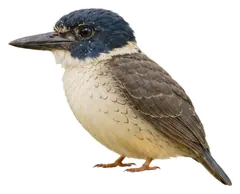 Scaly-breasted KingfisherActenoides princeps
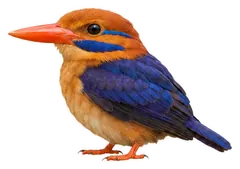 Moustached KingfisherActenoides bougainvillei
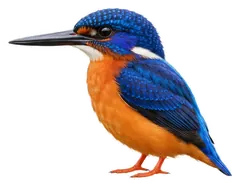
Download illustration
Free to use with credit: “Illustration: Field Stickers”. AI-generated. Its appearance was checked against a reference photo by Evan Hessels; the pose follows our standard. ↗
In other languages
- EnglishBlue-eared Kingfisher
- 简体中文蓝耳翠鸟
- 繁體中文藍耳翠鳥
- 日本語ルリカワセミ
- DeutschMenintingeisvogel
- FrançaisMartin-pêcheur méninting
- EspañolMartín pescador meninting
- Portuguêsguarda-rios-oriental
- ItalianoMartin pescatore guanceblu
- NederlandsMenintingijsvogel
- РусскийСинеухий зимородок
- Svenskamenintingkungsfiskare
- DanskBlåøret Isfugl
- Polskizimorodek granatowy