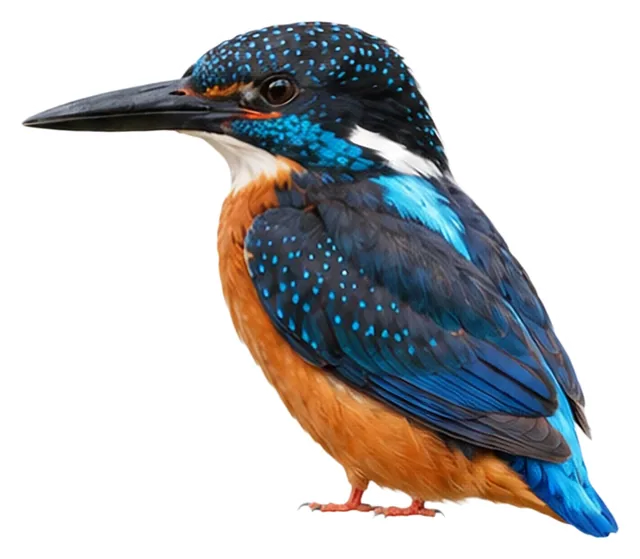
Blyth's Kingfisher
Alcedo hercules Laubmann, 1917
22–23 cmLength62 gWeight
It has a blue back, a rufous breast and belly, and a single blackish-blue patch on the breast.
Busiest months: March · Most records: China, Laos, Vietnam
Looks like Blue-eared Kingfisher, Common Kingfisher
AI-generated illustration. It may contain mistakes. · How the stickers are made
How to identify
Field marks
- Breast and belly rufous, with a blackish-blue breast patch
- Back bright cobalt-blue, tinged purple near rump
- Area in front of eye black, with a pale yellow stripe above
- Male: head black, with bright blue feather tips
Male, female and young
Male has an all-black bill; female has red at the base of the lower mandible.
Voice
Gives a loud, harsh “pseet”.
Similar species
Where and when it's recorded

Blyth's Kingfisher has been recorded at 14 of the 8,171 birding hotspots we track, in 7 countries and regions.
Records by month Northern Hemisphere
Where it's recorded most
- Nam Et - Phou Louey NPA – Nam Nern Night SafariLaos26 records
- GeshuikouChina14 records
- Chebaling NNRChina13 records
More places
- Jiulian Mountain NNRChina11 records
- Bidoup Nui Ba NP—Yang LyVietnam9 records
- Zhongxi VillageChina6 records
- DangzhouChina5 records
- Tashi Gasel Lodge to Samdrup Jongkhar checkpointBhutan4 records
- Dihing Patkai NP – SoraipungIndia4 records
- Jiangle Longqi Mountain NNRChina3 records
Countries and regions with the most records
eBird records via GBIF up to 2024-12-31. A record means someone listed it; more records partly mean more birders, not more birds.
About
Blyth's kingfisher (Alcedo hercules) is the largest kingfisher in the genus Alcedo. Named for Edward Blyth, the species has also been known as Alcedo grandis and as the great blue kingfisher. The wings are a dark blackish green, with blue speckles and tips to some of the feathers.
Excerpt from Wikipedia, CC BY-SA 4.0 · authors · Read more on Wikipedia
Questions
How big is the Blyth's Kingfisher?
The Blyth's Kingfisher is about 22–23 cm long and weighs around 62 g.
Where does the Blyth's Kingfisher live?
Its breeding range: Oriental: eastern Nepal to central Vietnam. It is most often recorded in China, Laos and Vietnam.
When is the best time to see the Blyth's Kingfisher?
At the hotspots we track, it is recorded most in March (Northern Hemisphere).
Is the Blyth's Kingfisher endangered?
The IUCN Red List classifies the Blyth's Kingfisher as Near Threatened.
What does the Blyth's Kingfisher eat?
Main food: Fish, shrimp & shellfish.
What family is the Blyth's Kingfisher in?
It belongs to the family Kingfishers (Alcedinidae), order Coraciiformes.
How do you identify the Blyth's Kingfisher?
Breast and belly rufous, with a blackish-blue breast patch. Back bright cobalt-blue, tinged purple near rump. Area in front of eye black, with a pale yellow stripe above.
How do male and female Blyth's Kingfisher differ?
Male has an all-black bill; female has red at the base of the lower mandible.
How do you tell the Blyth's Kingfisher from the Blue-eared Kingfisher?
Blyth's Kingfisher is markedly larger, with a thicker, longer bill.
At a glance
- Length
- 22–23 cm
- Weight
- 62 g
- Habitat
- Rivers & streams
- Diet
- Fish, shrimp & shellfish
- Lifestyle
- Perches in trees
- Migration
- Resident (barely migrates)
- Conservation
- Near Threatened
More measurements
- Wing
- 96 mm
- Tail
- 45 mm
- Bill
- 56 mm
- Tarsus
- 12 mm
Averages from the AVONET dataset; length from field guides where available.
Range
Oriental: eastern Nepal to central Vietnam
Breeding range, IOC World Bird List 15.2
Classification
- Order
- Coraciiformes
- Family
- Kingfishers Alcedinidae
- Genus
- Alcedo
Other birds in the genus Alcedo
 Cerulean KingfisherAlcedo coerulescens
 Malaysian Blue-banded KingfisherAlcedo peninsulae
 Javan Blue-banded KingfisherAlcedo euryzona
 Shining-blue KingfisherAlcedo quadribrachys
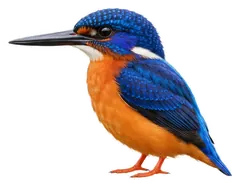 Blue-eared KingfisherAlcedo meninting
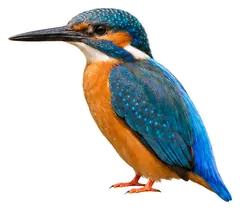 Common KingfisherAlcedo atthis
 Half-collared KingfisherAlcedo semitorquata
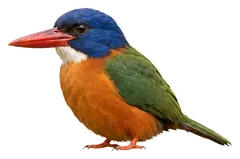 Green-backed KingfisherActenoides monachus
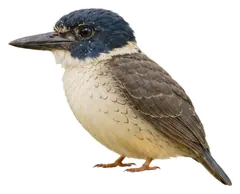 Scaly-breasted KingfisherActenoides princeps
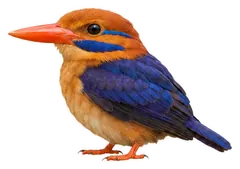 Moustached KingfisherActenoides bougainvillei
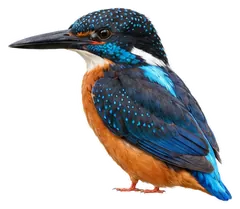
Download illustration
Free to use with credit: “Illustration: Field Stickers”. AI-generated. Its appearance was checked against a reference photo by p_concolor; the pose follows our standard. ↗
In other languages
- EnglishBlyth's Kingfisher
- 简体中文斑头大翠鸟
- 繁體中文斑頭大藍翠鳥
- 日本語オオカワセミ
- DeutschHerkuleseisvogel
- FrançaisMartin-pêcheur de Blyth
- EspañolMartín pescador hércules
- Portuguêsguarda-rios-grande
- ItalianoMartin pescatore di Blyth
- NederlandsBlyths IJsvogel
- РусскийЗимородок-геркулес
- Svenskaherkuleskungsfiskare
- DanskHerkulesisfugl
- Polskizimorodek duży