
Blue-grey Gnatcatcher
Polioptila caerulea (Linnaeus, 1766)
5.8 gWeight
The blue-gray gnatcatcher (Polioptila caerulea) is a very small gnatcatcher native to North America.
Busiest months: May · Most records: United States, Canada, Mexico
AI-generated illustration. It may contain mistakes. · How the stickers are made
Records by month · United States · Blue-grey Gnatcatcher
| Month | Records |
|---|---|
| January | 63,567 |
| February | 49,627 |
| March | 47,756 |
| April | 136,157 |
| May | 193,928 |
| June | 37,300 |
| July | 31,417 |
| August | 54,927 |
| September | 68,223 |
| October | 46,392 |
| November | 56,250 |
| December | 48,615 |
Counts come from the birding hotspots covered by Field Stickers. eBird records via GBIF up to 2024-12-31. A record means someone listed it; more records partly mean more birders, not more birds. eBird / GBIF
Where and when it's recorded

Blue-grey Gnatcatcher has been recorded at 848 of the 8,171 birding hotspots we track, in 14 countries and regions.
Records by month Northern Hemisphere
Where it's recorded most
- Magee Marsh – BoardwalkUnited States21,552 records
- Estero Llano Grande SP WBCUnited States17,179 records
- Point Pelee National ParkCanada16,802 records
More places
- Audubon Corkscrew Swamp SanctuaryUnited States15,627 records
- Montrose Point Bird Sanctuary, Lincoln Park, ChicagoUnited States13,834 records
- Santa Ana NWRUnited States11,458 records
- Bentsen-Rio Grande Val. SP WBC (Mission)United States10,556 records
- John Heinz NWR – impoundmentUnited States9,486 records
- Mead Botanical GardensUnited States9,168 records
- Sweetwater Wetlands ParkUnited States8,421 records
Countries and regions with the most records
eBird records via GBIF up to 2024-12-31. A record means someone listed it; more records partly mean more birders, not more birds.
About
The blue-gray gnatcatcher (Polioptila caerulea) is a very small gnatcatcher native to North America.
Excerpt from Wikipedia, CC BY-SA 4.0 · authors · Read more on Wikipedia
Questions
How big is the Blue-grey Gnatcatcher?
The Blue-grey Gnatcatcher weighs around 5.8 g.
Where does the Blue-grey Gnatcatcher live?
Its breeding range: North America, Middle America: southeastern Canada to Nicaragua. It is most often recorded in United States, Canada and Mexico.
When is the best time to see the Blue-grey Gnatcatcher?
At the hotspots we track, it is recorded most in May (Northern Hemisphere).
Is the Blue-grey Gnatcatcher endangered?
The IUCN Red List classifies the Blue-grey Gnatcatcher as Least Concern.
What does the Blue-grey Gnatcatcher eat?
Main food: Insects & other invertebrates.
What family is the Blue-grey Gnatcatcher in?
It belongs to the family Gnatcatchers (Polioptilidae), order Passerines (Passeriformes).
At a glance
- Weight
- 5.8 g
- Habitat
- Woodland
- Diet
- Insects & other invertebrates
- Lifestyle
- Perches in trees
- Migration
- Migratory
- Conservation
- Least Concern
More measurements
- Wing
- 51 mm
- Tail
- 49 mm
- Bill
- 11 mm
- Tarsus
- 16 mm
Averages from the AVONET dataset; length from field guides where available.
Range
North America, Middle America: southeastern Canada to Nicaragua
Breeding range, IOC World Bird List 15.2
Classification
- Order
- Passerines Passeriformes
- Family
- Gnatcatchers Polioptilidae
- Genus
- Polioptila
Other birds in the genus Polioptila
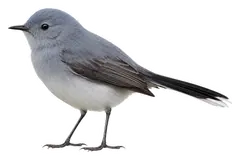 Rio Negro GnatcatcherPolioptila facilis
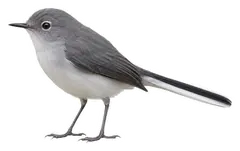 Guianan GnatcatcherPolioptila guianensis
 Slate-throated GnatcatcherPolioptila schistaceigula
 Para GnatcatcherPolioptila paraensis
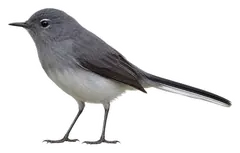 Iquitos GnatcatcherPolioptila clementsi
 Inambari GnatcatcherPolioptila attenboroughi
 Tropical GnatcatcherPolioptila plumbea
 Maranon GnatcatcherPolioptila maior
 Creamy-bellied GnatcatcherPolioptila lactea
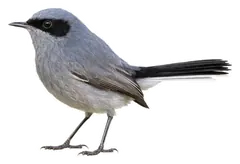 Masked GnatcatcherPolioptila dumicola
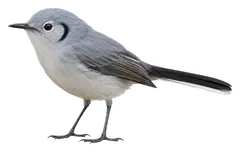 Cuban GnatcatcherPolioptila lembeyei
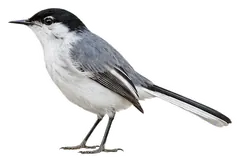 Yucatan GnatcatcherPolioptila albiventris

Download illustration
Free to use with credit: “Illustration: Field Stickers”. AI-generated. Its appearance was checked against a reference photo by go2nature; the pose follows our standard. ↗
In other languages
- EnglishBlue-grey Gnatcatcher
- 简体中文灰蓝蚋莺
- 繁體中文灰藍蚋鶯
- 日本語ブユムシクイ
- DeutschBlaumückenfänger
- FrançaisGobemoucheron gris-bleu
- EspañolPerlita grisilla
- Portuguêsbalança-rabo-de-sobrancelhas
- ItalianoPigliamoschini grigiazzurro
- NederlandsBlauwgrijze Muggenvanger
- РусскийГолубая комароловка
- Svenskasvartbrynad myggsnappare
- DanskBlågrå Snerresmutte
- Polskisiwuszka ciemnobrewa