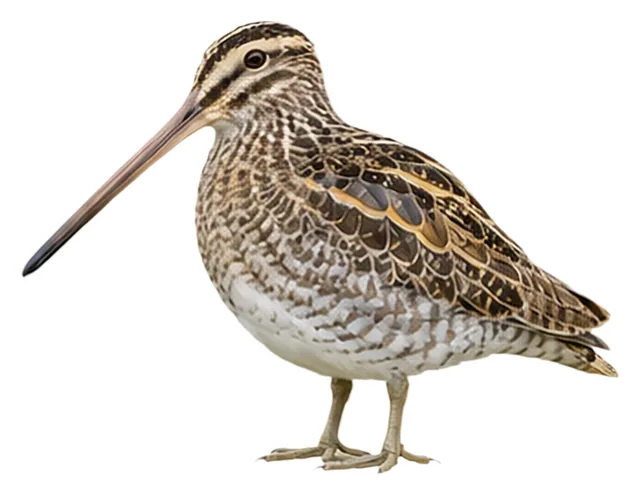
Giant Snipe
Gallinago undulata (Boddaert, 1783)
36–47 cmLength312 gWeight
The giant snipe (Gallinago undulata) is a stocky wader.
Busiest months: October · Most records: Brazil, Paraguay, Venezuela
AI-generated illustration. It may contain mistakes. · How the stickers are made
Where and when it's recorded

Giant Snipe has been recorded at 19 of the 8,171 birding hotspots we track, in 4 countries and regions.
Records by month Southern Hemisphere
Where it's recorded most
- Reserva Ecológica de GuapiaçuBrazil155 records
- PN de Boa Nova – Mata do CharmeBrazil85 records
- Parque Nacional San Rafael, Dptos. Itapúa y CaazapáParaguay25 records
More places
- Reserva Ecológica de Guapiaçu – AlagadosBrazil25 records
- Reserva Guyra RetaParaguay12 records
- Pompéu – apenas listas históricasBrazil11 records
- PN do Itatiaia – área geralBrazil10 records
- PARNA das EmasBrazil8 records
- Laguna Blanca, San PedroParaguay5 records
- Mbaracayú – JejuimiParaguay3 records
Countries and regions with the most records
eBird records via GBIF up to 2024-12-31. A record means someone listed it; more records partly mean more birders, not more birds.
About
The giant snipe (Gallinago undulata) is a stocky wader. It breeds in South America. The nominate subspecies G. u. undulata occurs in two distinct areas, one in Colombia, and the other from Venezuela through Guyana, Suriname and French Guiana to extreme north-eastern Brazil.
Excerpt from Wikipedia, CC BY-SA 4.0 · authors · Read more on Wikipedia
Questions
How big is the Giant Snipe?
The Giant Snipe is about 36–47 cm long and weighs around 312 g.
Where does the Giant Snipe live?
Its breeding range: South America: wet grassland of northern, southeastern South America. It is most often recorded in Brazil, Paraguay and Venezuela.
When is the best time to see the Giant Snipe?
At the hotspots we track, it is recorded most in October (Southern Hemisphere).
Is the Giant Snipe endangered?
The IUCN Red List classifies the Giant Snipe as Least Concern.
What does the Giant Snipe eat?
Main food: Fish, shrimp & shellfish.
What family is the Giant Snipe in?
It belongs to the family Sandpipers, Snipes (Scolopacidae), order Charadriiformes.
At a glance
- Length
- 36–47 cm
- Weight
- 312 g
- Habitat
- Grassland
- Diet
- Fish, shrimp & shellfish
- Lifestyle
- Active on the ground
- Migration
- Resident (barely migrates)
- Conservation
- Least Concern
More measurements
- Wing
- 155 mm
- Tail
- 50 mm
- Bill
- 108 mm
- Tarsus
- 46 mm
Averages from the AVONET dataset; length from field guides where available.
Range
South America: wet grassland of northern, southeastern South America
Breeding range, IOC World Bird List 15.2
Classification
- Order
- Charadriiformes
- Family
- Sandpipers, Snipes Scolopacidae
- Genus
- Gallinago
Other birds in the genus Gallinago
 Imperial SnipeGallinago imperialis
 Jameson's SnipeGallinago jamesoni
 Fuegian SnipeGallinago stricklandii
 Solitary SnipeGallinago solitaria
 Wood SnipeGallinago nemoricola
 Great SnipeGallinago media
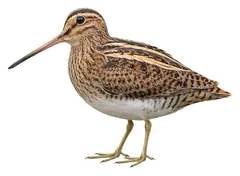 Swinhoe's SnipeGallinago megala
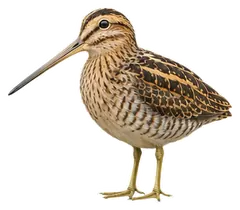 Pin-tailed SnipeGallinago stenura
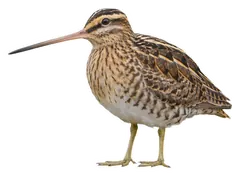 Latham's SnipeGallinago hardwickii
 African SnipeGallinago nigripennis
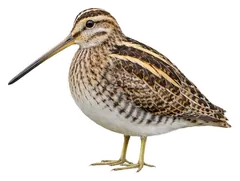 Common SnipeGallinago gallinago
 Wilson's SnipeGallinago delicata
 WebP · 1070 px