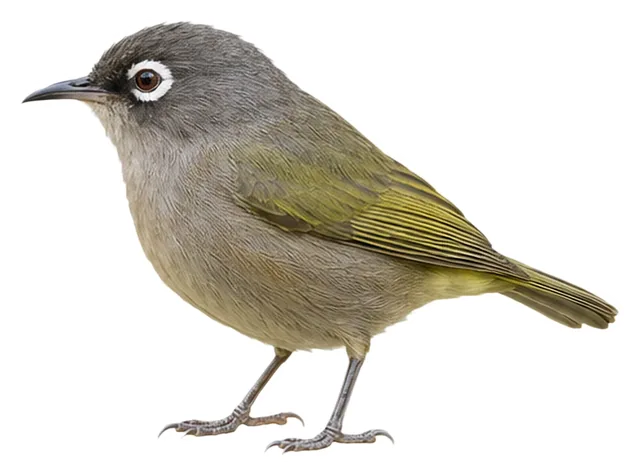
Mauritius Olive White-eye
Zosterops chloronothos (Vieillot, 1817)
8.1 gWeight
The Mauritius olive white-eye (Zosterops chloronothos, often mistakenly spelled Zosterops chloronothus) is a very rare and localized passerine from the family of white-eyes (Zosteropidae).
Busiest months: October · Most records: Mauritius
AI-generated illustration. It may contain mistakes. · How the stickers are made
Where and when it's recorded

Mauritius Olive White-eye has been recorded at 9 of the 8,171 birding hotspots we track, in 1 country or region.
Records by month Southern Hemisphere
Where it's recorded most
- Ile aux Aigrettes Nature ReserveMauritius162 records
- Black River Gorges NPMauritius40 records
- Black River Gorges NP – Gorges ViewpointMauritius12 records
More places
- Sir Seewoosagur Ramgoolam Botanical GardenMauritius7 records
- ChamarelMauritius6 records
- Black River Gorge NP – Alexandra FallsMauritius5 records
- Seven Coloured EarthMauritius3 records
- Flic en FlacMauritius2 records
- Rivulet Terre Rouge Bird SanctuaryMauritius1 record
Countries and regions with the most records
eBird records via GBIF up to 2024-12-31. A record means someone listed it; more records partly mean more birders, not more birds.
About
The Mauritius olive white-eye (Zosterops chloronothos, often mistakenly spelled Zosterops chloronothus) is a very rare and localized passerine from the family of white-eyes (Zosteropidae). It is one of two white-eye species endemic to the island of Mauritius, the other being the Mauritius grey white-eye.
Excerpt from Wikipedia, CC BY-SA 4.0 · authors · Read more on Wikipedia
Questions
How big is the Mauritius Olive White-eye?
The Mauritius Olive White-eye weighs around 8.1 g.
Where does the Mauritius Olive White-eye live?
Its breeding range: Indian Ocean: Mauritius (central Mascarenes; rare); introduced Ile aux Aigrettes (just east of Mauritius). It is most often recorded in Mauritius.
When is the best time to see the Mauritius Olive White-eye?
At the hotspots we track, it is recorded most in October (Southern Hemisphere).
Is the Mauritius Olive White-eye endangered?
The IUCN Red List classifies the Mauritius Olive White-eye as Critically Endangered.
What does the Mauritius Olive White-eye eat?
Main food: Nectar.
What family is the Mauritius Olive White-eye in?
It belongs to the family White-eyes (Zosteropidae), order Passerines (Passeriformes).
At a glance
- Weight
- 8.1 g
- Habitat
- Forest
- Diet
- Nectar
- Lifestyle
- Perches in trees
- Migration
- Resident (barely migrates)
- Conservation
- Critically Endangered
More measurements
- Wing
- 52 mm
- Tail
- 33 mm
- Bill
- 15 mm
- Tarsus
- 18 mm
Averages from the AVONET dataset; length from field guides where available.
Range
Indian Ocean: Mauritius (central Mascarenes; rare); introduced Ile aux Aigrettes (just east of Mauritius)
Breeding range, IOC World Bird List 15.2
Classification
- Order
- Passerines Passeriformes
- Family
- White-eyes Zosteropidae
- Genus
- Zosterops
Other birds in the genus Zosterops
 Sri Lanka White-eyeZosterops ceylonensis
 Yellowish White-eyeZosterops nigrorum
 Black-capped White-eyeZosterops atricapilla
 Abyssinian White-eyeZosterops abyssinicus
 Pale White-eyeZosterops flavilateralis
 Mbulu White-eyeZosterops mbuluensis
 Chestnut-flanked White-eyeZosterops erythropleurus
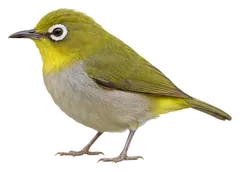 Swinhoe's White-eyeZosterops simplex
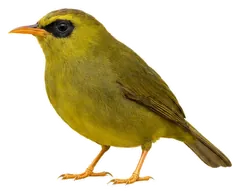 Mountain BlackeyeZosterops emiliae
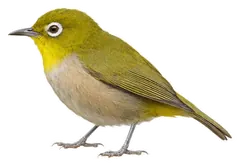 Warbling White-eyeZosterops japonicus
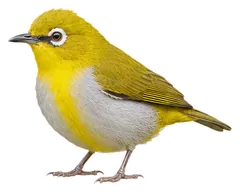 Indian White-eyeZosterops palpebrosus
 Lowland White-eyeZosterops meyeni
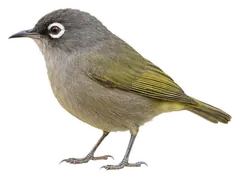
Download illustration
Free to use with credit: “Illustration: Field Stickers”. AI-generated. Its appearance was checked against a reference photo by Eric VanderWerf; the pose follows our standard. ↗
In other languages
- EnglishMauritius Olive White-eye
- 简体中文毛里求斯绣眼鸟
- 繁體中文模里西斯橄綠繡眼
- 日本語モーリシャスメジロ
- DeutschMauritius-Olivbrillenvogel
- FrançaisZostérops de Maurice
- EspañolAnteojitos oliváceo de Mauricio
- Portuguêsolho-branco-oliváceo-da-maurícia
- ItalianoOcchialino di Mauritius
- NederlandsOlijfgroene Mauritiusbrilvogel
- РусскийМаврикийская белоглазка
- Svenskamauritiusglasögonfågel
- DanskMauritius Brillefugl
- Polskiszlarnik maurytyjski