
Tickell's Blue Flycatcher
Cyornis tickelliae Blyth, 1843
11–12 cmLength16 gWeight
Tickell's blue flycatcher (Cyornis tickelliae) is a small passerine bird in the flycatcher family.
Busiest months: February and November–December · Most records: India, Sri Lanka, Nepal
AI-generated illustration. It may contain mistakes. · How the stickers are made
Where and when it's recorded

Tickell's Blue Flycatcher has been recorded at 162 of the 8,171 birding hotspots we track, in 3 countries and regions.
Records by month Northern Hemisphere
Where it's recorded most
- Kanha NP – Mukki ZoneIndia3,973 records
- Valley SchoolIndia2,495 records
- Salim Ali Centre for Ornithology and Natural HistoryIndia1,838 records
More places
- Nandi HillsIndia1,408 records
- Vetal Tekdi/HillIndia1,350 records
- Bondla Wildlife SanctuaryIndia978 records
- IISc BangaloreIndia933 records
- Ananthagiri Hills, VikarabadIndia910 records
- Kanha NP – Kanha ZoneIndia891 records
- Ranganathittu Bird SanctuaryIndia873 records
Countries and regions with the most records
eBird records via GBIF up to 2024-12-31. A record means someone listed it; more records partly mean more birders, not more birds.
About
Tickell's blue flycatcher (Cyornis tickelliae) is a small passerine bird in the flycatcher family. This is an insectivorous species which breeds in tropical Asia, from the Indian subcontinent eastwards to Bangladesh and western Myanmar. The Indochinese blue flycatcher was formerly considered conspecific.
Excerpt from Wikipedia, CC BY-SA 4.0 · authors · Read more on Wikipedia
Questions
How big is the Tickell's Blue Flycatcher?
The Tickell's Blue Flycatcher is about 11–12 cm long and weighs around 16 g.
Where does the Tickell's Blue Flycatcher live?
Its breeding range: Oriental: South Asia. It is most often recorded in India, Sri Lanka and Nepal.
When is the best time to see the Tickell's Blue Flycatcher?
At the hotspots we track, it is recorded most in February, November and December (Northern Hemisphere).
Is the Tickell's Blue Flycatcher endangered?
The IUCN Red List classifies the Tickell's Blue Flycatcher as Least Concern.
What does the Tickell's Blue Flycatcher eat?
Main food: Insects & other invertebrates.
What family is the Tickell's Blue Flycatcher in?
It belongs to the family Chats, Old World Flycatchers (Muscicapidae), order Passerines (Passeriformes).
At a glance
- Length
- 11–12 cm
- Weight
- 16 g
- Habitat
- Forest
- Diet
- Insects & other invertebrates
- Lifestyle
- Perches in trees
- Migration
- Resident (barely migrates)
- Conservation
- Least Concern
More measurements
- Wing
- 72 mm
- Tail
- 62 mm
- Bill
- 14 mm
- Tarsus
- 17 mm
Averages from the AVONET dataset; length from field guides where available.
Range
Oriental: South Asia
Breeding range, IOC World Bird List 15.2
Classification
- Order
- Passerines Passeriformes
- Family
- Chats, Old World Flycatchers Muscicapidae
- Genus
- Cyornis
Other birds in the genus Cyornis
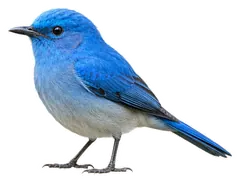 Pale Blue FlycatcherCyornis unicolor
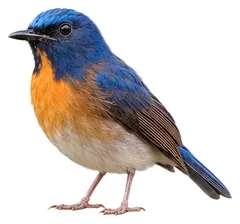 Chinese Blue FlycatcherCyornis glaucicomans
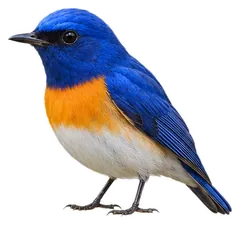 Blue-throated Blue FlycatcherCyornis rubeculoides
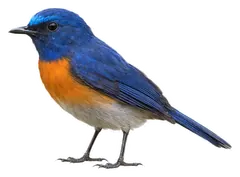 Hainan Blue FlycatcherCyornis hainanus
 Bornean Blue FlycatcherCyornis superbus
 Malaysian Blue FlycatcherCyornis turcosus
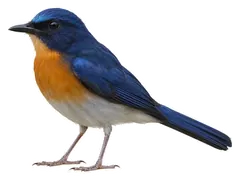 Palawan Blue FlycatcherCyornis lemprieri
 Sunda Blue FlycatcherCyornis caerulatus
 Blue-breasted Blue FlycatcherCyornis herioti
 Rufous-breasted Blue FlycatcherCyornis camarinensis
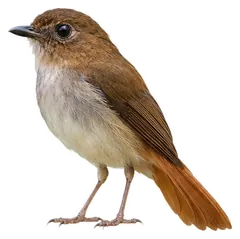 Philippine Jungle FlycatcherCyornis ruficauda
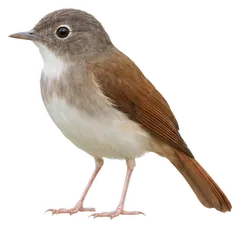 Sulu Jungle FlycatcherCyornis ocularis
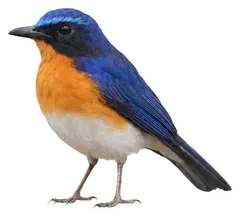 WebP · 1070 px
In other languages
- EnglishTickell's Blue Flycatcher
- 简体中文梯氏仙鹟
- 繁體中文蒂克氏藍仙鶲
- 日本語ノドアカヒメアオヒタキ
- DeutschTickellblauschnäpper
- FrançaisGobemouche de Tickell
- EspañolPapamoscas de Tickell
- Portuguêspapa-moscas-azul-indiano
- ItalianoPigliamosche blu di Tickell
- NederlandsTickells Niltava
- РусскийИндийская нильтава
- Svenskaindisk flugsnappare
- DanskHvidflanket Niltava
- Polskidżunglówka trójbarwna