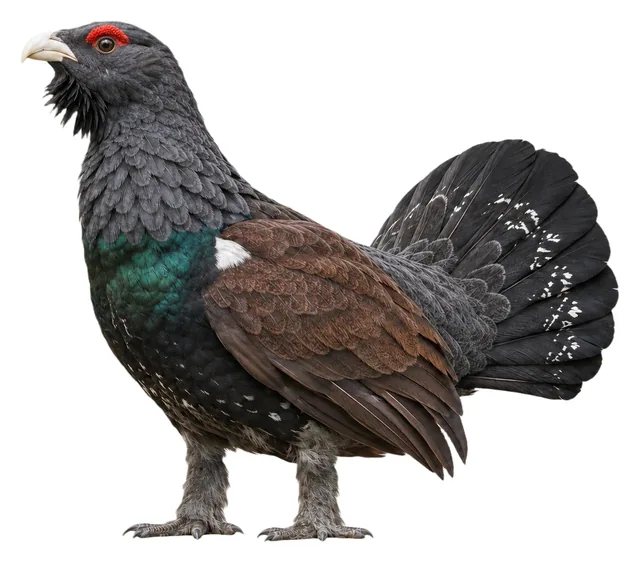
Western Capercaillie
Tetrao urogallus Linnaeus, 1758
74–85 cmLength106 cmWingspan2.7 kgWeight
It is the largest grouse, and the male is dark gray-brown with a metallic-green breast and a red patch above the eye.
Busiest months: May · Most records: Finland, Andorra, Estonia
AI-generated illustration. It may contain mistakes. · How the stickers are made
How to identify
Field marks
- Male has dark gray to dark brown body feathers and a deep metallic-green breast
- One bright red patch of bare skin above each eye
- White patch at the bend of the wing
- Legs and feet feathered
Male, female and young
Male much larger than female; female has brown upperparts with black and silver barring, and pale yellowish-brown underparts.
Voice
Male's courtship vocalization begins with double clicks like a bouncing table-tennis ball, accelerating into a popping sound like a champagne cork, followed by scraping sounds.
Where and when it's recorded

Western Capercaillie has been recorded at 26 of the 8,171 birding hotspots we track, in 8 countries and regions.
Records by month Northern Hemisphere
Where it's recorded most
- Inari – Kaamanen, Neljän Tuulen TupaFinland15 records
- Vergi sadamEstonia7 records
- Vall d'InclesAndorra3 records
More places
- CanòlichAndorra3 records
- Liminka – VirkkulaFinland3 records
- Andorra – route d'ArcalisAndorra2 records
- KolkaLatvia2 records
- Nesseby kirke og naturreservatNorway2 records
- Canillo Ski StationAndorra1 record
- ArcalisAndorra1 record
Countries and regions with the most records
eBird records via GBIF up to 2024-12-31. A record means someone listed it; more records partly mean more birders, not more birds.
About
The western capercaillie (Tetrao urogallus), also known as the Eurasian capercaillie, wood grouse, heather cock, cock-of-the-woods, or simply capercaillie, is a heavy member of the grouse tribe and the largest of all extant grouse species. Found across Europe and the Palearctic, this primarily-ground-dwelling forest grouse is renowned for its courtship display. The bird shows extreme sexual dimorphism, with males nearly twice the size of females.
Excerpt from Wikipedia, CC BY-SA 4.0 · authors · Read more on Wikipedia
Questions
How big is the Western Capercaillie?
The Western Capercaillie is about 74–85 cm long, with a wingspan of 106 cm and weighs around 2.7 kg.
Where does the Western Capercaillie live?
Its breeding range: Palearctic: northwestern, north-central. It is most often recorded in Finland, Andorra and Estonia.
When is the best time to see the Western Capercaillie?
At the hotspots we track, it is recorded most in May (Northern Hemisphere).
Is the Western Capercaillie endangered?
The IUCN Red List classifies the Western Capercaillie as Least Concern.
What does the Western Capercaillie eat?
Main food: Land plants.
What family is the Western Capercaillie in?
It belongs to the family Pheasants & Allies (Phasianidae), order Galliformes.
How do you identify the Western Capercaillie?
Male has dark gray to dark brown body feathers and a deep metallic-green breast. One bright red patch of bare skin above each eye. White patch at the bend of the wing.
How do male and female Western Capercaillie differ?
Male much larger than female; female has brown upperparts with black and silver barring, and pale yellowish-brown underparts.
At a glance
- Length
- 74–85 cm
- Wingspan
- 106 cm
- Weight
- 2.7 kg
- Habitat
- Forest
- Diet
- Land plants
- Lifestyle
- Varied
- Migration
- Resident (barely migrates)
- Conservation
- Least Concern
More measurements
- Wing
- 347 mm
- Tail
- 257 mm
- Bill
- 49 mm
- Tarsus
- 62 mm
Averages from the AVONET dataset; length from field guides where available.
Range
Palearctic: northwestern, north-central
Breeding range, IOC World Bird List 15.2
Classification
- Order
- Galliformes
- Family
- Pheasants & Allies Phasianidae
- Genus
- Tetrao
Other birds in the genus Tetrao
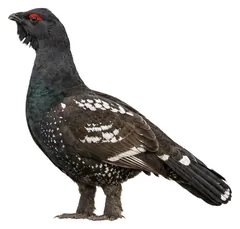 Black-billed CapercaillieTetrao urogalloides
 Udzungwa Forest PartridgeXenoperdix udzungwensis
 Ferruginous PartridgeCaloperdix oculeus
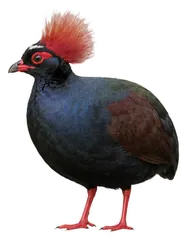 Crested PartridgeRollulus rouloul
 Black PartridgeMelanoperdix niger
 Hill PartridgeArborophila torqueola
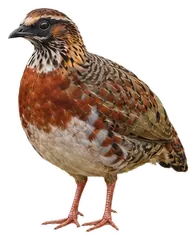 Sichuan PartridgeArborophila rufipectus
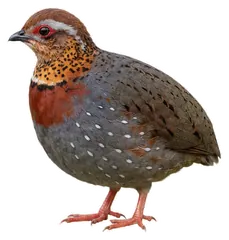 Chestnut-breasted PartridgeArborophila mandellii
 White-necklaced PartridgeArborophila gingica
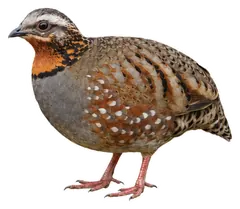 Rufous-throated PartridgeArborophila rufogularis

Download illustration
Free to use with credit: “Illustration: Field Stickers”. AI-generated. Its appearance was checked against a reference photo by stas_k; the pose follows our standard. ↗