
Yellow Bunting
Emberiza sulphurata Temminck & Schlegel, 1848
≈13 cmLength15 gWeight
This small bunting is about 14 cm long, with yellow-green underparts and black lores in the male.
Busiest months: April · Most records: China, Philippines, Japan
This sticker was generated from a written description only, without a reference photo, so it is more likely to contain mistakes than the others. Check a field guide for details.
AI-generated illustration. It may contain mistakes. · How the stickers are made
How to identify
Field marks
- Male: upperparts gray-green, back with black markings
- Underparts yellow-green, brightest on the throat and belly
- Male: lores black, a narrow black area on the chin, eye-ring pale
- Tail feathers white on the outer sides, wings with two bands of barring
Male, female and young
The female resembles the male but is paler, without black on the lores or chin.
Voice
The song is a trill; the call is a soft “tsip”.
Where and when it's recorded

Yellow Bunting has been recorded at 145 of the 8,171 birding hotspots we track, in 5 countries and regions.
Records by month Northern Hemisphere
Where it's recorded most
- Taipei – Tianliaoyang WetlandTaiwan (China)284 records
- Matsu – Dongyin Shizi Vegetable FarmChina231 records
- Matsu – DongyinChina169 records
More places
- Matsu – Dongyin Vegetable FarmChina120 records
- Basco Airport, BatanPhilippines107 records
- Basco Dump near Song Song Beach, BatanPhilippines93 records
- Taipei – Beitou Guizikeng Drainage CanalTaiwan (China)79 records
- Jinshan – Jinshan Youth Activity CenterTaiwan (China)74 records
- Sakata – Tobishima (island)Japan74 records
- Taipei – NTU Experimental Farm/Ecological PondTaiwan (China)71 records
Countries and regions with the most records
eBird records via GBIF up to 2024-12-31. A record means someone listed it; more records partly mean more birders, not more birds.
Questions
How big is the Yellow Bunting?
The Yellow Bunting is about ≈13 cm long and weighs around 15 g.
Where does the Yellow Bunting live?
Its breeding range: Palearctic: temperate far eastern Palearctic forest edge: montane northern, central Honshu (north-central Japan). It is most often recorded in China, Philippines and Japan.
When is the best time to see the Yellow Bunting?
At the hotspots we track, it is recorded most in April (Northern Hemisphere).
Is the Yellow Bunting endangered?
The IUCN Red List classifies the Yellow Bunting as Least Concern.
What does the Yellow Bunting eat?
Main food: Omnivore.
What family is the Yellow Bunting in?
It belongs to the family Buntings (Emberizidae), order Passerines (Passeriformes).
At a glance
- Length
- ≈13 cm
- Weight
- 15 g
- Habitat
- Forest
- Diet
- Omnivore
- Lifestyle
- Active on the ground
- Migration
- Migratory
- Conservation
- Least Concern
More measurements
- Wing
- 68 mm
- Tail
- 55 mm
- Bill
- 12 mm
- Tarsus
- 18 mm
Averages from the AVONET dataset; length from field guides where available.
Range
Palearctic: temperate far eastern Palearctic forest edge: montane northern, central Honshu (north-central Japan)
Breeding range, IOC World Bird List 15.2
Classification
- Order
- Passerines Passeriformes
- Family
- Buntings Emberizidae
- Genus
- Emberiza
Other birds in the genus Emberiza
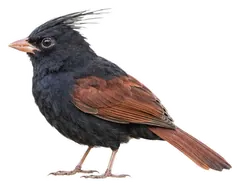 Crested BuntingEmberiza lathami
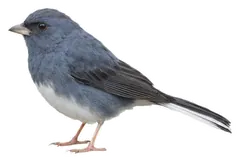 Slaty BuntingEmberiza siemsseni
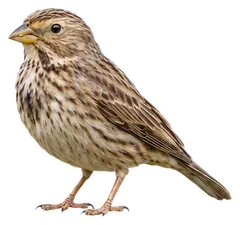 Corn BuntingEmberiza calandra
 YellowhammerEmberiza citrinella
 Pine BuntingEmberiza leucocephalos
 Rock BuntingEmberiza cia
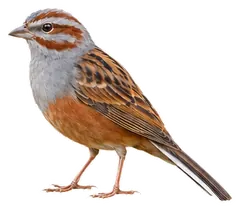 Godlewski's BuntingEmberiza godlewskii
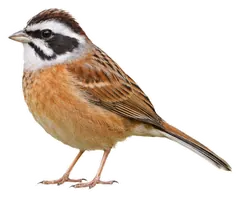 Meadow BuntingEmberiza cioides
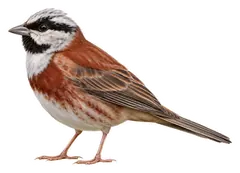 White-capped BuntingEmberiza stewarti
 Jankowski's BuntingEmberiza jankowskii
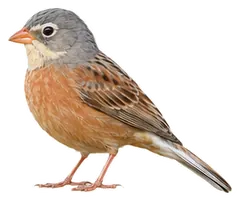 Grey-necked BuntingEmberiza buchanani
 Cinereous BuntingEmberiza cineracea

Download illustration
Free to use with credit: “Illustration: Field Stickers”. AI-generated from a written description only; no reference photo was used.