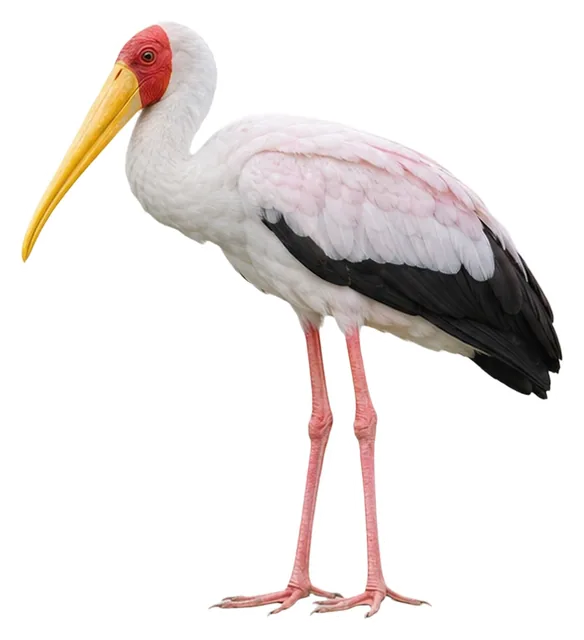
Yellow-billed Stork
Mycteria ibis (Linnaeus, 1766)
2.2 kgWeight
The yellow-billed stork (Mycteria ibis) is a large African stork species in the family Ciconiidae.
Busiest months: July–November · Most records: Kenya, South Africa, Tanzania
AI-generated illustration. It may contain mistakes. · How the stickers are made
Where and when it's recorded

Yellow-billed Stork has been recorded at 407 of the 8,171 birding hotspots we track, in 40 countries and regions.
Records by month Southern Hemisphere
Where it's recorded most
- Lake Nakuru NPKenya1,467 records
- Nairobi NPKenya1,352 records
- Ngorongoro Conservation Area – Ngorongoro CraterTanzania982 records
More places
- Lake Manyara NPTanzania552 records
- Lake NaivashaKenya522 records
- Queen Elizabeth II NP – Kazinga Channel Boat TripUganda488 records
- Chobe River – boat tripBotswana477 records
- Maasai Mara NR – Mara TriangleKenya469 records
- Amboseli NPKenya417 records
- St Lucia – iMfolozi River mouthSouth Africa396 records
Countries and regions with the most records
eBird records via GBIF up to 2024-12-31. A record means someone listed it; more records partly mean more birders, not more birds.
About
The yellow-billed stork (Mycteria ibis) is a large African stork species in the family Ciconiidae. It is widespread south of the Sahara and also occurs in Madagascar.
Excerpt from Wikipedia, CC BY-SA 4.0 · authors · Read more on Wikipedia
Questions
How big is the Yellow-billed Stork?
The Yellow-billed Stork weighs around 2.2 kg.
Where does the Yellow-billed Stork live?
Its breeding range: Africa: widespread south of the Sahara. It is most often recorded in Kenya, South Africa and Tanzania.
When is the best time to see the Yellow-billed Stork?
At the hotspots we track, it is recorded most in July, August, September, October and November (Southern Hemisphere).
Is the Yellow-billed Stork endangered?
The IUCN Red List classifies the Yellow-billed Stork as Least Concern.
What does the Yellow-billed Stork eat?
Main food: Omnivore.
What family is the Yellow-billed Stork in?
It belongs to the family Storks (Ciconiidae), order Ciconiiformes.
At a glance
- Weight
- 2.2 kg
- Habitat
- Wetland
- Diet
- Omnivore
- Lifestyle
- Active on the ground
- Migration
- Partial migrant
- Conservation
- Least Concern
More measurements
- Wing
- 462 mm
- Tail
- 154 mm
- Bill
- 236 mm
- Tarsus
- 212 mm
Averages from the AVONET dataset; length from field guides where available.
Range
Africa: widespread south of the Sahara
Breeding range, IOC World Bird List 15.2
Classification
- Order
- Ciconiiformes
- Family
- Storks Ciconiidae
- Genus
- Mycteria
Other birds in the genus Mycteria
 Wood StorkMycteria americana
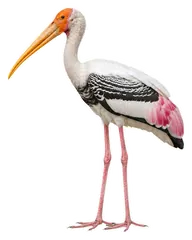 Painted StorkMycteria leucocephala
 Milky StorkMycteria cinerea
 African OpenbillAnastomus lamelligerus
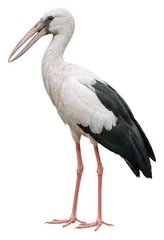 Asian OpenbillAnastomus oscitans
 Marabou StorkLeptoptilos crumenifer
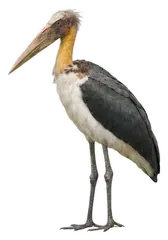 Lesser AdjutantLeptoptilos javanicus
 Greater AdjutantLeptoptilos dubius
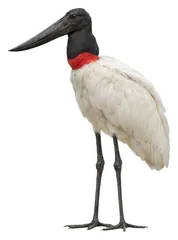 JabiruJabiru mycteria
 Saddle-billed StorkEphippiorhynchus senegalensis
 WebP · 1070 px
In other languages
- EnglishYellow-billed Stork
- 简体中文黄嘴鹮鹳
- 繁體中文黃嘴鸛
- 日本語アフリカトキコウ
- 한국어노랑부리황새
- DeutschNimmersatt
- FrançaisTantale ibis
- EspañolTántalo africano
- Portuguêstântalo-africano
- ItalianoTantalo africano
- NederlandsAfrikaanse Nimmerzat
- РусскийАфриканский клювач
- Svenskaafrikansk ibisstork
- DanskAfrikansk Skovstork
- Polskidławigad afrykański