
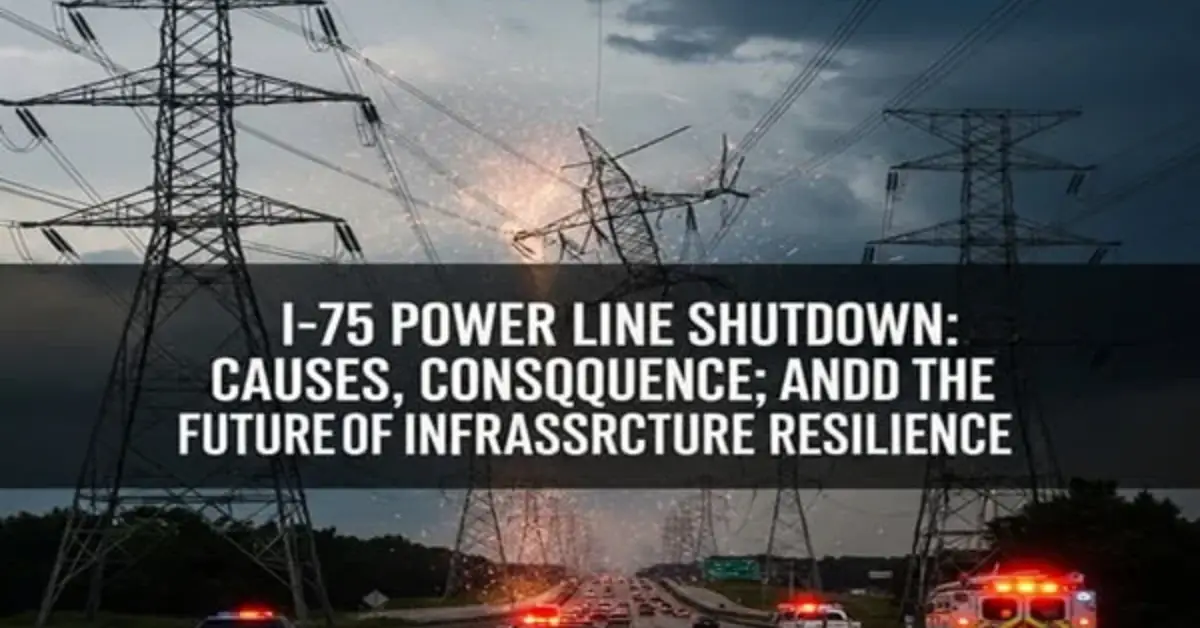
What Happened During the I-75 Power Line Shutdown?
The recent i-75 power line shutdown created major concerns for drivers, local communities, and emergency teams across the region. When a major highway like I-75 faces unexpected disruption, thousands of people feel the impact—from long traffic delays to safety risks and sudden road closures. Incidents like this highlight how closely our roads and electrical systems are connected, and why fast response is so important.
This shutdown also raised questions about infrastructure, utility crews, public safety, and traffic management. Understanding what happened, why it happened, and how officials handled the situation helps us learn important lessons for the future and prevent similar events from happening again.
Immediate Timeline of the I-75 Power Line Shutdown
The closure began minutes after authorities confirmed a tower collapse risk that could trigger a regional power failure. The transportation department actions moved fast because responders feared a chain reaction that might harm nearby communities. Officials later explained that how storms affect power lines played a major role in the crisis.
Causes Behind the Shutdown: What Went Wrong?
The main cause was a mix of weather extremes and infrastructure maintenance issues. Strong winds weakened utility towers, rainfall softened the soil beneath them and lightning struck multiple lines. This combination created a dangerous environment where a utility tower failure became almost unavoidable. Analysts noted that what caused the I-75 power line shutdown was less about one mistake and more about years of gradual strain on older towers.
Another factor was the aging power grid that runs beside I-75. Engineers observed that decades-old towers faced stress from constant load demand. This weakened frame strength and raised the chance of tower collapse risk. Reports later showed that the damage assessment process uncovered corrosion on several support structures near the highway.
Environmental Stressors That Damaged High-Voltage Lines
Heavy storms attacked the towers for hours and wind gusts bent lines beyond safe tension. Experts studying grid reliability issues said how severe weather damages power lines near highways remains a growing national concern.
How Power Lines Interact With Highways Like I-75
Power lines often run beside highways to reduce construction costs and simplify access routes for utility repair crews. Engineers choose these open corridors because they allow large trucks to reach towers quickly during an emergency. However this setup also means a single failure can shut down a major interstate and cause transportation disruption across the region.
When an issue occurs, co-locating lines with roadways heightens risk for both energy systems and drivers. If a line sags or a tower shifts, it may instantly threaten highway safety risks. This is why many agencies now question why were power lines near the highway and whether safer routes should be used.
Why Utility Routes Often Follow Major Highways
Corridors like I-75 offer easy access for tower inspection procedures which normally speeds up repairs. Yet the shutdown showed that why infrastructure failures cause major traffic delays is tied to how close both systems are built to one another.
Impact on Traffic, Travel, and Public Safety
Traffic gridlock stretched for miles because drivers were forced into unexpected traffic detour routes. This slowed freight movement and caused freight and supply chain delays across several states. The impact of highway closures on traffic proved larger than predicted because many commuters rely on this interstate daily for work and school.
Emergency vehicles struggled too since ambulances and fire trucks had to find new routes during the busiest times of day. Officials said transportation disruption increased response times by several minutes. This raised public safety concerns because delays can change the outcome of medical emergencies.
Multi-Mile Traffic Backups and Emergency Detours
Drivers saw delays stretch far beyond the initial closure zone because the regional outage management affected digital signs and local signals. The situation revealed the true impact of I-75 shutdown on supply chains during weather events.
Emergency and Utility Response: Who Stepped In?
Multiple agencies worked together in one of the most intense inter-agency coordination efforts of the year. Utility repair crews rushed in first to secure the site and cut the power. Emergency response teams cleared vehicles from the danger zone. Police helped maintain safety while engineers began examining the structural damage to the towers.
The utility company response included bringing in specialized equipment that could lift lines, support weakened towers, and restore electricity to nearby communities. Their quick actions limited the regional power failure and helped restore stability to parts of the grid. Officials later praised coordinated disaster response as a key factor that prevented more serious consequences.
Utility Crew Mobilization and Damage Assessment
Crews worked nonstop to stabilize the electrical infrastructure and assess tower damage. Leaders explained that steps taken to restore power after tower damage required fast decision-making and constant communication.
Economic Ripple Effects on Nearby Communities
Local businesses lost sales for days because customers could not reach the area easily. Restaurants, retail shops, and gas stations along detour corridors saw reduced traffic. The economic impact of shutdown events like this often lingers because supply deliveries slow down and staffing becomes unpredictable during closures.
Trucking companies suffered major financial losses because longer travel times increased fuel costs. Missed deadlines raised penalties for carriers which worsened freight and supply chain delays. Regional industries dependent on timely shipments felt the strain too, proving that even short closures can disrupt entire markets.
Impact on Local Commerce and Small Businesses
Shops near the closure zone experienced sudden drops in customers because the emergency highway shutdown redirected vehicles far away. Analysts noted that the economic cost of highway closures for local communities can exceed repair expenses.
Communication With the Public: What Worked and What Didn’t
Authorities used real-time public alerts to notify drivers through radio, apps, and news networks. These messages prevented panic and helped drivers choose early detours. Some travelers said the communication during highway closures felt faster than usual which kept them informed about road closure updates and safety conditions.
However some updates lacked clarity since shifting weather made predictions hard. Many travelers felt confused about how long I-75 was closed because different outlets reported different time frames. Officials later said improving consistency in alerts will help reduce travel stress in future emergencies.
Real-Time Alerts Through Media and DOT Platforms
The role of DOT in road shutdown operations was essential because digital boards and traffic systems carried vital updates across the region. Many experts argue the importance of real-time public alerts must be prioritized nationwide.
Infrastructure Weaknesses Revealed by the Shutdown
The incident highlighted grid vulnerability in areas where old towers remain in service. Engineers found rusted bolts, weakened steel frames, and worn connectors on several towers. These signs of aging power grid structures raised concerns about long-term safety across major interstate corridors.
Investigators discovered multiple towers needed reinforcement long before the storm hit. This raises questions about infrastructure maintenance schedules and how often towers should be inspected to avoid future disruptions. Reports suggested that harsh winds and previous storms had already caused hidden structural weaknesses.
Structural Issues in Aging Power Grids
Specialists studying the system argued that strengthening critical infrastructure requires early detection of wear and better planning for upgrades.
Long-Term Solutions to Prevent Future Shutdowns
Experts recommended adding smart sensors to towers so stress can be detected early. These sensors monitor tension in lines, soil movement, and vibration levels during storms. Leaders say that best ways to prevent future grid failures include digital monitoring tools, faster inspections, and upgrading transmission lines with stronger materials.
Another approach is burying key lines in high-risk areas. Undergrounding is expensive but reduces tower collapse risk and prevents wind damage. Many agencies believe weather-proofing power systems is necessary as storms grow stronger each year. Improving infrastructure resilience now could save millions in emergency repairs later.
Smart Grid Technology and Predictive Monitoring
Predictive software helps track tower movement and signals when action is needed. Experts say future infrastructure improvements should include automated alerts that warn teams before failures occur.
Key Lessons Learned for Transportation and Energy Resilience
Agencies learned that coordinated planning between transportation and energy teams is critical during weather disasters. The shutdown proved how essential it is to share information fast so both sectors can react together. Leaders said transportation department actions improved once they synchronized with utility specialists.
Communities also discovered that preventing power line failures requires better maintenance, stronger towers, and quicker tower inspection procedures. Officials believe these lessons learned from the shutdown will guide new safety rules for major corridors like I-75.
Strengthening Multi-Agency Coordination
The event demonstrated that improving grid resilience depends on teamwork, technology upgrades, and faster communication between emergency departments.
FAQs About the I-75 Power Line Shutdown
Q1. Can you run over down power lines?
No, you should never drive over downed power lines. They may still have electricity and can cause a deadly shock.
Q2. What causes I-75 closures?
I-75 can close because of accidents, power line issues, construction, severe weather, or emergency situations.
Q3. What happens when a power line goes down?
A downed power line can cause outages, fires, road closures, and safety risks until crews repair it.
Q4. Can you take I-75 from Michigan to Florida?
Yes, I-75 runs from Michigan all the way to Florida, making it a major north–south highway in the U.S.
Q5. Why is 75 called an Alligator Alley?
The section in South Florida is called Alligator Alley because it passes through the Everglades, where many alligators live.