
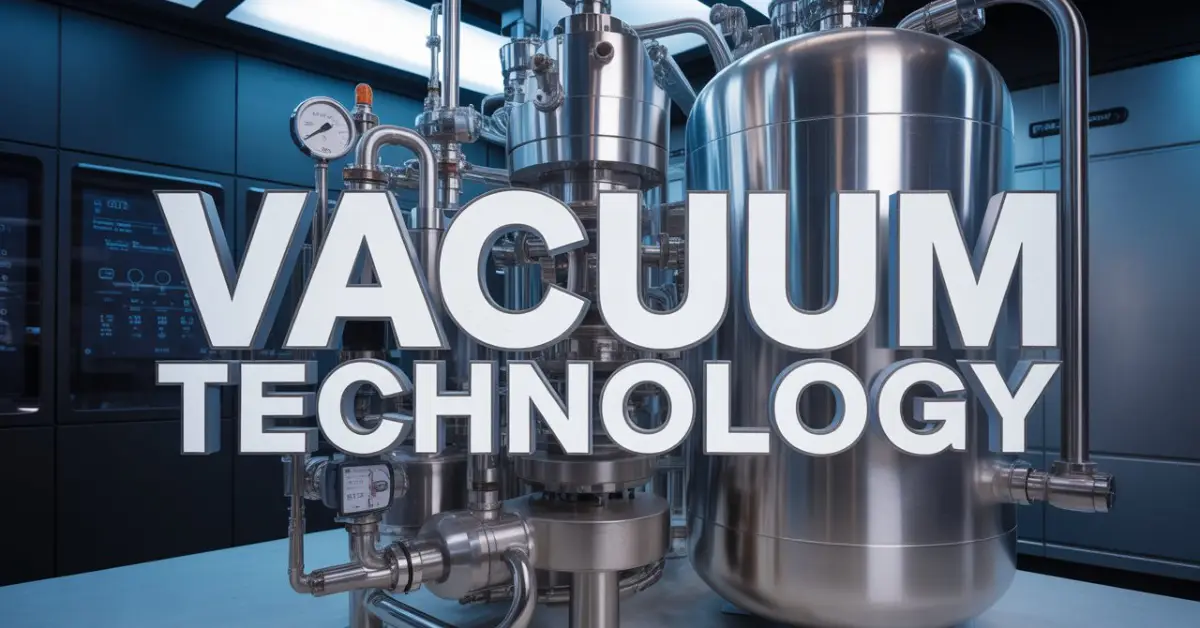
What Is Vacuum Technology? A Beginner-Friendly Overview
Vacuum technology is a cornerstone of modern industries and scientific research, enabling low-pressure environments where precision and purity are critical. From vacuum pumps used in semiconductor fabrication to vacuum chambers for space simulation testing, this technology allows processes that would be impossible under normal atmospheric conditions. Industries such as pharmaceuticals, electronics, and food processing rely on contamination-free processing to maintain quality and safety.
Advances in ultra-high vacuum systems have also transformed laboratories, enabling breakthroughs in nanostructure fabrication and high-precision experiments. As innovation continues, vacuum technology plays an increasingly vital role in shaping manufacturing, research, and futuristic applications worldwide.
How Vacuum Systems Work: The Core Principles Explained
Vacuum systems work by moving air from places with high pressure to places with low pressure. They use vacuum pumps like turbomolecular pumps or diffusion pumps to do this. This helps keep the vacuum steady so machines like electron microscopes and mass spectrometry tools can work properly. Vacuum monitoring sensors make sure the system stays under control.
Scientists use vacuum systems to do experiments that need very special conditions. Low-pressure environments and vacuum control mechanisms help make tiny structures and advanced computer chips. Engineers check pressure with pressure gauges and stop air leaks with leak-proof seals and valves, making sure everything stays accurate and safe.
Essential Components of a Vacuum System and Their Functions
A vacuum system has several important parts like vacuum pumps, vacuum chambers, valves, pressure gauges, and seals. Each part helps keep the vacuum steady and makes high-precision manufacturing possible. The chambers are where work happens, and the pumps remove air so processes like PVD and CVD coatings can happen without dirt or contamination.
To keep systems working well, engineers use outgassing-resistant materials that last a long time. Cryogenic vacuum systems are used for special research, and valves and seals stop air from leaking in. Today, IoT-enabled vacuum systems can give real-time information, helping predictive maintenance systems fix problems faster and make industrial vacuum systems work better and longer.
Types of Vacuum Pumps and Which Industries Use Them
Different vacuum pumps are used for different jobs. Rotary vane pumps are good for low to medium vacuum work, while turbomolecular pumps and diffusion pumps can make ultra-high vacuum needed for semiconductor fabrication processes. Cryogenic pumps remove gases very well and are used in research and space simulation chambers.
Many industries depend on these pumps. Semiconductor manufacturing uses high-vacuum systems for thin-film deposition. The pharmaceutical industry uses vacuum-based sterilization and freeze-drying technology to keep products safe. The aerospace industry uses space simulation chambers to test equipment for space. This shows how vacuum technology is important for many advanced jobs.
Industrial Uses of Vacuum Technology Across Major Sectors
In the U.S., industrial vacuum systems are very important for electronics, aerospace, food packaging, and medicine. Vacuum packaging helps food stay fresh longer, and vacuum-based food preservation keeps the food healthy and tasty. Making computer chips also needs high-vacuum systems so no dirt or dust can damage them.
Hospitals use pharmaceutical sterility processes to make sure medicines are safe. Science labs use electron microscopes and particle accelerators that need controlled vacuum environments to work properly. Special coatings and PVD and CVD coatings are also made in vacuum, showing how vacuum technology principles help make products better and safer.
Role of Vacuum Technology in Advanced Scientific Research
Science labs use vacuum technology for experiments that need controlled vacuum environments. Space simulation chambers copy the conditions of outer space to test satellites and spacecraft. Scientists also use mass spectrometry and electron microscopes to look at atoms and molecules in very clean, low-pressure environments.
In material science research, ultra-high vacuum keeps experiments free from contamination. This helps create tiny structures in nanostructure fabrication and develop new materials. Scientific vacuum research also helps new areas like quantum computers and advanced engineering processes, showing how vacuum technology principles make important discoveries in U.S. laboratories.
Quality Control, Safety Measures, and Maintenance in Vacuum Systems
Keeping industrial vacuum systems working well needs careful checking of vacuum stability, vacuum control mechanisms, and outgassing-resistant materials. Vacuum monitoring sensors watch the pressure, and predictive maintenance systems help fix problems before machines stop working. Engineers also check valves and seals to make sure no air leaks in and everything stays safe.
Safety is very important in high-vacuum systems. If machines are used wrong, they can get damaged or contaminated. Energy-efficient pump technology saves electricity, and checking pressure gauges carefully keeps vacuum-based sterilization and freeze-drying technology working properly in factories and labs.
Advantages and Limitations of Modern Vacuum Technology
Vacuum technology helps make things very carefully and cleanly. It is used to make computer chips, special coatings, and medicines. Companies in the U.S. use it to make better products faster and keep their work areas clean and safe.
Vacuum systems can cost a lot of money and need skilled workers to take care of them. Some machines may stop working if the vacuum is not steady. Cryogenic vacuum systems and IoT vacuum machines are also expensive. Even with these problems, the benefits are bigger, so many industries still use vacuum technology to make safe and high-quality products.
The Latest Innovations Transforming the Vacuum Technology Industry
New technology is making vacuum systems smarter. Machines now have IoT sensors, smart tools, and computers that check the vacuum all the time. This helps workers fix problems before they happen. Energy-efficient pump technology saves electricity, and new materials make machines stronger and last longer.
Small cryogenic vacuum systems and compact pumps are easy to move. They are used to make tiny structures, test space exploration equipment, and make special coatings. U.S. companies use these tools to make products more accurate, clean, and high-quality while meeting the need for high-vacuum systems in factories and labs.
Future Outlook: How Vacuum Technology Will Shape Tomorrow’s Industries
The future of vacuum technology in the U.S. looks very exciting. It will be used more in clean energy, aerospace, and making computer chips. Controlled vacuum environments will be important for quantum computers and advanced electronics. New technology will also help with vacuum-based food preservation and safer pharmaceutical sterility processes.
Improvements in industrial vacuum systems, IoT-integrated vacuum equipment, and energy-efficient pump technology will make high-quality vacuum machines easier to use. Industries like nanotechnology, space simulation, and material science research will depend on these innovations. This shows how vacuum technology principles will help create very precise and advanced tools in the future.
FAQs
1. What is vacuum technology?
Vacuum technology is a way to remove air from a space to create a low-pressure environment for making products or doing experiments.
2. How does vacuum technology work?
It works by using vacuum pumps to take out air and gases so machines and experiments can happen in a controlled vacuum environment.
3. Is it possible to create a 100% vacuum?
No, a perfect vacuum is impossible because some tiny particles of air always remain.
4. Do modern computers still use vacuum tube technology?
No, modern computers use microchips, not vacuum tubes, because they are smaller, faster, and more efficient.
5. Why did we stop using vacuum tubes?
Vacuum tubes were big, hot, and used lots of power, so we replaced them with smaller and better microchips.